A Solar Spectacle: The Golden Corona of 2026
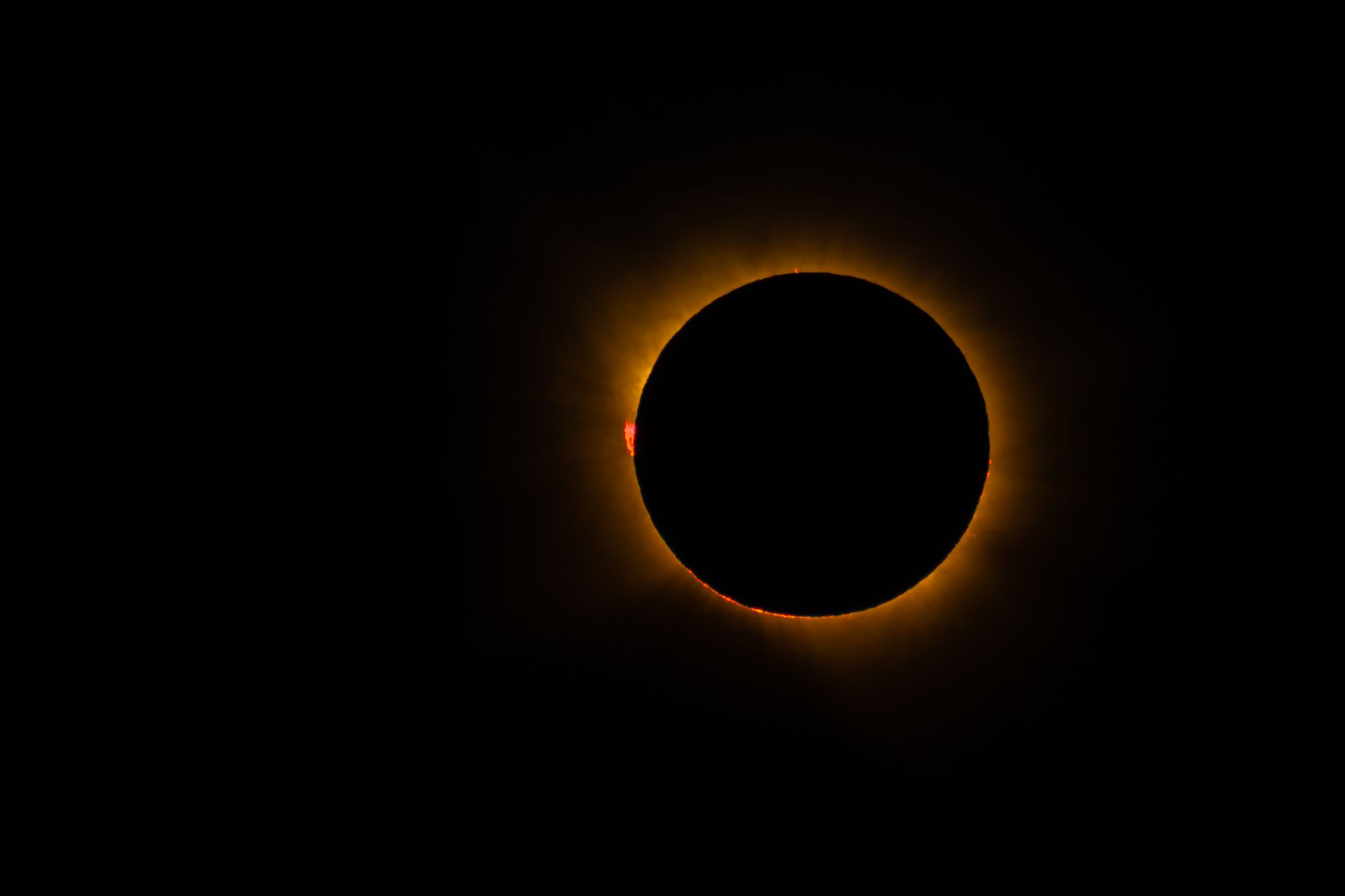
In a year of celestial phenomena, the skies over Spain offered a spectacle that will be etched in the annals of astronomy. On 17th August 2026, the Sun and Moon aligned to produce a total solar eclipse, but with a remarkable twist — a corona that shimmered in gold.
Traditionally, the solar corona, the Sun's outermost layer, appears in a pearly white hue. However, observers stationed in Benavente, Spain, were treated to an unusual sight. The corona, captured in high-dynamic-range (HDR) images, glowed with an unexpected golden tint. This rare phenomenon has sparked a flurry of interest among astronomers and enthusiasts alike.
The Science Behind the Gold
Scientists posit that the golden appearance could be attributed to atmospheric conditions unique to the region and the time of day the eclipse occurred. The Sun's position in the sky, combined with the local atmospheric composition, may have refracted the light in a manner that gave the corona its gilded glow. This hypothesis is still under scrutiny, with researchers eager to delve deeper into the data gathered during the eclipse.
While the corona basked in golden hues, a solar prominence on the Sun's edge stood out in stark contrast. The prominence, a loop of hot plasma, retained its vivid pink, adding another layer of beauty to the event.
A Window into Solar Mysteries
Beyond its aesthetic allure, this eclipse offers a rare opportunity for scientific exploration. The solar corona, although visible only during a total eclipse, holds clues about the Sun's magnetic field and the solar wind. By analysing this event, scientists hope to unlock more secrets about these celestial phenomena.
Such solar eclipses not only captivate the public but also serve as a reminder of the intricate dance of celestial bodies. As researchers continue to study the event, the golden corona of 2026 will likely remain a significant point of reference in solar research.