Crafting Ravana: Titarpur's Effigies Reflect Political Undercurrents
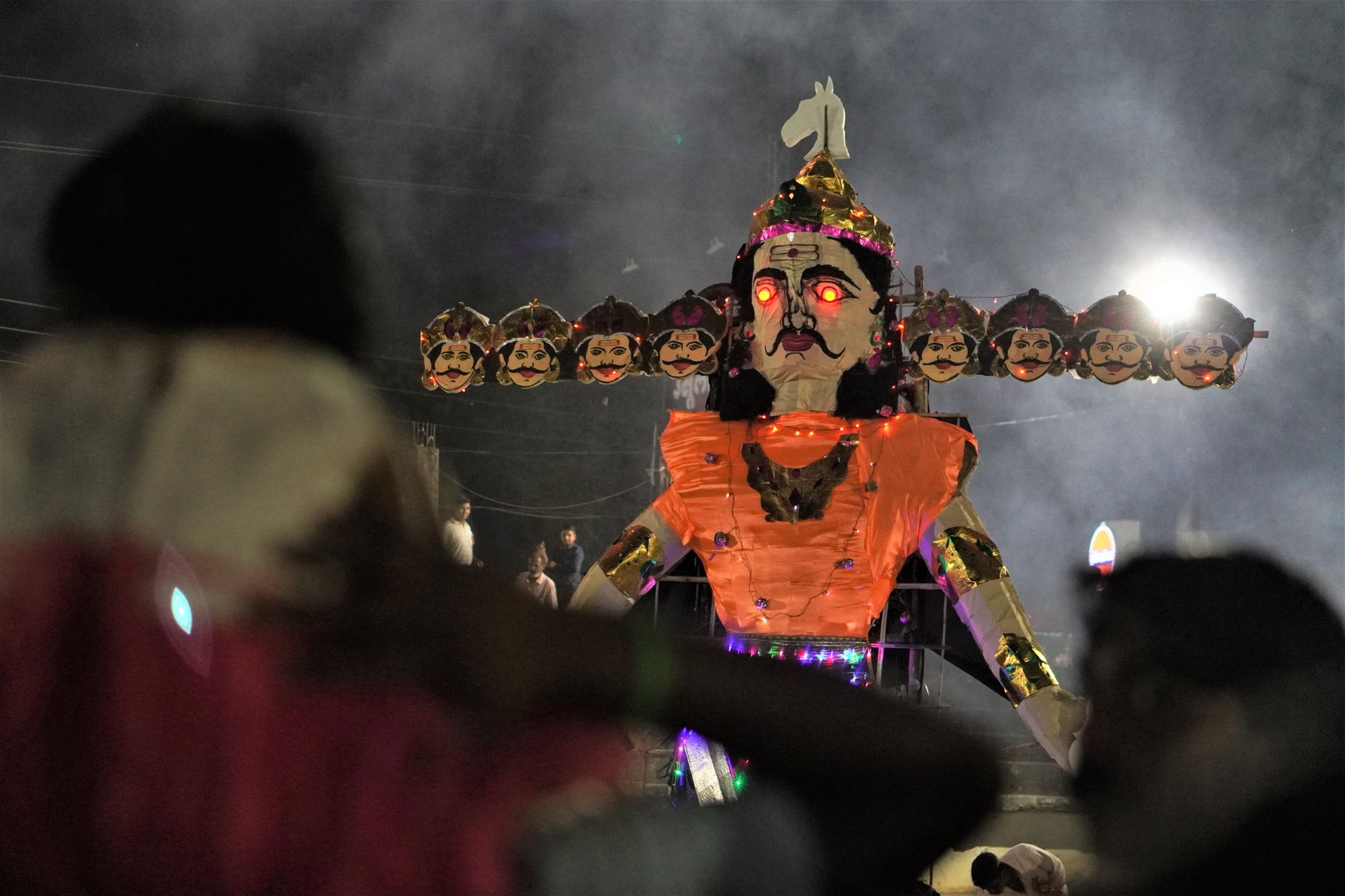
Amidst the bustling lanes of Titarpur, a small village in Delhi, craftsmen are deeply engrossed in the intricate task of creating Ravana effigies for the upcoming Dussehra festival. Yet, these effigies have evolved beyond mere representations of mythological defeat. They now stand as silent commentators on the prevailing political climate, capturing the essence of an increasingly divided society.
For generations, the creation of these towering figures has been a labour of love, skill, and tradition. However, in recent years, the narratives they embody have taken on a more complex hue. As political discourse in India becomes ever more charged and polarised, the effigies of Ravana have come to symbolise not just the vanquishing of evil, but also the contentious debates of the day.
A Mirror to Politics
The artisans of Titarpur find themselves at the crossroads of tradition and modernity. While the effigies continue to depict the ten-headed demon king's defeat, their symbolism extends beyond the religious. "Ravana today is as much about politics as it is about mythology," says Rajesh Kumar, a veteran craftsman whose family has been in the trade for decades. "Each head of Ravana could represent a different political issue," he adds with a wry smile.
Indeed, the effigies are beginning to reflect contemporary concerns. Whether it’s the spectre of corruption, the struggles with governance, or social disparities, the Ravana of Titarpur seems to encapsulate it all. Even the villagers, who have long been accustomed to the annual spectacle, acknowledge this shift. "These effigies don't fit my mental image of a man who forced Shiva to acknowledge his wisdom," remarks one villager, reflecting on the changing perceptions.
The Artisans' Challenge
In the heart of the village, the artisans face the challenge of balancing tradition with evolving narratives. The task is not just technical; it's profoundly philosophical. "We have to stay true to our roots while acknowledging the world around us," explains Sunita Devi, one of the few female artisans involved in this craft. The rising demand for effigies that echo current events has added a new dimension to their work.
This transformation in the symbolic meaning of Ravana is indicative of a broader cultural shift. As India grapples with the complexities of modern governance, the narratives that have traditionally brought communities together are being reshaped. In Titarpur, the effigies of Ravana stand as a poignant reminder of tradition's power to evolve and reflect the zeitgeist.