Decoding the Cosmic Dawn: First Supermassive Black Holes Explored
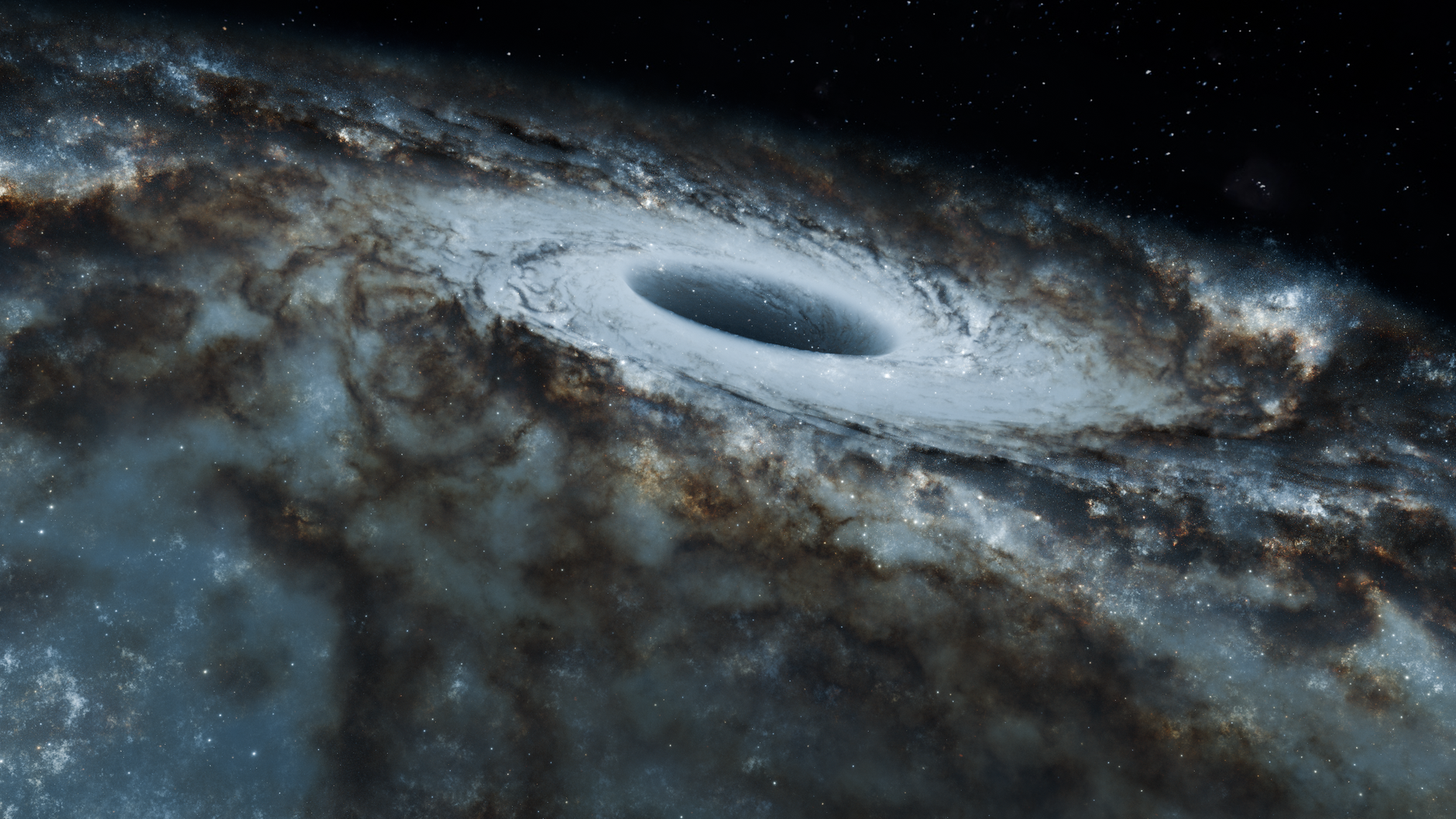
In a universe still in its infancy, the cosmic nursery of the first supermassive black holes has been unveiled, offering a glimpse into a time when the universe was less than 500 million years old. Researchers from the UAE University have made a groundbreaking discovery, measuring the environment where these colossal entities were forged.
Their study, published in a recent scientific journal, reveals that massive black hole seeds could form via direct collapse, an idea that challenges previous theories suggesting a more gradual growth from smaller black holes. This process likely occurred during a period known as the 'cosmic dawn', a time characterised by the first stars and galaxies illuminating the universe.
The Significance of the Discovery
Understanding the formation of supermassive black holes is crucial as they play a pivotal role in shaping galaxies, including our own Milky Way. These black holes, which can be billions of times more massive than the Sun, influence the formation and evolution of galaxies through their immense gravitational pull and energetic emissions.
The research utilised advanced cosmological radiation-hydrodynamic simulations, providing a vivid picture of the gas density distribution around these early black hole seeds. The colour scale of the simulations vividly illustrates the conditions of the universe at redshift z=12, a time when the universe was a mere fraction of its current age.
Implications for Future Research
This new understanding opens avenues for further exploration into the early universe and the evolution of cosmic structures. It presents a compelling challenge to astronomers and physicists to refine models of galaxy formation and to seek out observational evidence that can corroborate these theoretical findings.
As we peer deeper into the cosmos, the quest to unravel the mysteries of the universe's formative years continues. This discovery not only enriches our understanding of supermassive black holes but also enhances our grasp of the universe's complex history.