Delhi's Air Crisis: Minister Yadav Calls for Urgent Action
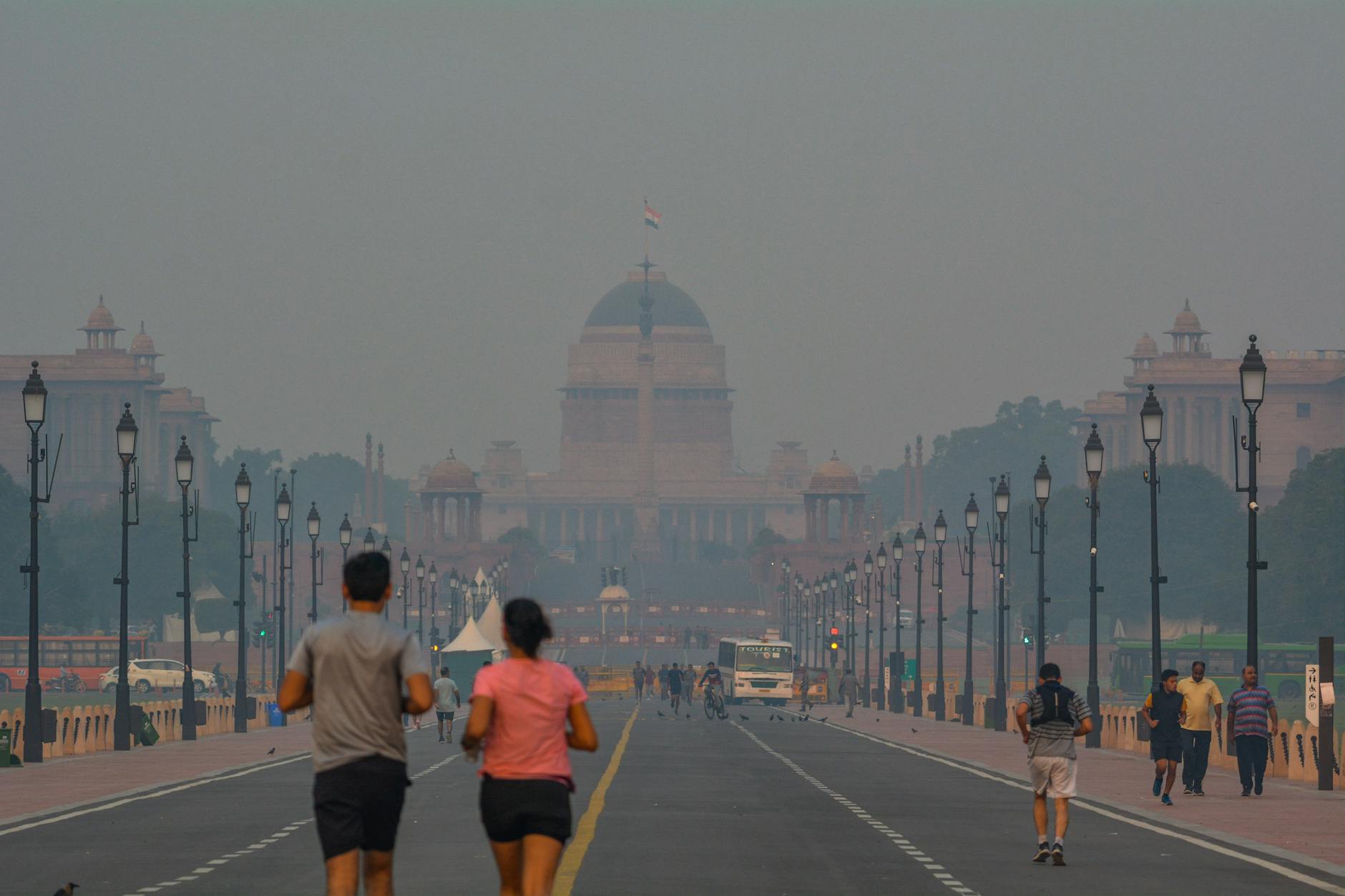
Standing amidst the smog-laden skyline of Delhi, Environment Minister Bhupender Yadav has issued a clarion call for action. His message is clear: the time for talking is over; the time for implementation is now. In a series of high-level meetings, Yadav underscored the urgency of deploying anti-pollution strategies to salvage Delhi's air quality, which has been deteriorating at an alarming rate.
The minister's agenda is ambitious. It encompasses a multi-pronged approach targeting industrial emissions, vehicular pollution, and urban greening. 'We've seen some progress,' Yadav remarked, noting that 227 out of 240 industrial estates in the National Capital Region (NCR) have transitioned to cleaner Piped Natural Gas (PNG). Yet, the unchecked operations of industries outside designated zones continue to pose a significant hurdle.
Traffic congestion, another major contributor to pollution, is squarely in Yadav's sights. The minister has advocated for smart traffic management systems, designed to reduce gridlock and, consequently, vehicular emissions. 'We are focusing on real-time traffic solutions,' he asserted, emphasising the importance of technology in combating pollution.
Yet, it is not just industry and traffic that are under scrutiny. Road dust, a perennial problem, has been targeted with plans for extensive road redevelopment and greening initiatives. Over 3,300 kilometres of roads are slated for redevelopment, with measures to control dust woven into the planning process. 'We aim to involve local youth in large-scale plantation drives,' Yadav stated, highlighting the dual benefits of such initiatives for both air quality and community engagement.
While Yadav's strategies mark a step in the right direction, the execution will require concerted effort from both public and private sectors. The challenges are manifold, but with such initiatives, there is a glimmer of hope that Delhi might one day breathe easy again.