Early Universe: Cradle of the First Supermassive Black Holes
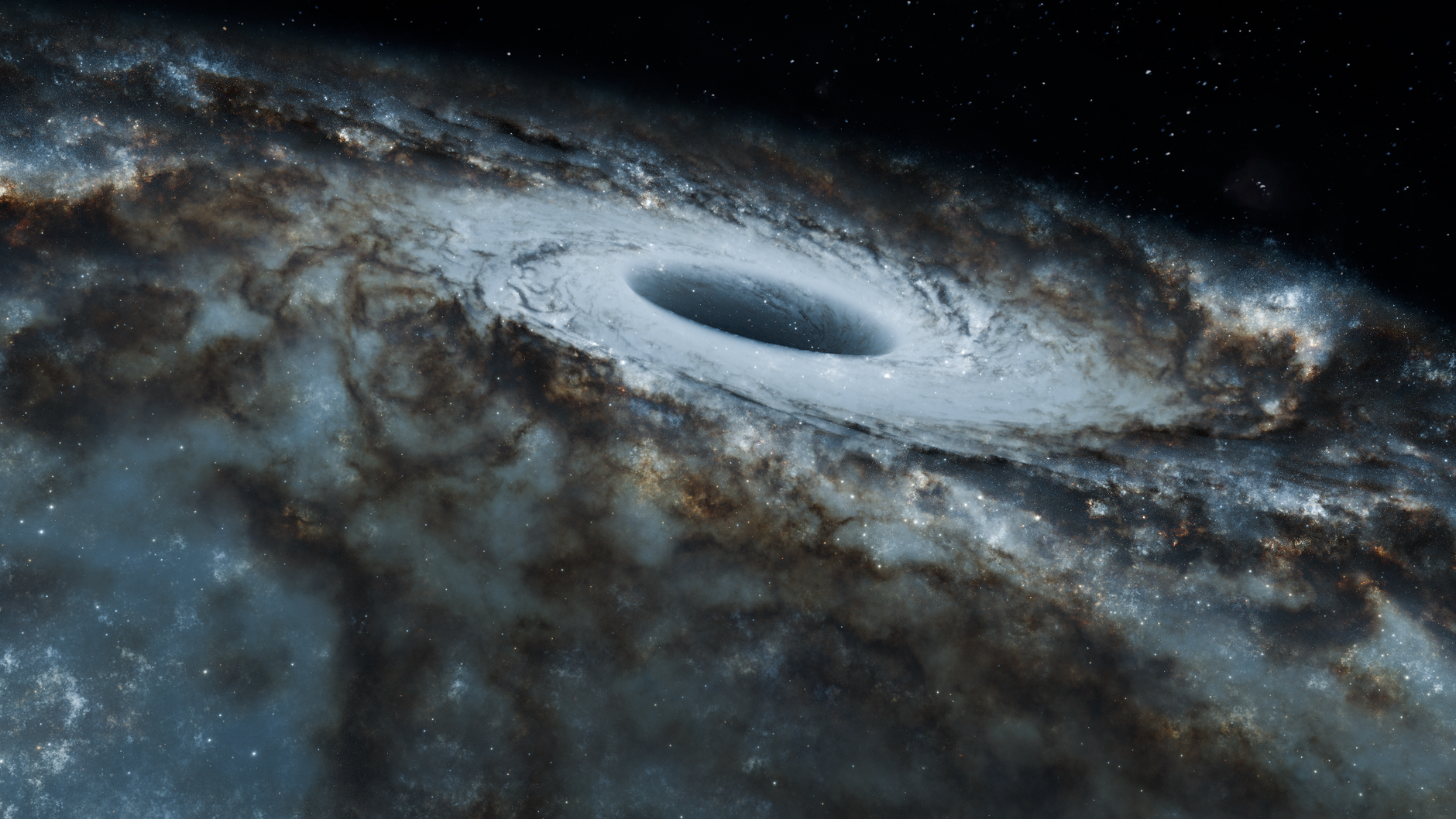
In a pioneering leap for astrophysics, researchers have unlocked new insights into the primordial environments that housed the universe's first supermassive black holes. These cosmic behemoths, which emerged a mere 500 million years post-Big Bang, have long been a subject of scientific intrigue and speculation.
The study, employing advanced cosmological radiation-hydrodynamic simulations, reveals that these massive black holes were not mere anomalies but the inevitable offspring of early cosmic structure formation. Dr. Whalen, a lead researcher, describes them as 'children of the cosmic web', underscoring their integral role in the universe's evolution.
Cradles of Cosmic Giants
Using a colour scale to depict gas density distribution, the simulations provide a vivid picture of the conditions at redshift z=12, a time when the universe was still in its infancy. It is in these dense gas halos that the seeds of supermassive black holes are believed to have taken root, eventually growing into the titanic forces observed at the centres of galaxies like Messier 87.
This revelation challenges the conventional bottom-up model, which posits that black holes form from the remnants of massive stars. Instead, the direct collapse theory suggests a more dramatic genesis, wherein the gravitational pull of dense gas clouds spawns these gargantuan entities.
Implications for Modern Astronomy
Understanding the formation of these early black holes offers a window into the processes that shaped the cosmos. As these supermassive entities continue to influence galactic formation and evolution, they hold clues to the universe's past and its future trajectory.
The findings not only enrich our comprehension of cosmic history but also set the stage for future explorations into the universe's most enigmatic structures. As telescopes grow ever more powerful, the secrets of these ancient black holes are closer than ever to being fully illuminated.