Gluon Discovery in Protons Challenges Fundamental Physics
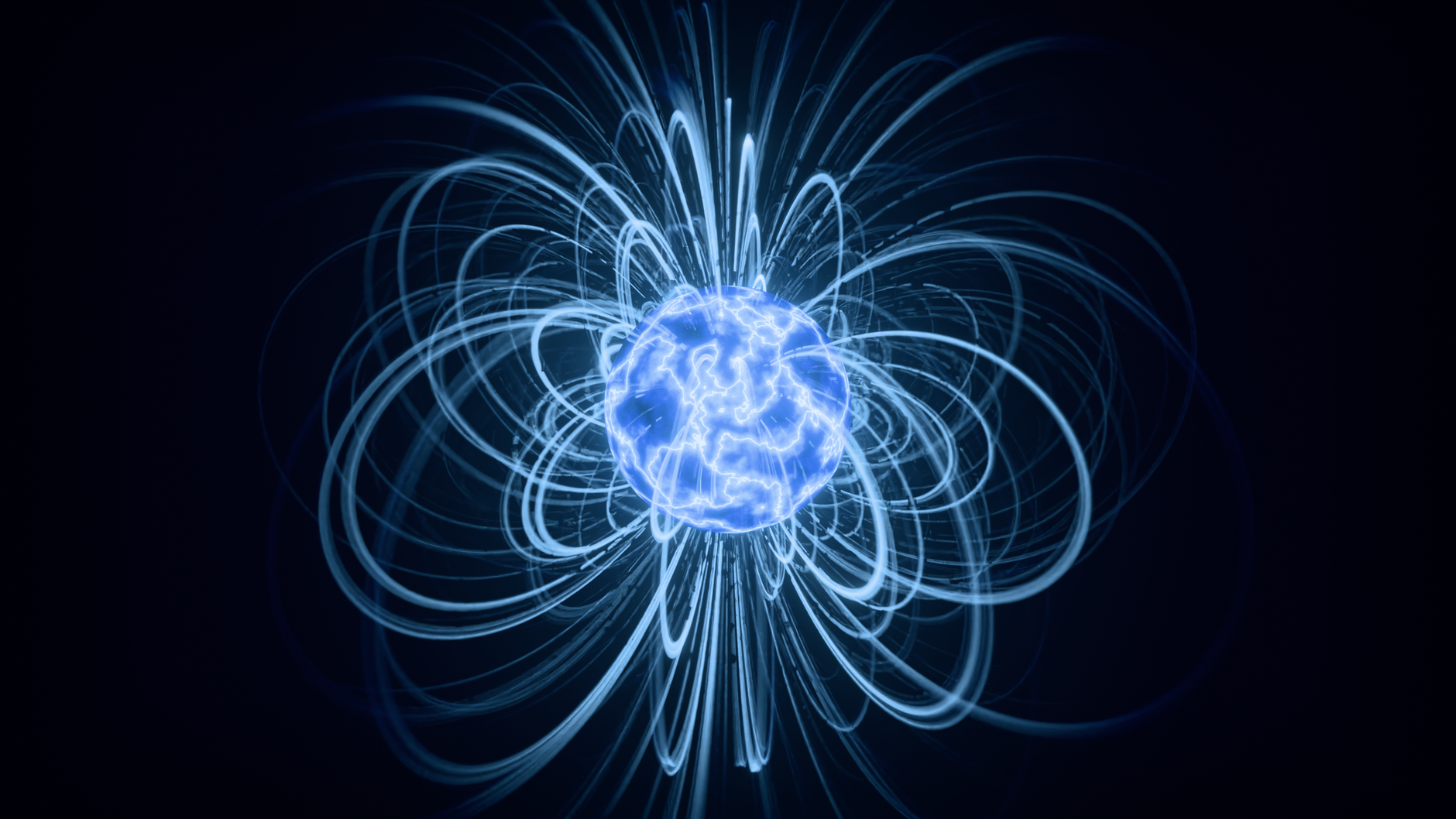
In an astonishing revelation that could send ripples through the world of physics, researchers have unveiled a hidden gluon structure within protons. This finding challenges the fundamental assumption that baryon numbers are exclusively carried by quarks, the subatomic particles long believed to form the core of atomic nuclei.
The discovery stems from data collected at the Relativistic Heavy Ion Collider (RHIC), which suggests that the baryon number is not merely the sum of the three valence quarks traditionally associated with protons. Instead, a Y-shaped junction of gluons, the particles responsible for binding quarks together, may also carry this fundamental property.
Gluons, often overshadowed by their quark counterparts, have traditionally been considered the 'glue' that holds the atomic nucleus together. However, this new research indicates they may play a far more pivotal role than previously thought. If gluons indeed carry baryon numbers, the implications could be profound, necessitating a significant revision of the standard model of particle physics.
The Complexity of Protons
Protons, despite being one of the smallest building blocks of matter, are anything but simple. The traditional model, taught in classrooms worldwide, presents protons as consisting of three quarks held together by gluons. However, this new insight suggests a more intricate structure, where gluons themselves contribute to the proton's baryon number.
Such a revelation could radically alter textbooks and educational curricula, prompting a re-evaluation of how we understand the very fabric of matter. It underscores the complexity and dynamism of subatomic particles, challenging the notion of them as static entities.
Implications for the Future
While the discovery is still in its early stages, its potential implications for theoretical and experimental physics are immense. Researchers must now grapple with the challenge of integrating this new understanding into existing frameworks, a task that could lead to further insights into the universe's fundamental forces.
As scientists continue to delve deeper into the mysteries of subatomic particles, one thing is clear: the world of physics is far from settled. Each discovery opens new avenues for exploration, reminding us that our understanding of the universe is continually evolving.