Hubble Reveals Asymmetric Spiral Galaxy in Stunning Detail
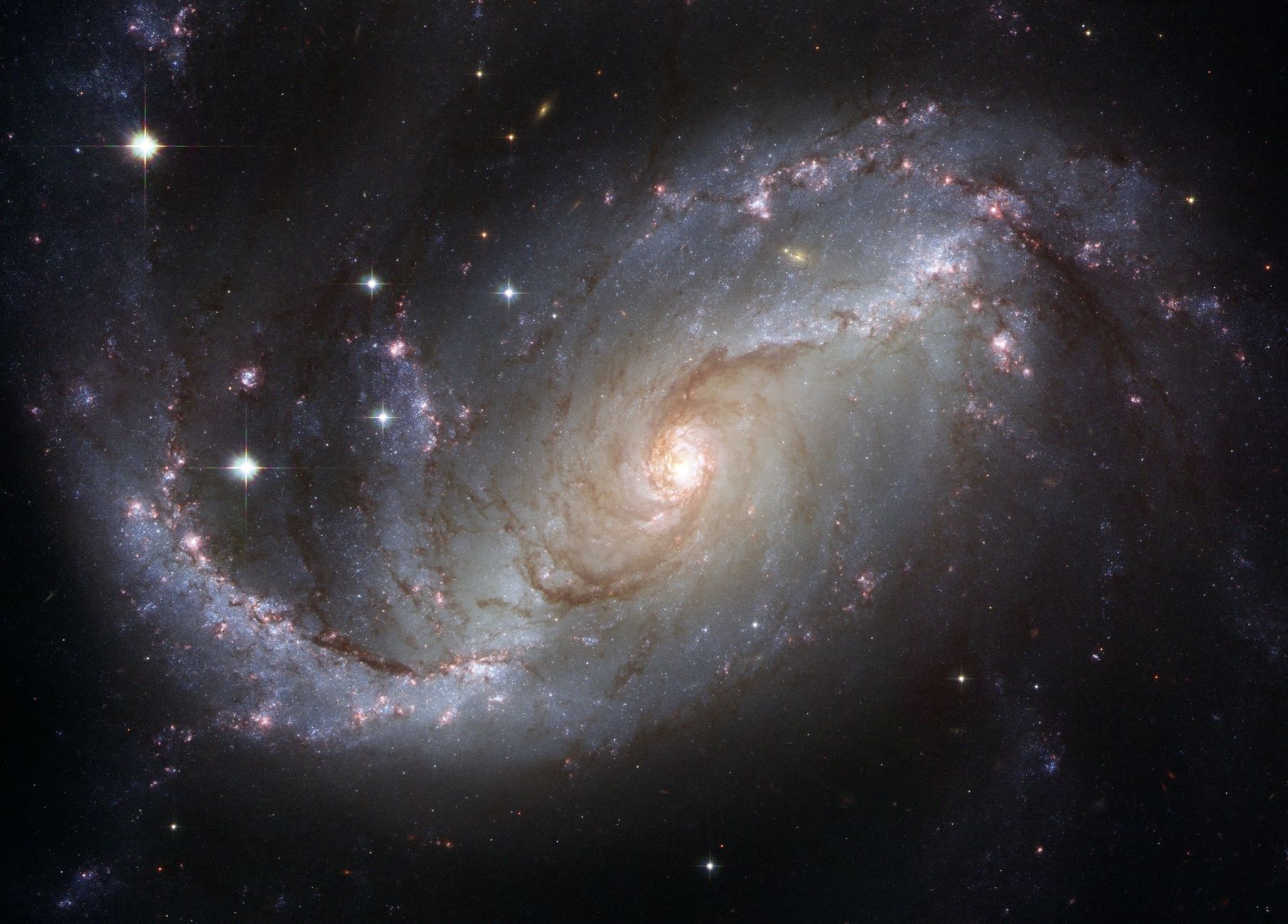
In a cosmic portrait that blends beauty with intrigue, the Hubble Space Telescope has unveiled a peculiar spiral galaxy, NGC 4654, displaying an asymmetric structure that defies conventional celestial symmetry. Situated some 72 million light-years from Earth within the Virgo Cluster, this galaxy offers a unique spectacle with its one-sided spiral arm, casting a long, ethereal tail of gas into the vast darkness.
On one flank, NGC 4654 presents a rounded, neatly defined edge, while the opposite side witnesses a dramatic extension of gas, as if the galaxy were reaching out into the cosmic void. This striking imbalance is not just a visual curiosity; it provides astronomers with valuable clues into the dynamic forces at play in the universe. The galaxy's asymmetry suggests interactions with neighbouring celestial bodies or perhaps the influence of unseen gravitational forces, which could be pulling the gas into its elongated form.
The Science Behind the Spiral
The peculiar structure of NGC 4654 invites speculation and study, particularly concerning the role of gravitational interactions in shaping galaxies. Such distortions are often attributed to gravitational tugs from nearby galaxies or the influence of dark matter halos, which may not be visible but exert a powerful force. As these forces act over millions of years, they can stretch and warp galaxies, creating the asymmetric features observed by Hubble.
The Hubble Space Telescope, a joint mission by NASA and the European Space Agency, continues to offer unprecedented views of the cosmos, its keen eye capturing details that ground-based telescopes cannot. By studying these images, scientists aim to unravel the history of galactic interactions and the role they play in the evolution of the universe.
Implications for Cosmic Understanding
The discovery of such a one-sided spiral structure in NGC 4654 is more than a mere astronomical oddity. It underscores the dynamic and ever-changing nature of galaxies, serving as a reminder that the universe is far from static. Each new image captured by Hubble adds a piece to the cosmic puzzle, helping scientists to construct a more comprehensive picture of how galaxies form, interact, and evolve over billions of years.
As NGC 4654 continues its silent dance in the Virgo Cluster, it stands as a testament to the complexity and beauty of our universe. The insights gained from studying such galaxies not only enhance our understanding of the cosmos but also inspire a sense of wonder about the myriad forces that shape the heavens above.