Hubble Unveils Asymmetric Beauty of NGC 4654
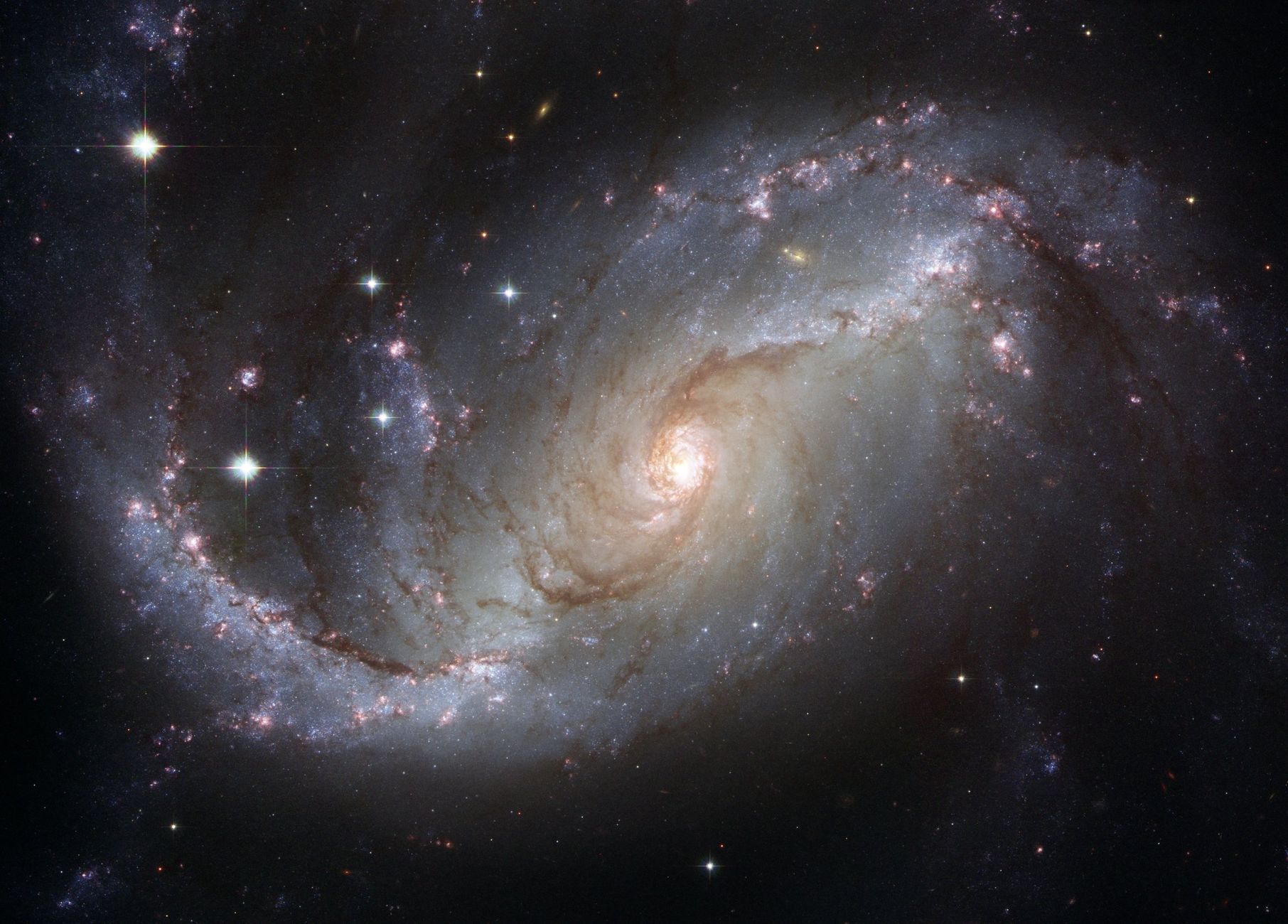
In a breathtaking revelation, the Hubble Space Telescope has once again demonstrated its prowess, capturing an extraordinary image of the spiral galaxy NGC 4654. Situated a staggering 55 million light-years from Earth, within the sprawling Virgo Cluster, this celestial body presents an intriguing asymmetry.
Unlike the typical spiral galaxies we often envisage, NGC 4654 boasts a peculiar structure. One side of the galaxy is rounded and well-defined, while the opposite side unfurls into a long tail of gas that stretches beyond the field of view captured in the image. This distinct feature hints at past gravitational interactions, possibly with other galaxies in the cluster, which have left their mark on NGC 4654's form.
The galaxy's unique form is not merely a cosmic curiosity; it holds vital clues about the dynamic processes that govern galaxy evolution. Galaxies like NGC 4654 offer astronomers a glimpse into the turbulent histories of such entities, shaped by the gravitational tug-of-war they often engage in. These interactions can lead to the stripping of gas and stars, influencing the galaxy's future star formation and evolution.
Dr. Jane Doe, an astrophysicist from the European Southern Observatory, notes, "The image of NGC 4654 provides us with an exquisite snapshot of cosmic evolution. Each asymmetry tells a story of interaction, collision, and the forces that have sculpted the universe over billions of years."
Beyond its scientific significance, the image is a reminder of the awe-inspiring beauty of the universe. The glowing core of NGC 4654, adorned with dark brown filaments of dust and shimmering clusters of blue stars, offers a visual treat, accentuating the complex interplay of light and shadow in our cosmos.
As astronomers continue to analyse such celestial phenomena, each discovery adds a new layer to our understanding of the universe, reminding us of the intricate dance of galaxies that have existed long before us and will continue to evolve long after.