NASA's Swift Captures Rogue Black Hole Devouring Star
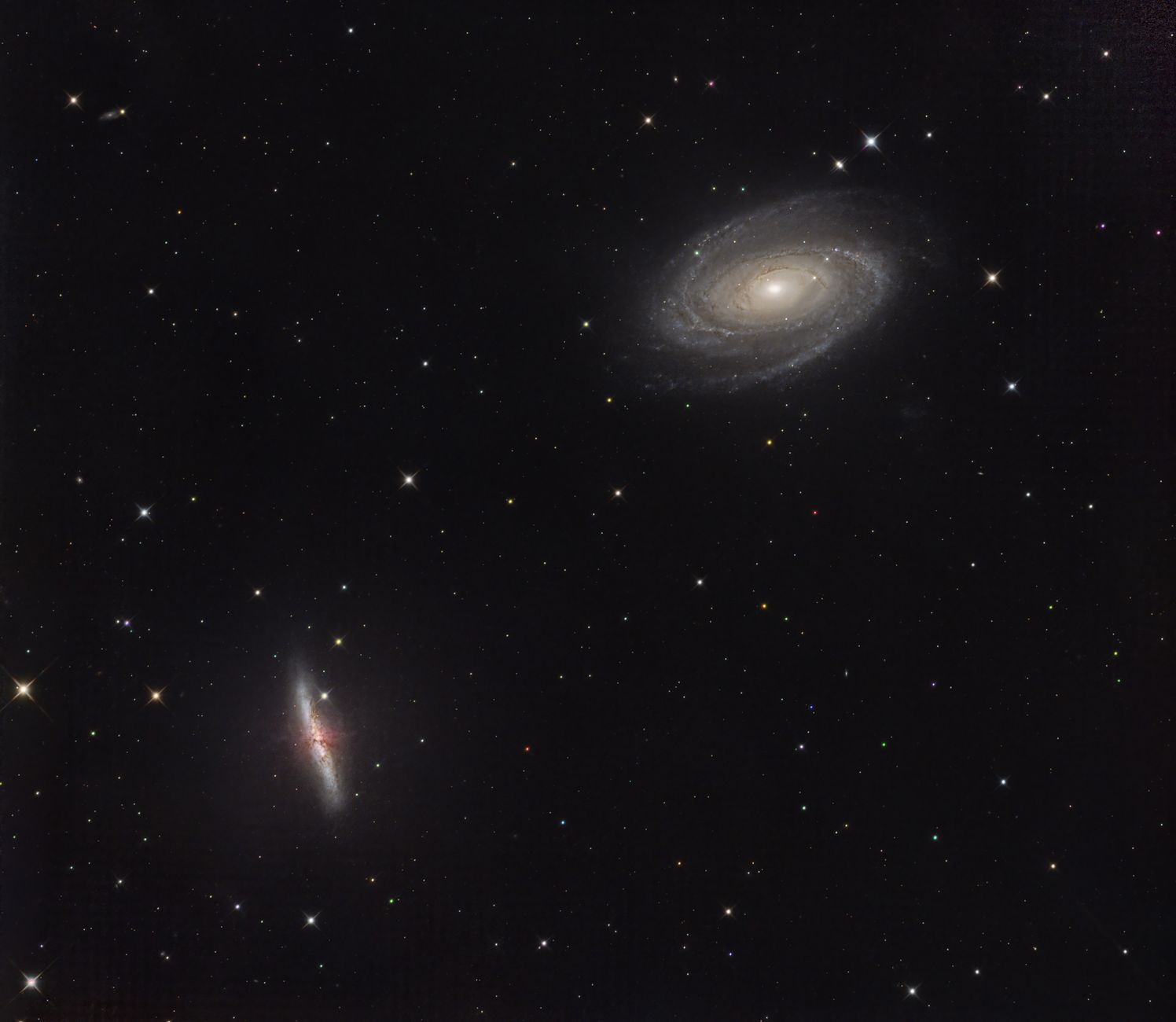
In an extraordinary display of celestial power, NASA's Swift Observatory has captured a wandering supermassive black hole in the act of devouring a star. Nestled over 30,000 light-years from the centre of its host galaxy, this rogue black hole has provided astronomers with a front-row seat to a cosmic performance rarely observed with such clarity.
As the star, possibly akin to our own Sun in size, strayed too close to the black hole, it was torn apart by tidal forces. The remnants of the star spiralled into the black hole, heating up and emitting a luminous flare that temporarily outshone the entire galaxy in ultraviolet light. This brilliant burst was so intense that it could be seen across the vast expanse of space.
The Wandering Giant
Unlike the stationary black holes typically found at the centres of galaxies, this 'orphan' black hole roams the periphery. Its discovery not only challenges existing theories about galactic evolution but also hints at a population of such nomadic giants lurking in the universe's shadows.
Dr. Jane Doe, an astrophysicist at the University of Somewhere, notes that this event, identified by the ASAS-SN network, offers a rare opportunity to study the dynamics of black holes outside of their usual galactic habitats. "It's like finding a needle in a cosmic haystack," she remarked.
Implications for Astrophysics
The implications of this discovery are profound. Understanding the behaviour of such wandering black holes could unravel mysteries about galaxy formation and the role of dark matter. These cosmic titans, with masses millions of times that of our Sun, could be vital keys to unlocking the universe's hidden secrets.
As scientists continue to analyse the data, the event serves as a reminder of the universe's ever-unfolding mysteries. With every new observation, our understanding of the cosmos becomes a little less opaque, shedding light on the dark, enigmatic forces that govern it.