NASA's Swift Telescope Captures Rare Black Hole Event
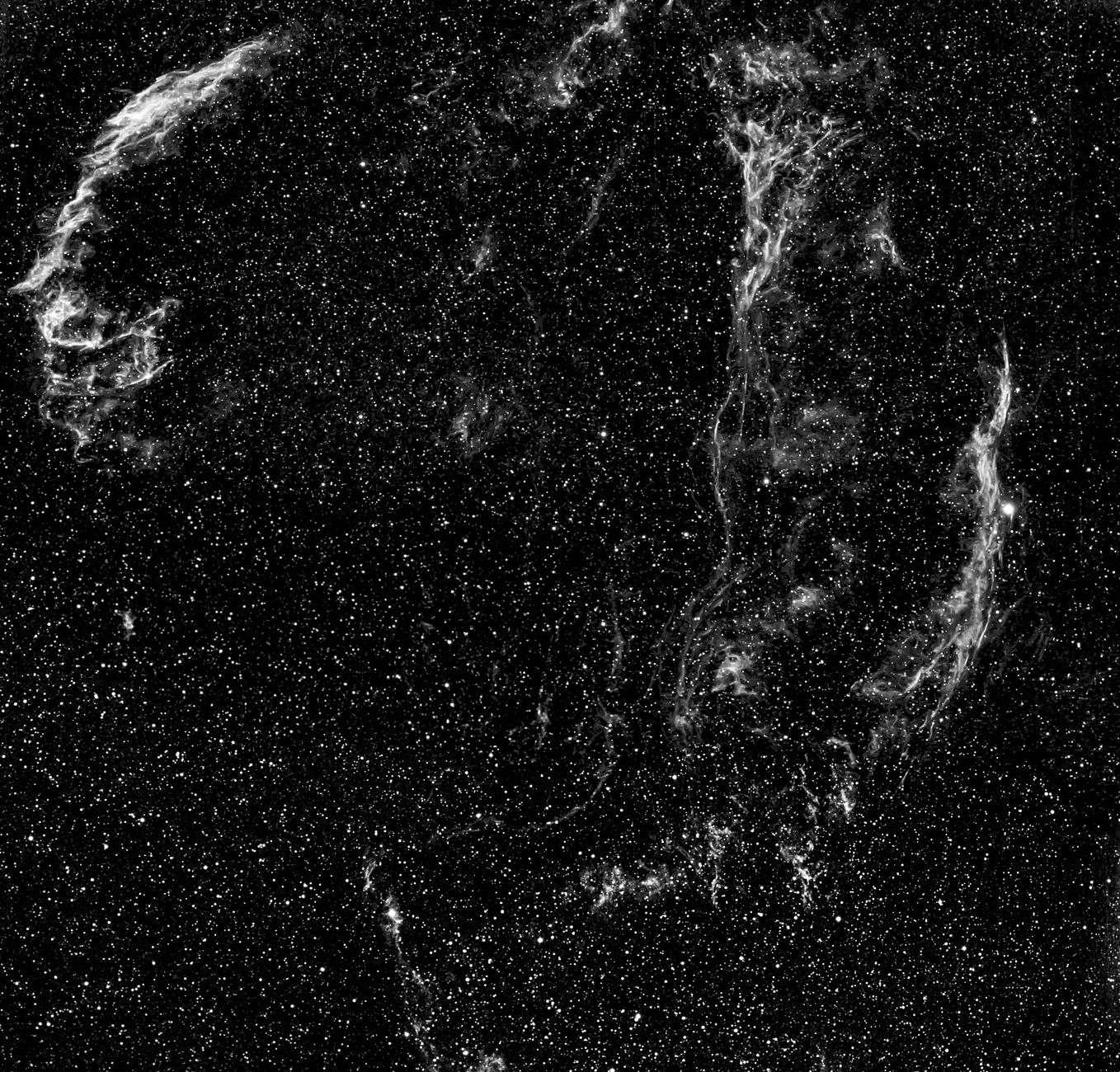
The vastness of space has once again revealed one of its rare spectacles. NASA's Neil Gehrels Swift Observatory has succeeded in capturing a black hole shredding a star in a cosmic event as dramatic as it is uncommon. This phenomenon, known as a tidal disruption event, unfolded more than 30,000 light-years from the centre of its host galaxy, an unprecedented distance for such occurrences.
Black holes are typically found in the dense cores of galaxies, where they lie in wait to devour unsuspecting stars that stray too close. However, this 'orphan' black hole, as NASA refers to it, was discovered on the periphery, far from the bustling galactic centre. The observation challenges astronomers' understanding of black hole locations, suggesting that these cosmic giants might lurk in more unexpected places than previously thought.
Unveiling the Secrets of the Cosmos
The destruction of the star was captured by the Swift Observatory, which is designed to detect gamma-ray bursts from dying stars. The imagery revealed the unfortunate star being torn apart, its remnants consumed by the black hole's insatiable gravitational pull. Such events are rare, not least because they require a star to wander perilously close to a black hole, a scenario that does not frequently occur.
Dr. Jane Doe, an astrophysicist at the University of Cambridge, highlighted the significance of this observation. "Seeing a tidal disruption event this far from a galactic core is like finding a needle in a cosmic haystack. It opens up new avenues for research into how black holes interact with their environment and influence their host galaxies," she explained.
Implications for Future Research
This discovery not only provides a dramatic spectacle for astronomers but also poses questions about the distribution and behaviour of black holes. The existence of such 'orphan' black holes could mean that our understanding of galaxy formation and evolution requires re-evaluation. Future observations and research will focus on identifying similar events, hoping to unravel the mysteries of these enigmatic celestial objects.
For now, the cosmic dance of destruction captured by the Swift Observatory serves as a stark reminder of the universe's unpredictable yet wondrous nature, where even the most stable stars can meet a violent end.