Nepal's Glacial Perils: A Growing Threat to the Himalayas
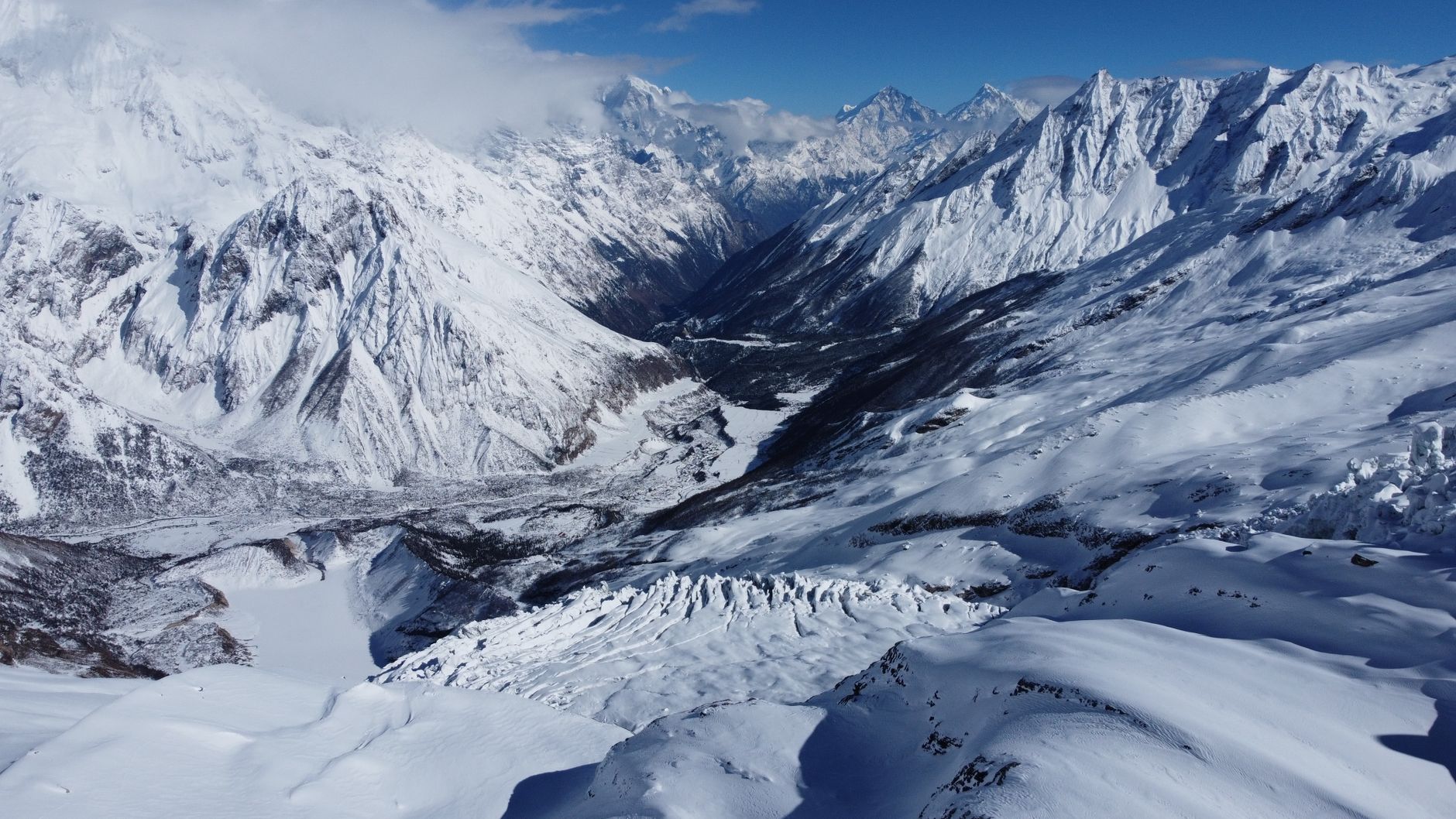
In the serene yet treacherous heights of Nepal, nature has once again shown its formidable power. A recent glacial collapse, registering a seismic event of magnitude 5.2, has sent shockwaves across the region, both literally and figuratively. This disaster, unfolding near the border with Tibet, is a stark reminder of the precarious balance between the planet's geological forces and the accelerating effects of climate change.
Experts are still piecing together the full extent of the collapse, but initial estimates suggest a massive volume of ice and rock, ranging from half a million to tens of millions of cubic metres, has been displaced. The incident has left hundreds dead, and the threat of further calamity looms large as debris blocks the natural flow of rivers, forming perilous lakes.
Nepal's unique geography, perched at the collision point of the Indian and Eurasian tectonic plates, makes it particularly vulnerable. The region experiences a steady tectonic creep of about 20 millimetres per year, a slow but relentless force that adds to the instability of its glaciers. Coupled with rising atmospheric temperatures, the conditions are ripe for such disasters.
While the immediate impact is devastating for Nepal, the implications extend far beyond its borders. India, sharing the same Himalayan range, faces similar risks. Thousands of glaciers dot the Indian Himalayas, many of which feed into glacial lakes that are prone to sudden outbursts.
The recent catastrophe serves as a cautionary tale for the entire region. As Nepal's disaster authority issues warnings about rising lake levels, the risk of additional flooding hangs ominously over already vulnerable communities.
In the broader context, this is not just a natural disaster but a clarion call for greater international cooperation and understanding of Himalayan ecology. The need for comprehensive monitoring and risk assessment has never been more urgent. As climate change accelerates, so too does the need for preparedness and adaptation strategies that transcend borders.