New Study Suggests 'Empty' Space May Not Be So Void After All
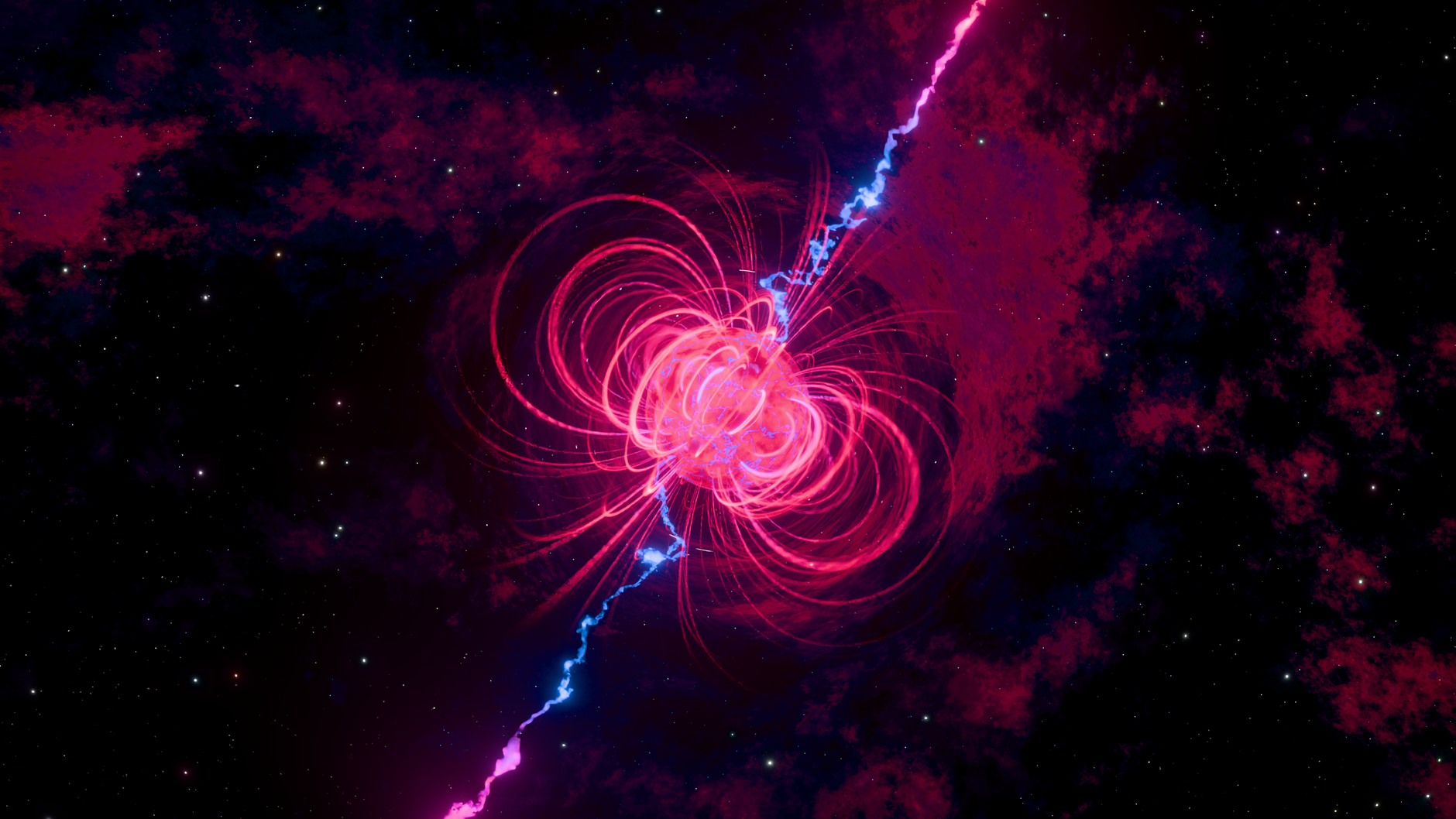
In an intriguing turn of events, scientists may have finally untangled one of the universe's long-standing enigmas. For decades, the notion that space is a vast, empty void has been a staple of our cosmic understanding. However, recent research suggests that this 'emptiness' might be more of an illusion than a reality.
Utilising the extraordinary characteristics of the ultra-magnetic star 1E 1547.0-5408, astronomers have observed a quantum effect known as vacuum birefringence. This phenomenon, predicted as far back as 1936 by Werner Heisenberg and Hans Euler, implies that space, under certain conditions, acts like a prism, altering the path of light that passes through it. The study, published in the journal Nature, marks a significant step forward in quantum physics.
What is Vacuum Birefringence?
Vacuum birefringence occurs when a magnetic field is so intense that it affects the vacuum itself, causing light to split into different polarisations. In simple terms, the vacuum behaves like a crystal, changing the way light travels through it. The implications of this are profound, offering insights into the very fabric of the cosmos.
The findings provide compelling evidence that the vacuum of space is not as void as traditionally thought. Instead, it may be teeming with activity, albeit on an imperceptible scale. This opens new avenues for exploring quantum mechanics, potentially reshaping our understanding of the universe.
Implications of the Discovery
Should these observations be confirmed, they could herald a paradigm shift in how we perceive space. The idea that space is empty has underpinned much of classical physics, but this discovery suggests a richer, more complex landscape.
In practical terms, understanding vacuum birefringence could enhance our ability to study other cosmic phenomena, such as black holes and neutron stars. It may also offer a new lens through which to view the early universe, providing clues about its infancy and evolution.
As scientists continue to unravel the mysteries of the cosmos, this study serves as a reminder of the universe's endless surprises. The concept of an 'empty' space may soon be relegated to the annals of history, replaced by a more nuanced understanding of our cosmic neighbourhood.