Revelation in Dark Matter: Forces Defying Expectations
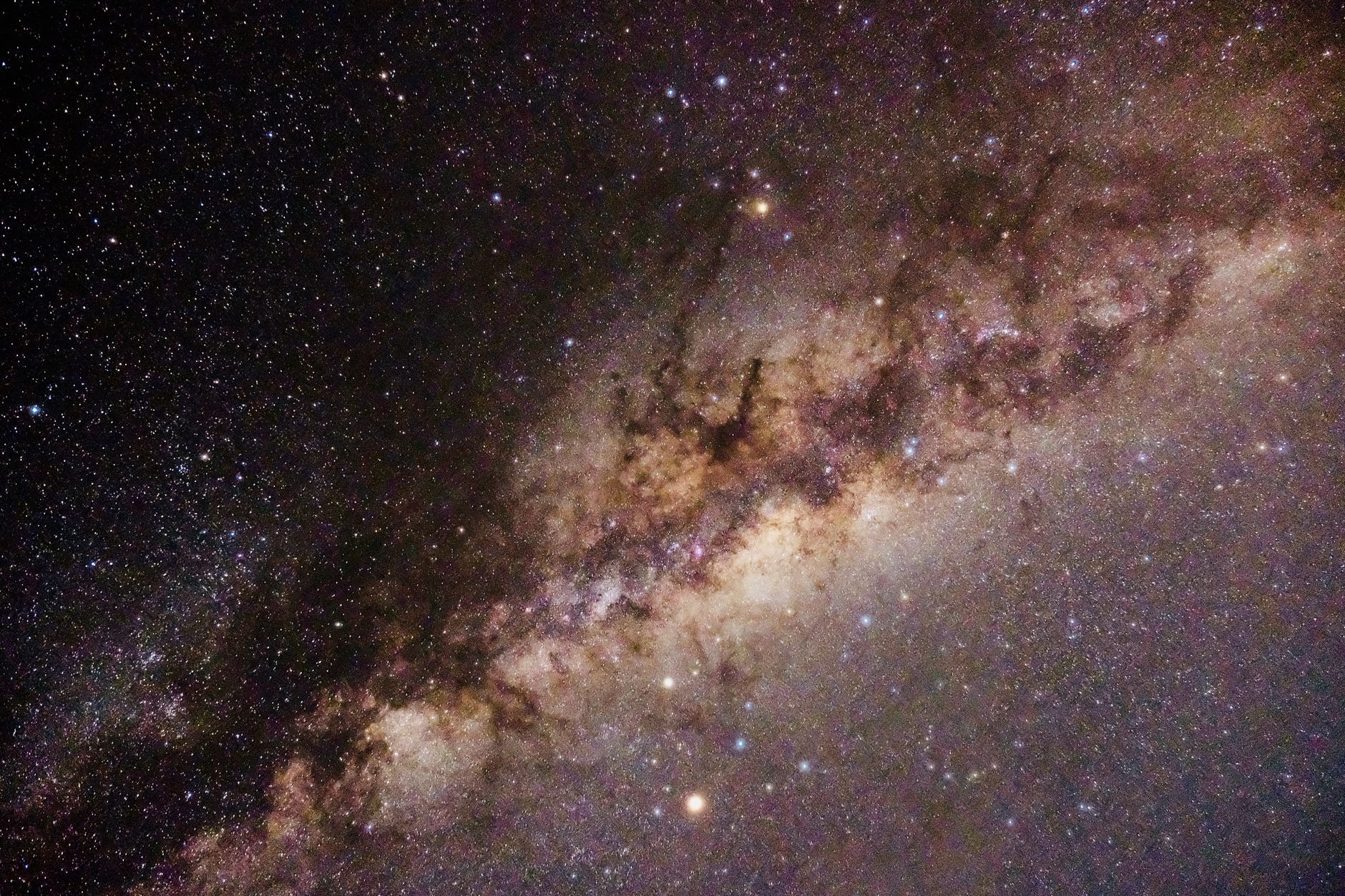
The enigmatic nature of dark matter has taken another intriguing turn, as scientists uncover forces that defy their expectations. Contrary to the long-held belief that dark matter merely clusters due to its gravitational pull, recent findings suggest these particles may also experience an additional force that paradoxically lightens them as the universe expands.
For decades, dark matter has been a cornerstone of cosmological research. It makes up approximately 85% of the universe's mass, yet remains invisible, interacting only through gravity. The latest revelation complicates this narrative, hinting at a hidden interaction that could reshape our understanding of cosmic mechanics.
The Unexpected Force
The concept of dark matter exerting an unexpected force is more than just an academic curiosity. It raises profound questions about the fundamental forces that govern the universe. According to the new research, as dark matter particles draw together, the very force that clusters them might simultaneously contribute to a reduction in their effective mass. This counterintuitive phenomenon could have far-reaching implications for how we model the universe's expansion.
Understanding this hidden force requires a departure from traditional theories. While dark matter does not interact with electromagnetic forces and remains unseen, its gravitational influence is undeniable. The new findings suggest that there might be more to dark matter's influence than previously assumed, potentially involving interactions that have yet to be fully understood.
Implications for Cosmology
The potential existence of such a force could alter our understanding of dark energy and dark matter's roles in cosmic evolution. Currently, dark energy is theorised to drive the universe's accelerated expansion. Yet, if dark matter itself is subject to forces that affect its mass, this could lead to revisions in how we interpret cosmological data.
While these developments are still in their infancy, they underscore the dynamic nature of astrophysical research. As scientists continue to unravel these mysteries, the answers could redefine our grasp of the universe's structure and behaviour. With each discovery, the cosmos offers more questions, keeping the scientific community on a perpetual quest for understanding.