Revolutionary Images Unveil Sun's Secret Whirlpools
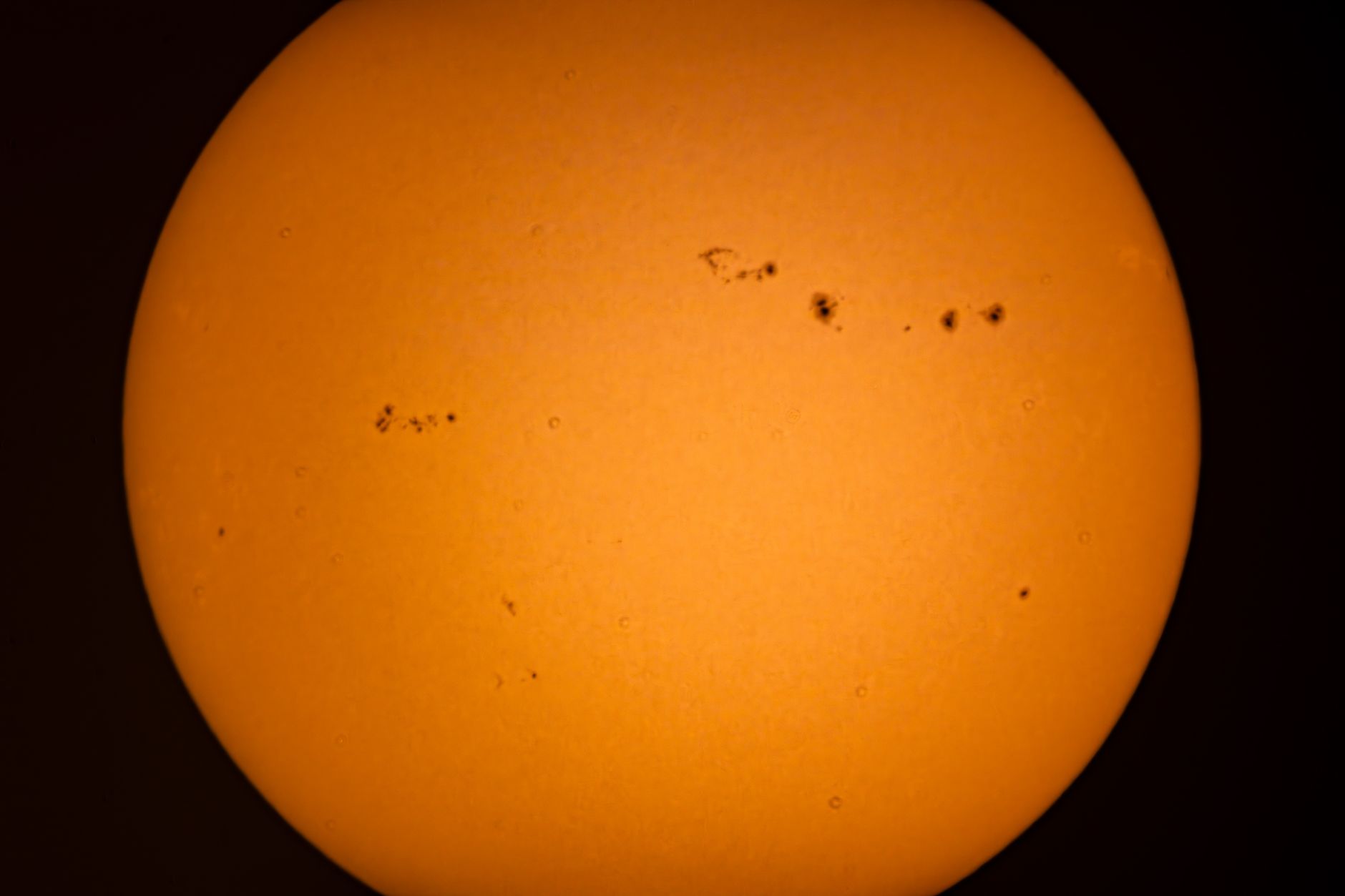
In a development that could fundamentally alter our understanding of solar physics, the Parker Solar Probe and the Inouye Solar Telescope have provided an unprecedented view of the sun’s dynamic surface. These images, capturing the sun's photosphere in remarkable detail, reveal the presence of tiny whirlpools — an indication of the Kelvin-Helmholtz instability (KHI) — swirling across the sun’s surface.
The sun’s photosphere, a vibrant, ever-changing tapestry, is shaped by magnetic fields and plasma currents. Until now, much of its intricate behaviour was shrouded in mystery. The recently captured images expose the fine-scale magnetic structures and dark striations associated with KHI, a phenomenon previously thought to occur only under specific conditions.
These findings are not just a visual treat for astronomers but a scientific revelation. The images highlight how these plasma whirlpools, driven by magnetic forces, contribute to solar activity. This could significantly aid our understanding of phenomena such as solar flares and coronal mass ejections, which have a direct impact on space weather and, consequently, on Earth's technological infrastructure.
The Role of Kelvin-Helmholtz Instability
Kelvin-Helmholtz instability occurs when there is a velocity difference across the interface of two fluids, leading to the formation of wave-like structures. On the sun, these instabilities manifest as tiny whirlpools in the plasma, challenging previous assumptions about solar dynamics.
Dr. Emma Thompson, a solar physicist involved in the analysis, remarked, “It's simply astonishing to witness the sun teeming with such intricate structures. These images confirm that KHI plays a crucial role in shaping solar phenomena, providing a fresh perspective on how the sun’s magnetic environment evolves.”
Implications for Space Weather Prediction
Understanding these processes is not merely an academic exercise. Solar activity impacts space weather, which can disrupt satellite communications, GPS systems, and even power grids on Earth. By delving deeper into these newly observed phenomena, scientists hope to improve predictions of solar storms, safeguarding our technological world.
As scientific instruments continue to advance, the potential for new discoveries about our nearest star seems boundless. With each revelation, we edge closer to unravelling the sun's many mysteries, enhancing our ability to predict and prepare for the celestial influences that extend far beyond its fiery surface.