Scientists Craft Black Hole from Light to Probe Hawking's Theory
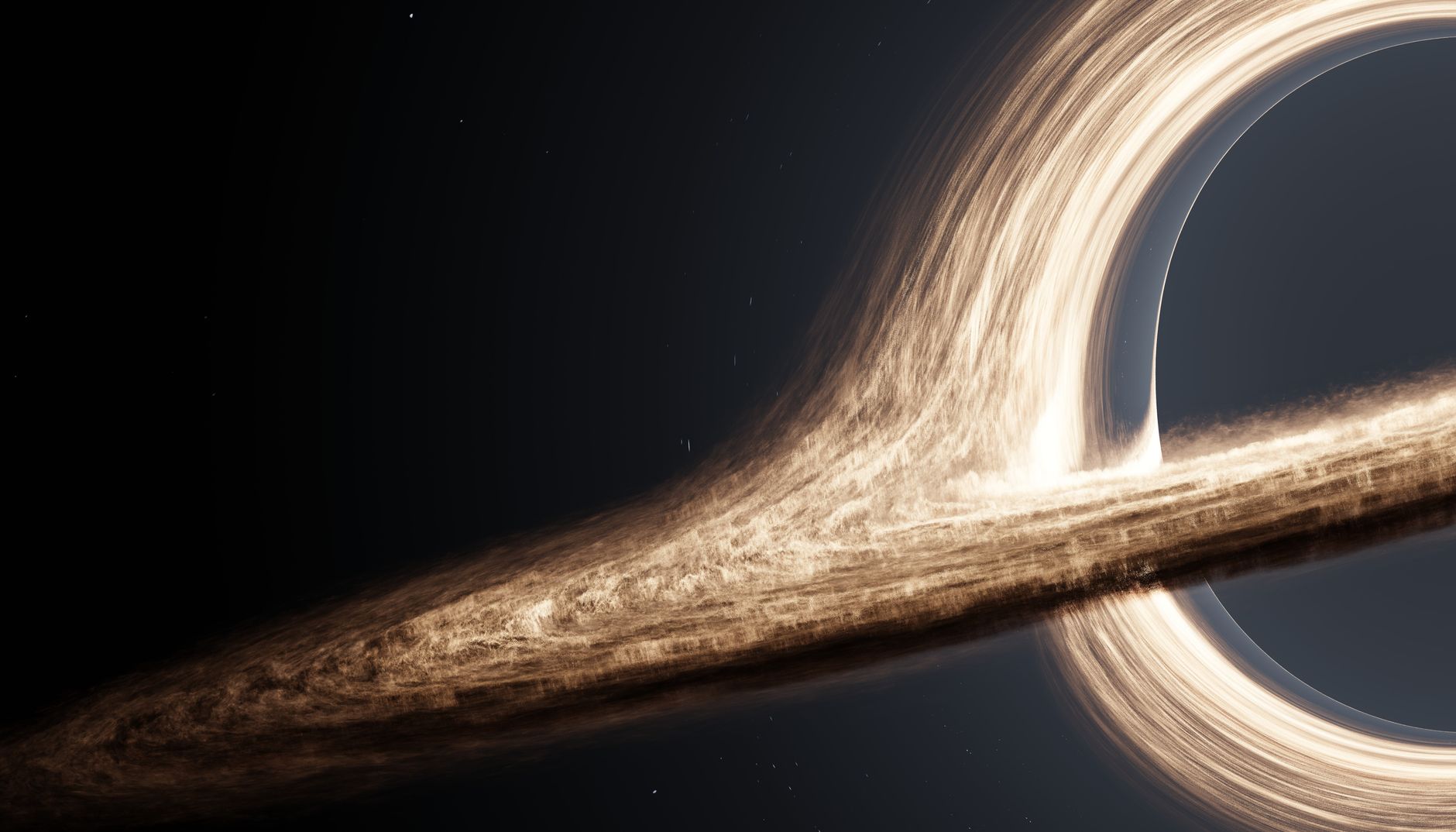
In what might be described as a feat of scientific wizardry, physicists have succeeded in creating a black hole from light—a creation smaller than the tiniest scale known to nature. This artificial black hole offers an unprecedented method to test Stephen Hawking’s elusive radiation theory, which has intrigued and perplexed scientists for decades.
Stephen Hawking, the legendary physicist, once proposed that black holes aren't the inescapable cosmic vacuums we once thought them to be. Instead, he suggested they could emit radiation, known as Hawking radiation, allowing them to lose mass over time. This phenomenon, if proven, could unlock myriad secrets about the universe.
The Experiment's Ingenious Design
At the heart of this groundbreaking experiment lies a simple yet powerful idea: using light to mimic the conditions of a black hole. By manipulating intense beams of light, researchers have managed to simulate the gravitational pull of black holes, thereby facilitating the observation of Hawking radiation in a controlled environment.
Silke Weinfurtner, a research fellow at Nottingham University's School of Mathematical Sciences, lauded the experiment as a 'huge leap forward'. She emphasised its potential to confirm Hawking's predictions regarding black hole thermodynamics, which could revolutionise our understanding of these mysterious cosmic entities.
Implications for the Scientific Community
While this experiment does not involve an actual black hole devouring stars and planets, its implications are far-reaching. By offering a tangible method to study Hawking radiation, scientists can now explore questions about the nature of black holes that were previously relegated to the realm of theory.
The confirmation of Hawking's theory could fundamentally alter our comprehension of the universe's workings. Moreover, it may illuminate new pathways in the quest to unify general relativity and quantum mechanics—a goal that has eluded physicists for decades.
This experiment, while still in its early stages, signifies a remarkable stride towards demystifying one of the cosmos's most enigmatic phenomena. As researchers continue to refine their methods, the scientific community watches with bated breath, anticipating what this light-born black hole might reveal next.