Scientists Trace Powerful Neutrino to Cosmic Blazar
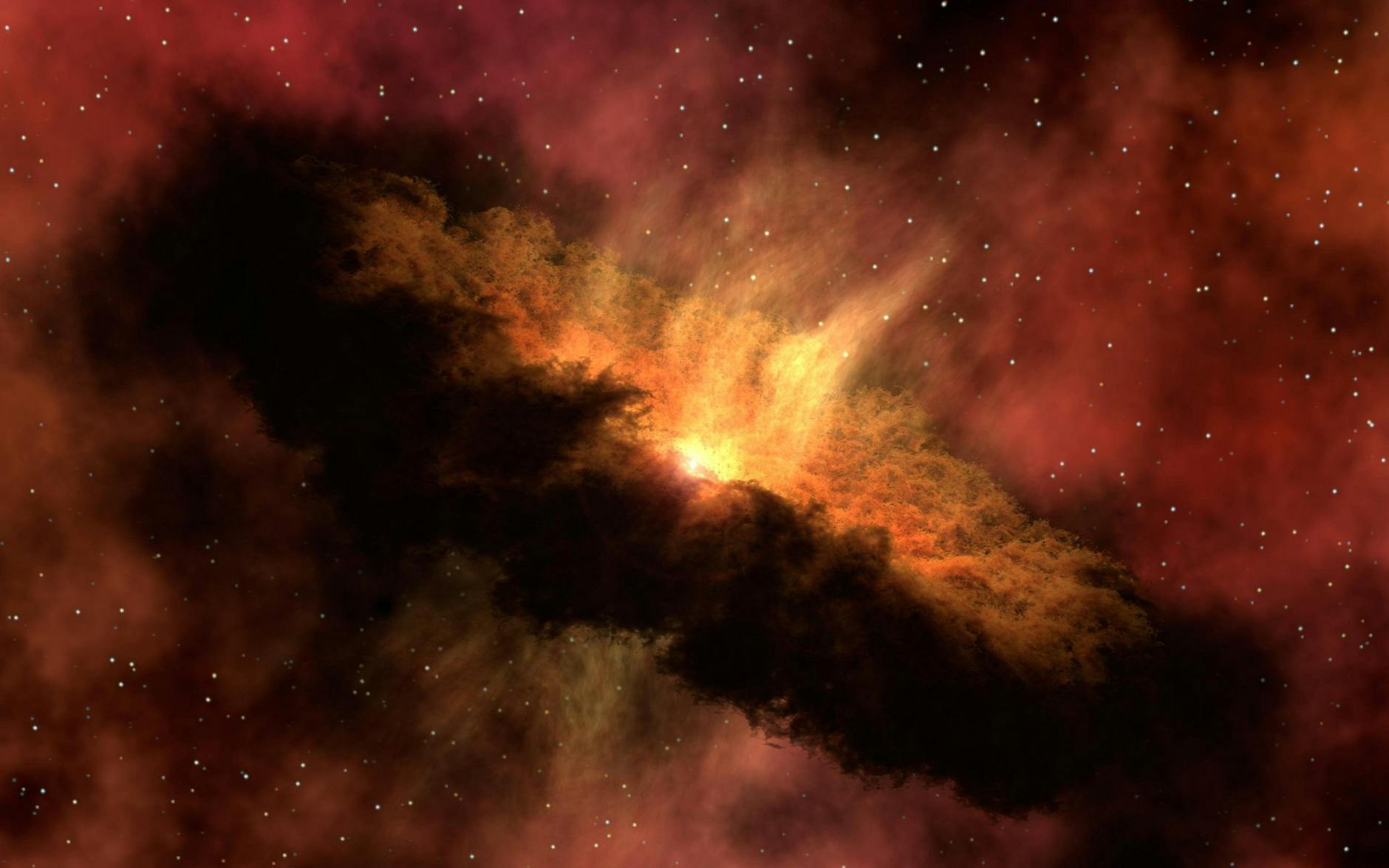
In a remarkable stride for astrophysics, scientists have potentially pinpointed the origin of the most energetic neutrino ever recorded. This elusive particle, which was detected by a sophisticated detector submerged in the Mediterranean Sea, is believed to have originated from blazars—colossal black holes that spew forth high-energy jets across the universe.
The neutrino, with an astonishing energy level of 220 million billion electron volts (PeV), has astounded researchers, prompting a reevaluation of known cosmic accelerators. Such a potent particle suggests that the universe harbours cosmic phenomena far more powerful than previously inferred.
Blazars, the suspected source, are a type of active galactic nucleus, where a supermassive black hole is believed to be the central powerhouse. When these behemoths devour surrounding matter, they release jets of particles that can span across millions of light-years. If confirmed, the association of this neutrino with blazars would mark a significant leap in our understanding of cosmic dynamics and the mechanics of particle acceleration.
The Implications of a Cosmic Discovery
This discovery not only challenges existing models of particle physics but also opens new avenues for exploring the universe. The energy carried by the neutrino dwarfs that of any particle accelerated on Earth, suggesting that natural cosmic accelerators are far more potent than human-made ones.
Astrophysicists are now keenly focused on verifying these findings through further observations and data analysis. The detection was made possible by a network of sensors in the Mediterranean, designed to detect the faintest signs of these enigmatic particles as they interact with water molecules.
As the scientific community delves deeper into the universe's mysteries, this discovery could pave the way for understanding the processes behind high-energy cosmic events, potentially unveiling new dimensions of space and time.