Sonam Wangchuk's Hunger Strike: A Silent Cry in Indian Politics
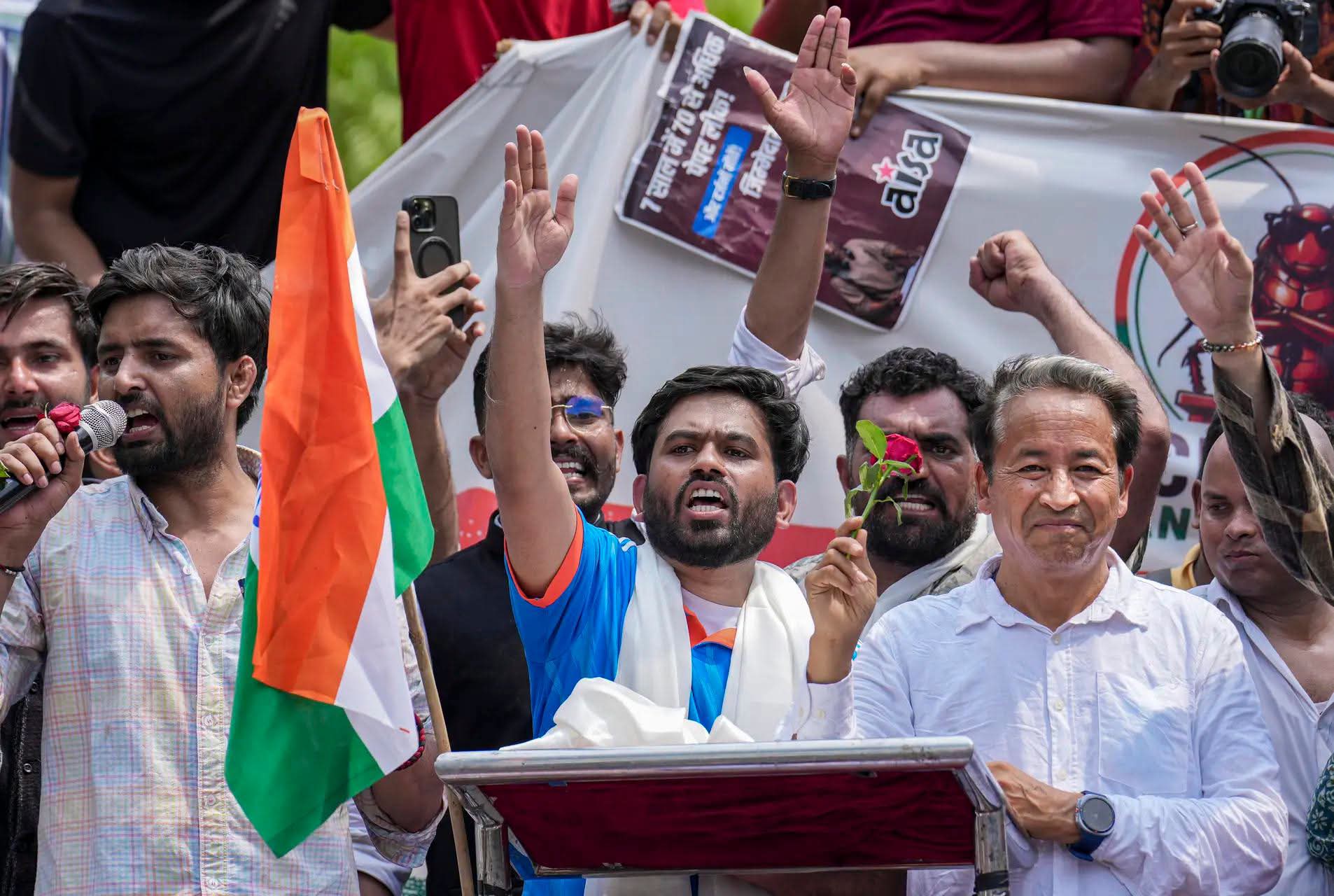
As the blistering heat beats down on Delhi's Jantar Mantar, Sonam Wangchuk lies on a makeshift stage, embodying the resilience of a tradition that has shaped Indian politics for over a century. For 20 days, the 59-year-old educationist and activist has refused sustenance, his protest a stark reminder of the enduring power of the hunger strike in India.
Wangchuk's fast is not an isolated incident but part of a storied legacy that began with Mahatma Gandhi, whose own hunger strikes became a potent tool against colonial rule. The simplicity of the method belies its impact; a hunger strike demands attention, compelling both public and government to confront the issues at stake. In Wangchuk's case, the protest centres around environmental concerns and local governance issues in Ladakh, his home region.
The Historical Echo
India's history is replete with hunger strikes that have driven significant change. From Potti Sriramulu's fast for Andhra Pradesh's formation to Irom Sharmila's prolonged protest against the Armed Forces Special Powers Act, the act of fasting has often been a catalyst for policy shifts. Yet, it is not without its limitations. While it can galvanise public support and highlight issues, it often requires a broader movement to translate into tangible change.
For Wangchuk, the challenge is both physical and political. As his health declines, calls for him to end his fast grow louder. However, his determination remains unshaken, highlighting not just the cause he champions but also the personal sacrifice involved in such protests.
A Modern-Day Satyagraha
In today's rapidly changing political landscape, where media cycles are brief and attention spans shorter, Wangchuk's hunger strike is a reminder of the power of personal conviction. It is a modern-day satyagraha, a testament to the belief that change is possible through non-violent means. His protest underscores a simple yet profound truth: sometimes, in the cacophony of political discourse, silence speaks the loudest.
As the nation watches, Wangchuk's hunger strike invites reflection on the methods and means of protest in contemporary India. It challenges both the public and policymakers to consider the issues he raises and the enduring significance of the hunger strike as a tool for change.