The Not-So-Empty Vacuum: New Discoveries in Quantum Space
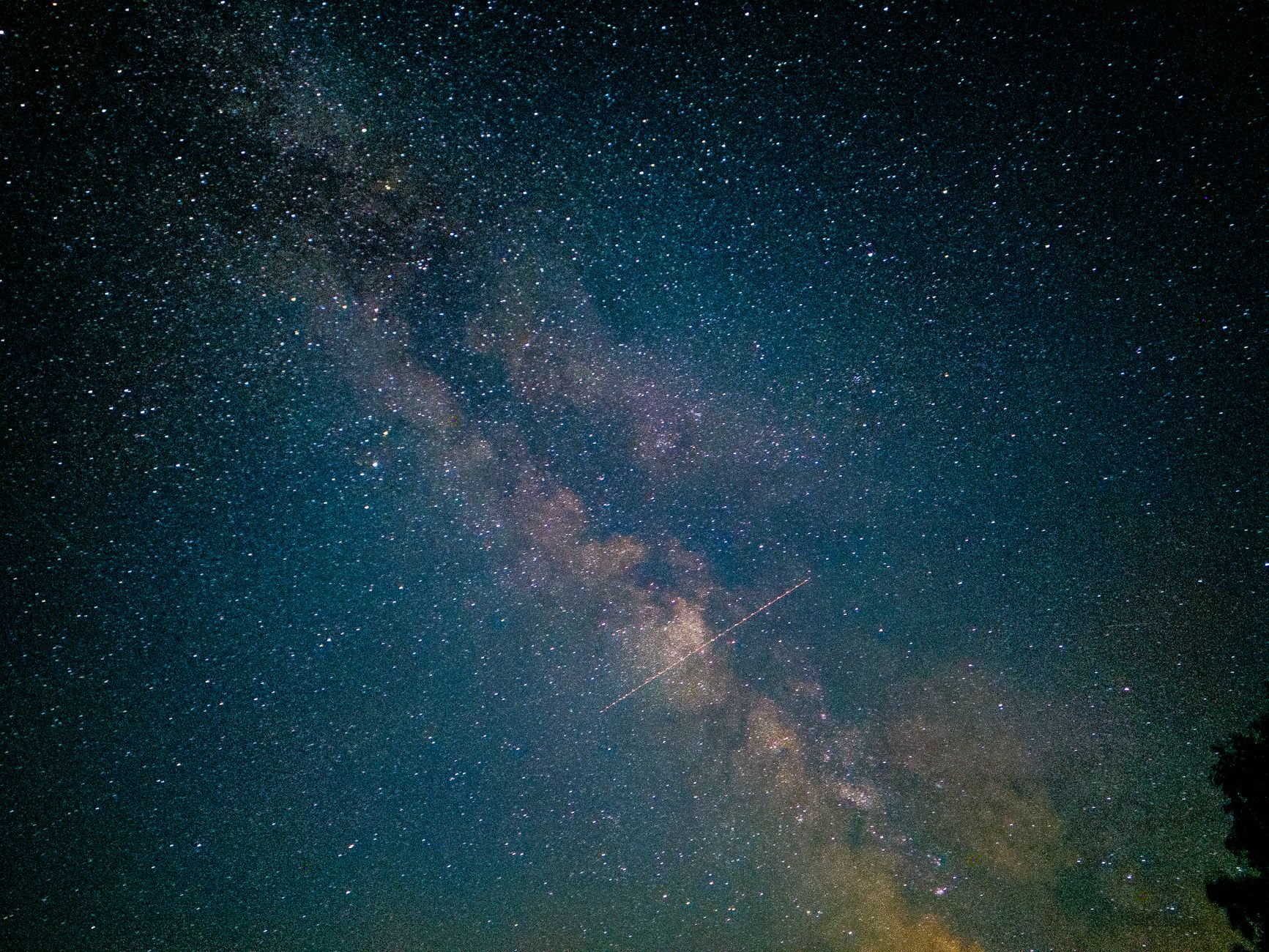
For centuries, the vast expanse of space has been regarded as the ultimate emptiness—a void, a vacuum devoid of matter. Yet, recent scientific findings suggest this notion might be more fiction than fact. In observing the enigmatic star 1E 1547.0-5408, astronomers have discovered evidence of vacuum birefringence, a rare quantum effect that could reshape our understanding of what 'empty' truly means.
The research, published in the esteemed journal Nature, details how this highly magnetic star offers a unique opportunity to study phenomena predicted by quantum physics. The concept of vacuum birefringence emerges from the idea that what appears to be empty space is, in fact, teeming with virtual particles. These particles momentarily pop into existence, affecting the path of light in subtle but measurable ways.
Dr. Lynn Carter, a leading astrophysicist involved in the study, remarked, "This isn't just a mere theoretical exercise. We've observed changes in polarisation that align with what we'd expect if vacuum birefringence were occurring."
Quantum Implications
The implications of these findings extend far beyond academic curiosity. If confirmed, this could offer a new lens through which scientists view the cosmos, providing insights into the fundamental nature of reality itself. As quantum theories often predict phenomena at odds with classical physics, observing such effects in space could bridge gaps in our current understanding.
Historically, scientists like Dirac have postulated that vacuums are not empty but filled with energy and activity at the quantum level. This study provides a rare glimpse into that hidden world, potentially validating long-held theoretical predictions.
A New Cosmic Perspective
The discovery of vacuum birefringence around 1E 1547.0-5408 is not just a triumph of observation but a testament to the power of modern telescopic technology. By peering deeper into the universe, astronomers are uncovering layers of complexity previously thought impossible to observe.
As researchers continue their quest to unravel the mysteries of the universe, the notion of 'empty' space being anything but may just mark the beginning of a new era in astrophysics. The next steps will involve further observations and experiments to confirm these initial findings, potentially opening new avenues for exploring the quantum universe.