Unlocking the Cosmos: Tracing the Birth of Supermassive Black Holes
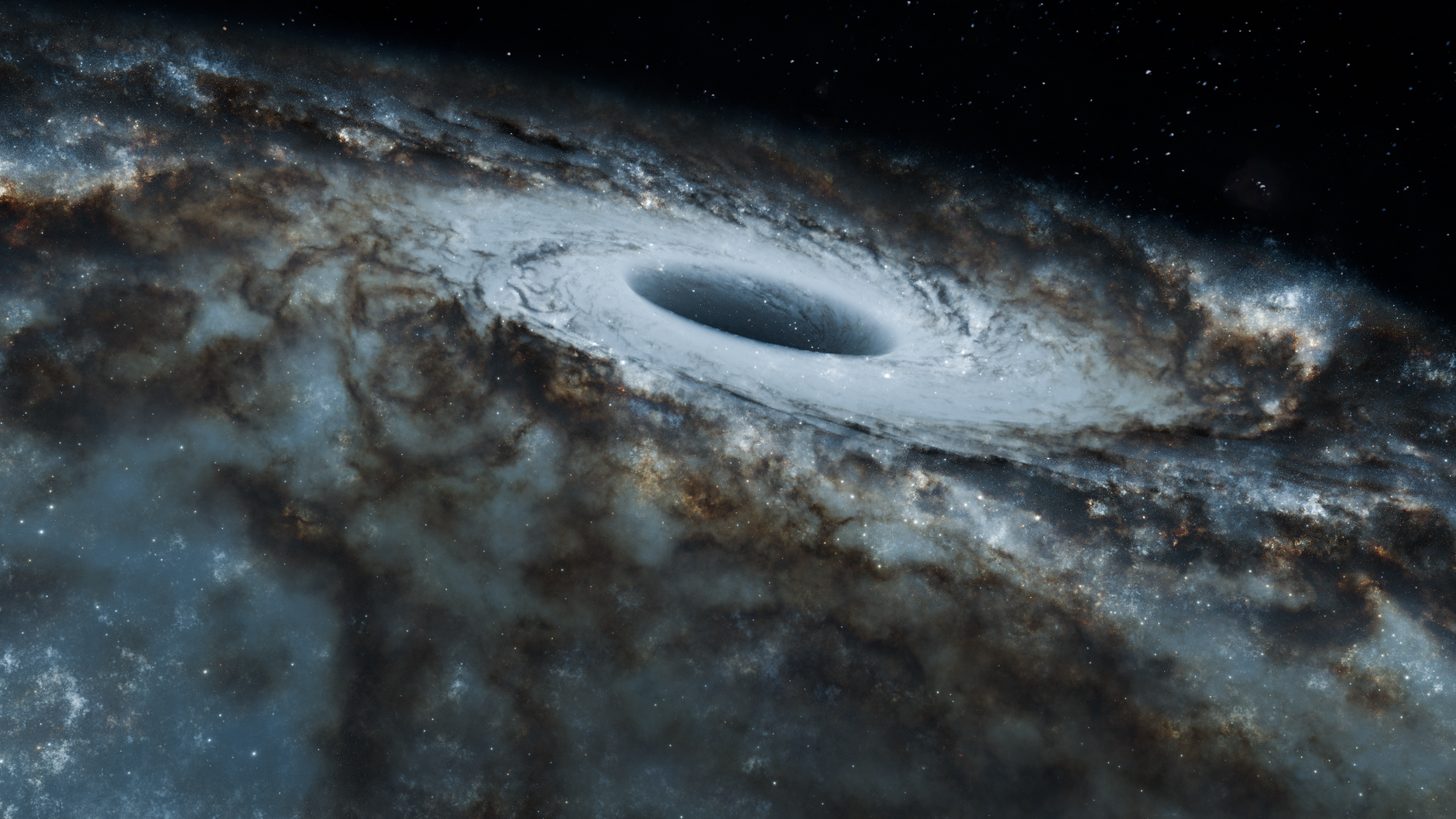
In a breakthrough that peels back the layers of cosmic history, researchers have measured the environment where the universe's first supermassive black holes took shape. This study, examining conditions less than 500 million years after the Big Bang, offers tantalising clues about how these astronomical behemoths came into existence.
Supermassive black holes, found at the centres of most massive galaxies today, are enigmas that have long puzzled scientists. Recent findings suggest that these colossal entities formed via a process known as direct collapse, bypassing the traditional route of stellar death and subsequent black hole growth. This phenomenon occurred when the universe was still in its infancy, at a time when galaxies were just beginning to coalesce.
The research utilises cosmological radiation-hydrodynamic simulations, a sophisticated method that maps the gas density distribution around early cosmic structures. By focusing on target halos at redshift z=12, scientists have been able to recreate the conditions under which these massive black hole seeds could form.
The Birth of Cosmic Giants
Traditionally, black holes are thought to form when massive stars exhaust their nuclear fuel and collapse under their own gravity. These stellar remnants, typically up to 100 times the mass of the Sun, can gradually grow by accreting material from their surroundings. However, the direct collapse model posits a more dramatic origin story, one where vast amounts of gas coalesce and collapse directly into a black hole, skipping the intermediary stellar phase altogether.
This revelation not only provides a window into the universe's distant past but also challenges existing theories about galaxy formation and evolution. Understanding the conditions that allowed such formations to occur is crucial for mapping the intricate tapestry of cosmic history.
A New Chapter in Cosmic Understanding
As telescopes and simulation technologies continue to advance, our ability to peer into the universe's earliest epochs becomes more refined. These discoveries are not merely academic; they reshape our understanding of the cosmos and our place within it.
While the notion of supermassive black holes may seem distant and abstract, their study has profound implications for the broader field of physics and the quest to understand the universe's origins. As researchers push the boundaries of what is known, each revelation brings us closer to comprehending the vast, mysterious expanse that surrounds us.