BJP Chief Criticises Rahul Gandhi's Dharnā as 'Anarchy Politics'

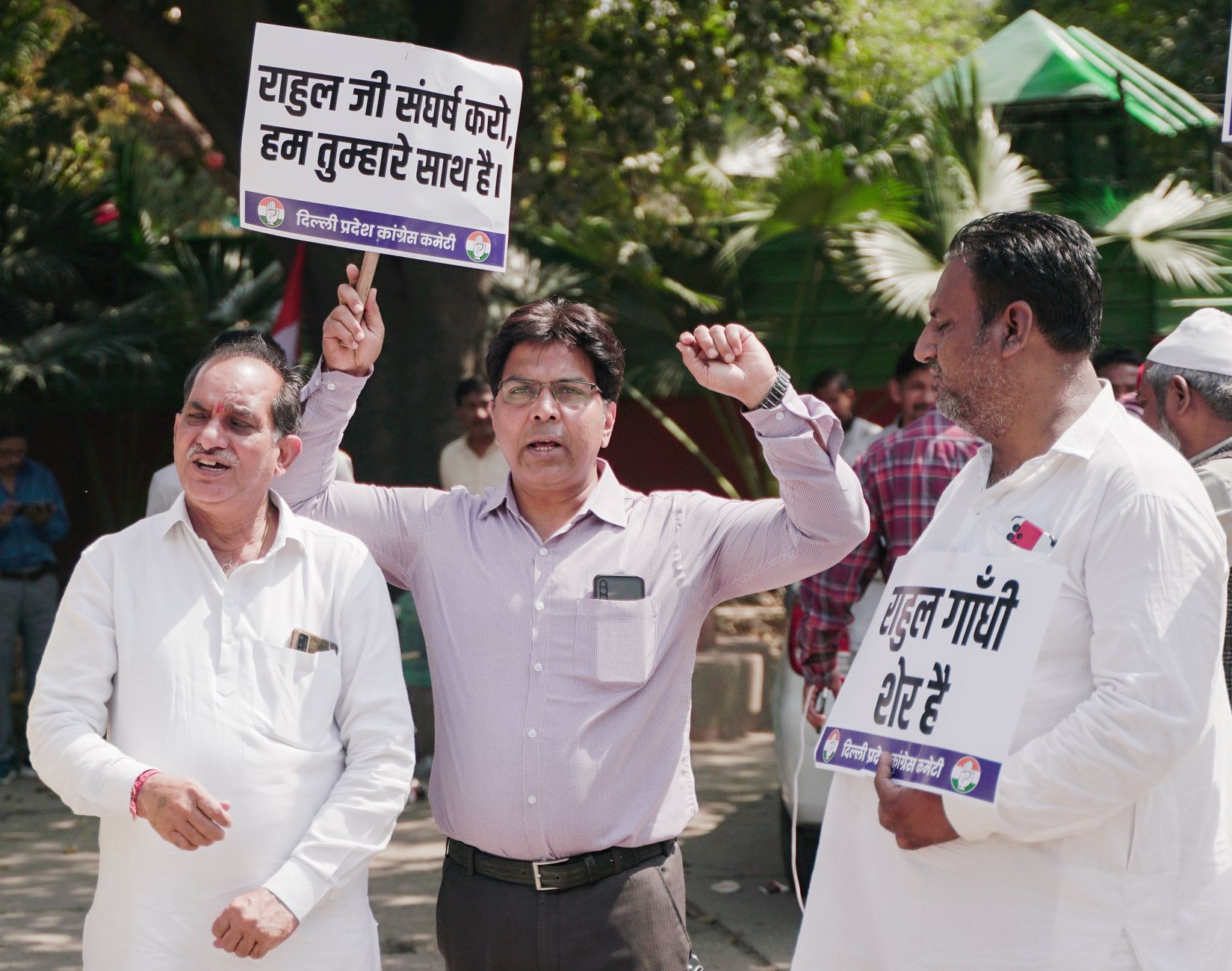
In a scene reminiscent of India's storied tradition of civil disobedience, Rahul Gandhi and senior Congress leaders planted themselves resolutely outside the residence of Prime Minister Narendra Modi. Their demand? The resignation of the Prime Minister, following the police's heavy-handed response to NEET examination protesters.
This protest, described by BJP chief Nitin Nabin as 'politics of anarchy', has set the stage for a new chapter in the ongoing saga of Indian political drama. Nabin minced no words, calling the demonstration a 'black day' in Indian politics, underscoring the deep chasm between the BJP and the Congress.
The dharnā, a form of protest deeply ingrained in India's political fabric, was not merely about the NEET controversy, but a broader critique of the ruling government's approach to dissent. The Congress leaders, including Mallikarjun Kharge and Priyanka Gandhi Vadra, sought to highlight what they perceive as an erosion of democratic norms under Modi's leadership.
Meanwhile, BJP's response was swift and scathing. Nabin's characterisation of the protest as 'anarchy' points to the BJP's narrative that the Congress is resorting to disruptive tactics to destabilise the government. Such accusations are not new in Indian politics, but they come at a time when the nation is grappling with numerous challenges, not least of which is the ongoing pandemic and its economic fallout.
For the Congress, this protest is part of a larger strategy to regain political ground and reassert itself as a formidable opposition. Rahul Gandhi's role has been pivotal, as he attempts to harness public discontent over various issues, including unemployment and educational reforms.
As the dust from this political skirmish settles, it becomes clear that this is not merely about one protest or one demand. It is about the future trajectory of Indian politics, where the battle lines are drawn not just over policies, but over the very nature of democracy itself.