British Mathematician Challenges Parthenon's Optical Illusion Myth
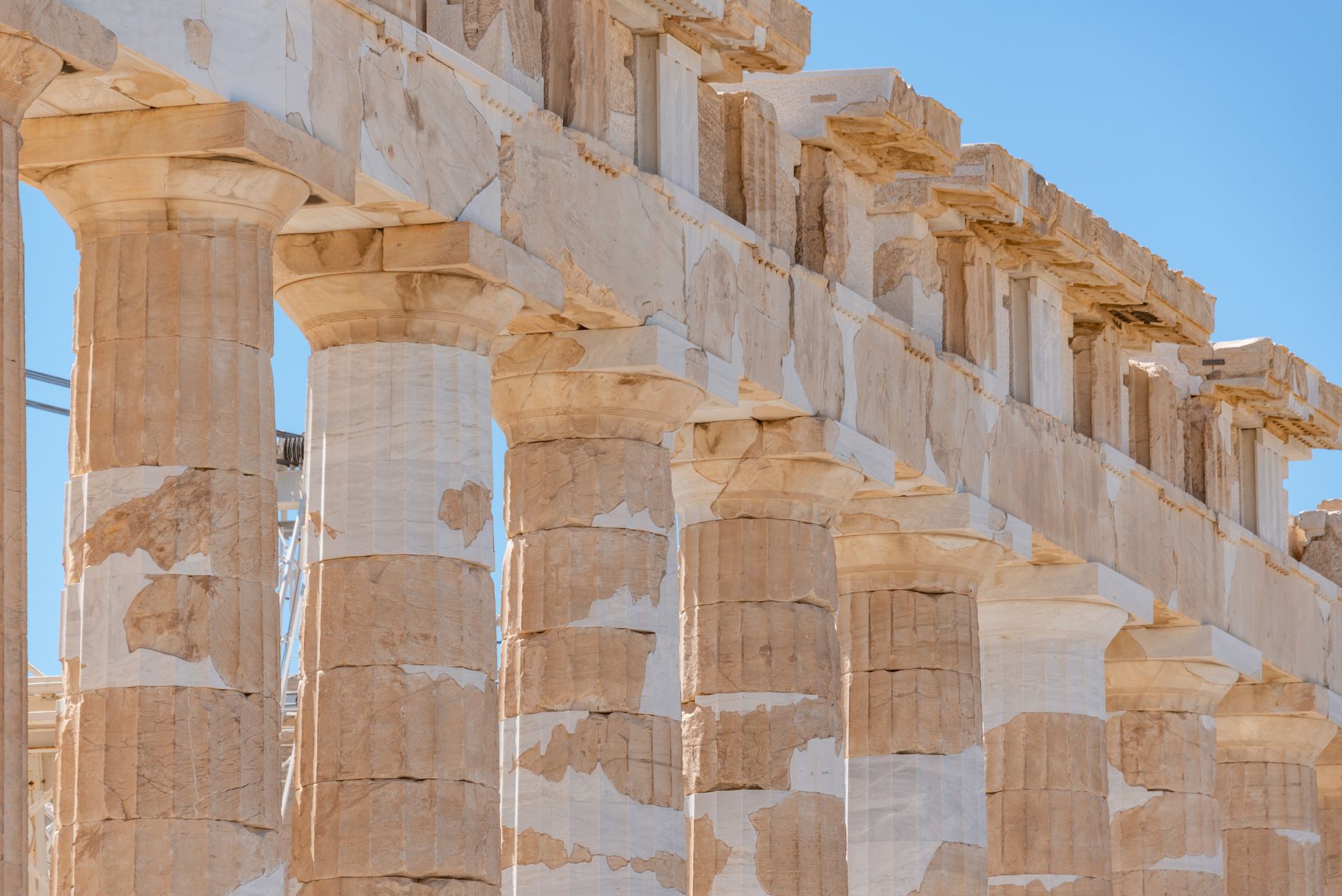
The Parthenon, an enduring symbol of ancient Greek architecture, has long been admired for its seemingly perfect lines and harmonious proportions. Yet, according to Professor Alain Goriely of the University of Oxford, the widely held belief that its curves were designed to correct optical illusions is nothing more than a myth.
The legend, as Goriely recounts, traces back to the Roman architect Vitruvius, who claimed that the Parthenon's subtle curves were intentional, crafted to appear straight to the human eye. This narrative has been passed down through the ages, becoming almost gospel in architectural circles. However, Goriely's recent study suggests otherwise.
Architectural Tradition, Not Optical Trickery
Goriely argues that the Parthenon's curves are not, in fact, a sophisticated optical correction. Rather, they are a product of architectural convention of the time. The slight rise of the stylobate and the entasis of the columns, he explains, are too minimal to effectively alter human perception.
"The supposed optical corrections are either too subtle to be noticed or simply unproven," Goriely asserts. Instead, these architectural features should be seen as aesthetic choices characteristic of the era, rather than clever illusions.
Revisiting Ancient Wisdom
This revelation has significant implications for how we understand ancient Greek architecture. It challenges the narrative that ancient architects were attempting to 'trick' the viewer and instead suggests they were adhering to established styles and methods. The Parthenon, built during Athens' Golden Age under Pericles, might indeed be more a testament to tradition than to innovation.
As Goriely's study gains attention, it invites both historians and architects to re-evaluate long-held beliefs about ancient structures. While the Parthenon remains a masterpiece of design, its true story may be rooted more in the artistic conventions of its time than in legendary optical illusions.