
CERN's Collider Unveils a Quirky Twist in Big Bang's Primordial Soup
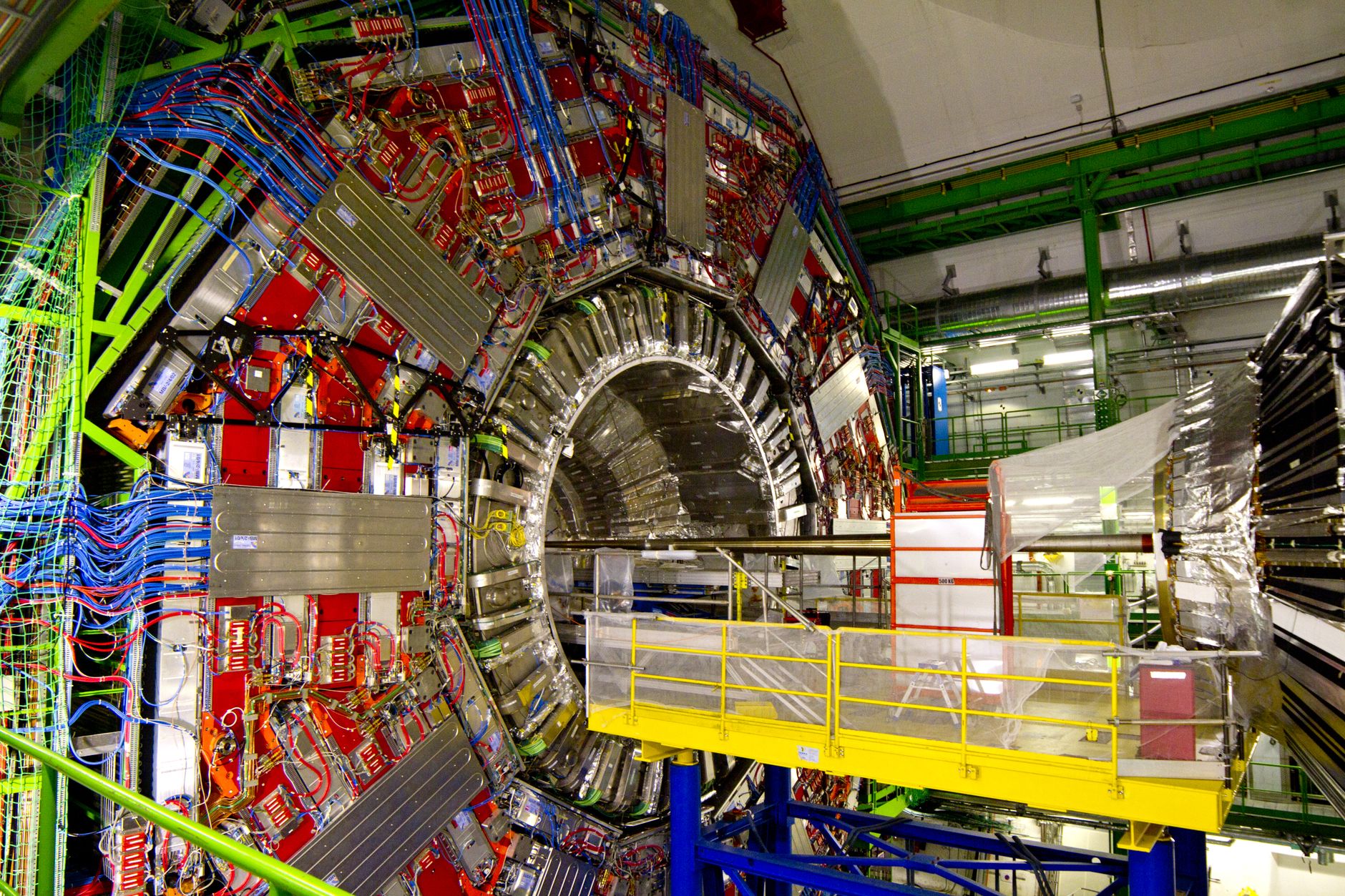
In the cavernous depths of the CERN laboratory, where science often dances on the edge of the fantastical, a remarkable experiment has unfolded. Physicists at the Large Hadron Collider, the world's most powerful particle accelerator, have managed to recreate the primordial soup that once filled the universe a few billionths of a second after the Big Bang. The recipe? Smashing gold nuclei together at nearly the speed of light.
The experiment aimed to reproduce the quark-gluon plasma, a state of matter believed to exist just moments after the universe's birth. In this chaotic mix, quarks and gluons—the fundamental building blocks of protons and neutrons—roamed freely, unshackled by the forces that now bind them into the atoms making up the world around us.
However, the researchers stumbled upon an unexpected twist. The particles sprayed out from these high-energy collisions arranged themselves in a pattern not predicted by existing theoretical models. This anomaly has sent ripples through the scientific community, potentially challenging long-held assumptions about the early universe.
The Significance of the Discovery
The discovery is not just a curiosity for particle physicists but could have profound implications for our understanding of the universe. The unexpected particle arrangement might offer new insights into how the early universe cooled and coalesced from its initial chaotic state into the structured cosmos we observe today.
Dr. Emily Hawthorne, a leading physicist involved in the experiment, remarked, "This unexpected result gives us a fresh perspective on the forces and interactions that governed the early universe. It’s akin to finding a new piece in the cosmic puzzle that we weren't even aware was missing."
Broader Implications
While the findings are still under scrutiny and further experiments will be needed to verify these observations, the implications could be far-reaching. If confirmed, this new understanding of quark-gluon interactions might necessitate revisions of existing models in particle physics, potentially unveiling new forces or interactions that played a role in the universe's infancy.
As the scientific community eagerly awaits further data, the experiment underscores the importance of pushing the boundaries of our knowledge. In the vast, complex dance of particles and forces, even a small unexpected twist can lead to significant revelations about the very fabric of reality.


