Claude's Nine-Loop Breakthrough in Theoretical Physics
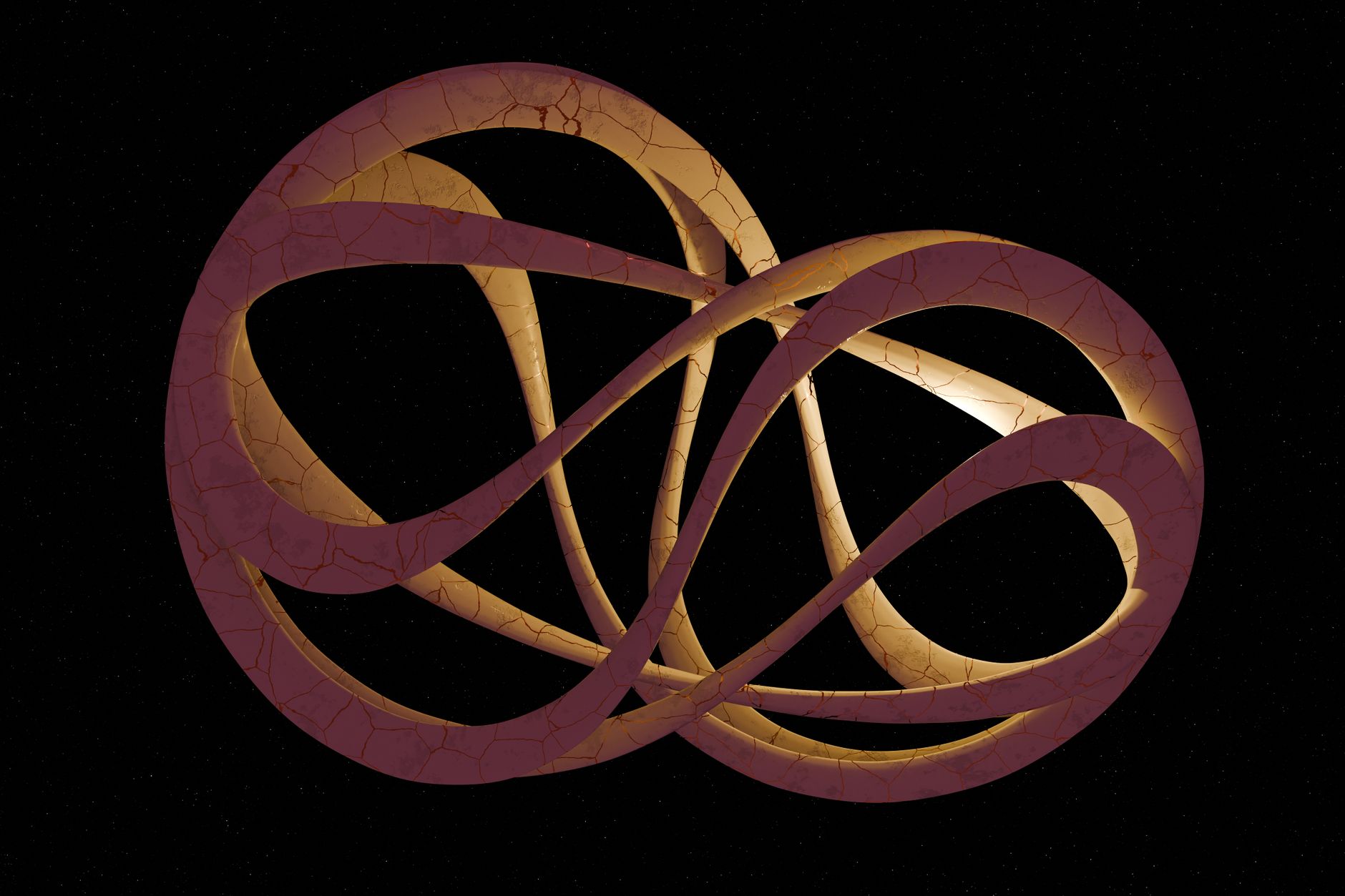
In the esoteric realm of theoretical physics, where equations often bear more resemblance to abstract art than comprehensible prose, Anthropic's artificial intelligence model, Claude, has achieved a mathematical milestone. The model has successfully computed a nine-loop amplitude in the N=4 super-Yang-Mills theory, an undertaking that even seasoned physicists might find daunting.
The computation, orchestrated by physicists Liam Fitzpatrick and Siddharth Mishra-Sharma, was announced on 25 September 2026, showcasing the prowess of Claude Science, a tool designed expressly for scientists. While N=4 super-Yang-Mills doesn't offer direct insights into the workings of the universe, it serves as a fertile ground for honing mathematical techniques due to its peculiar mathematical elegance.
A Mathematical Marvel
At its core, N=4 super-Yang-Mills remains an abstract construct, not directly tethered to physical reality like theories of gravity or electromagnetism. Yet, it’s precisely this abstraction that makes it invaluable. The theory is renowned for its symmetry and simplicity, providing physicists with a sandbox to test and refine the methods used in more complex theories.
Fitzpatrick and Mishra-Sharma's work involves computing the six-particle scattering amplitude at nine loops. This is not merely an academic exercise but a critical step in advancing the field of amplitudeology, which seeks to simplify and understand the interactions of elementary particles through mathematical amplitudes.
Implications for the Future
While the practical applications of such computations may not be immediately evident, they offer a theoretical underpinning that could lead to breakthroughs in understanding quantum field theories, potentially influencing areas as varied as quantum computing and high-energy physics.
As the boundaries of theoretical physics continue to expand, achievements like those of Claude and the Anthropic team serve as a reminder of the limitless potential of human ingenuity, aided by the computational might of artificial intelligence. Whether these calculations will one day translate into tangible technological advancements remains a question for the future. Yet, for now, they stand as a testament to the power of theory and the relentless quest for knowledge.