Cosmic Winds: XRISM Mission's Pulsar Discovery
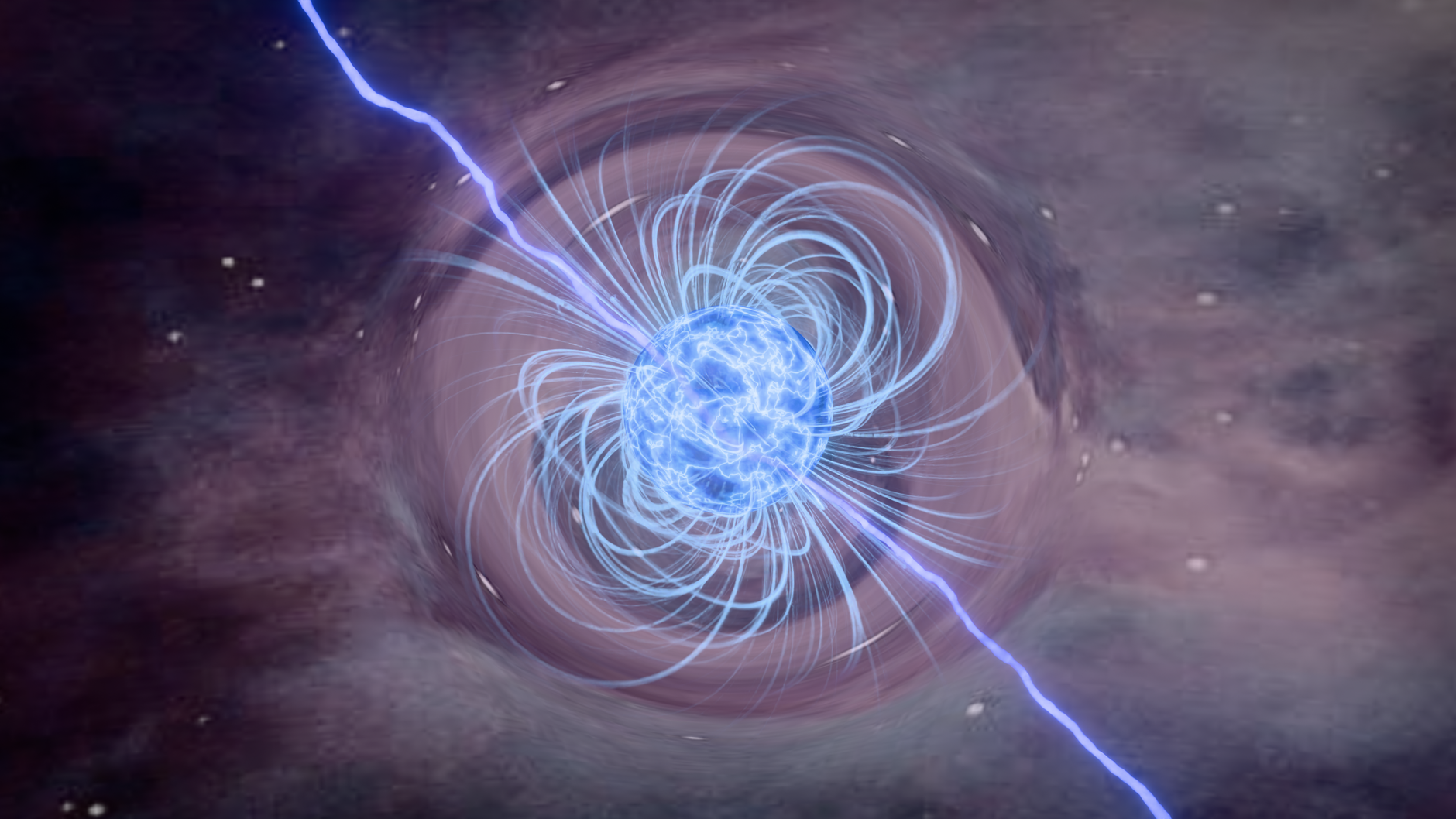
In a cosmic ballet of grandeur and precision, the XRISM mission has once again demonstrated the beauty of scientific collaboration. The joint venture by NASA, JAXA, and ESA has peered into the heart of a stellar system, revealing the intricate dance between a pulsar and its supergiant companion.
At the centre of this celestial drama is GX 301-2, a neutron star that, despite its diminutive size, wields the gravity of a celestial heavyweight. This pulsar, the remnant of a supernova, pulls matter from its colossal neighbour, a process known as wind accretion. The XRISM mission, with its cutting-edge Resolve instrument, has captured this interaction in unprecedented detail.
The Celestial Duo
On 1st February 2025, the XRISM observatory turned its gaze towards this dynamic duo. For 16 hours, it observed the system during one of its more intense flares, an event marked by heightened emissions and activity. The data collected offers a window into the mechanisms driving these cosmic winds, providing a clearer picture of how matter is funnelled onto the neutron star.
The success of XRISM is particularly poignant given its predecessor, the ill-fated Hitomi observatory, which met an untimely demise shortly after its launch in 2016. The triumph of XRISM is not just a testament to technological resilience but also to the spirit of international cooperation. Scientists across three continents have pooled their expertise to unlock the secrets of the universe, setting a precedent for future collaborations.
Implications for Astrophysics
The insights gained from XRISM's observations could significantly impact our understanding of neutron stars and their environments. By analysing the X-ray spectra, astronomers can infer the composition, density, and velocity of the material being accreted. This data is crucial for testing theories about the behaviour of matter under extreme conditions, a topic that has fascinated physicists for decades.
As XRISM continues its mission, it promises to shed light on other cosmic phenomena, including galaxy clusters and dark matter. Each observation brings us a step closer to understanding the complex tapestry of the cosmos.