
Earth Faces Unseen Threat from Newly Discovered Microblazar
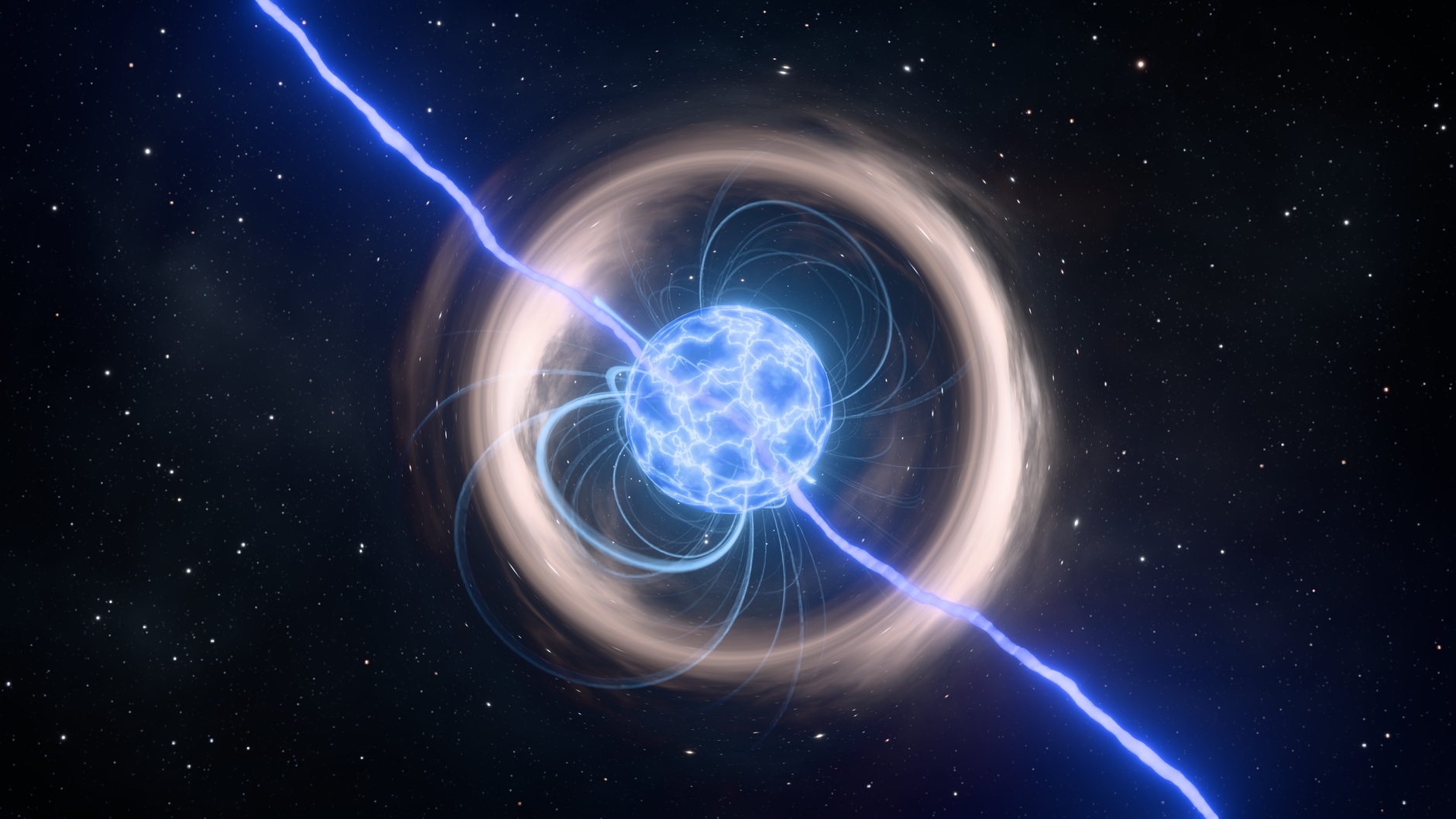
In a revelation that could reshape our understanding of cosmic phenomena, scientists have confirmed the existence of a 'microblazar', a hitherto theoretical object that is currently aiming its potent beam of particles directly at our planet. This discovery, made by an international team of astronomers, could herald a new era in the study of stellar objects.
Microblazars are akin to their larger cousins, blazars, which are composed of supermassive black holes devouring surrounding matter and emitting twin jets of high-energy particles across the cosmos. However, unlike these celestial giants, microblazars involve much smaller black holes. Yet, their relatively diminutive size does not diminish their potential influence on cosmic activity.
A Cosmic Conundrum
The microblazar, detected within the Milky Way, challenges existing astronomical models. Traditional blazars are known for their intense brightness, a result of the jets pointing directly towards Earth. This newly identified microblazar, however, offers a scaled-down perspective, opening up fresh avenues for research. The object was identified using an array of advanced telescopes and data from multiple observatories, demonstrating the power of collaborative scientific efforts.
Why It Matters
The implications of this discovery are manifold. For one, it provides a unique opportunity to observe the mechanics of particle jets at a scale previously considered impossible. Furthermore, understanding microblazars could enhance our comprehension of the life cycles of black holes and the dynamic processes occurring in their vicinity.
While the notion of a stream of particles heading towards Earth might seem alarming, scientists assure us that the energy levels involved pose no immediate threat. Instead, this finding presents an invaluable chance to study high-energy astrophysical processes up close, potentially unlocking answers to some of the universe's most enduring mysteries.
As researchers continue to analyse data from this microblazar, the astronomical community eagerly anticipates what revelations might lie ahead. In the ever-expanding tapestry of space exploration, each new discovery weaves a richer understanding of the cosmos and our place within it.


