Have We Finally Found a Dark Matter Particle?
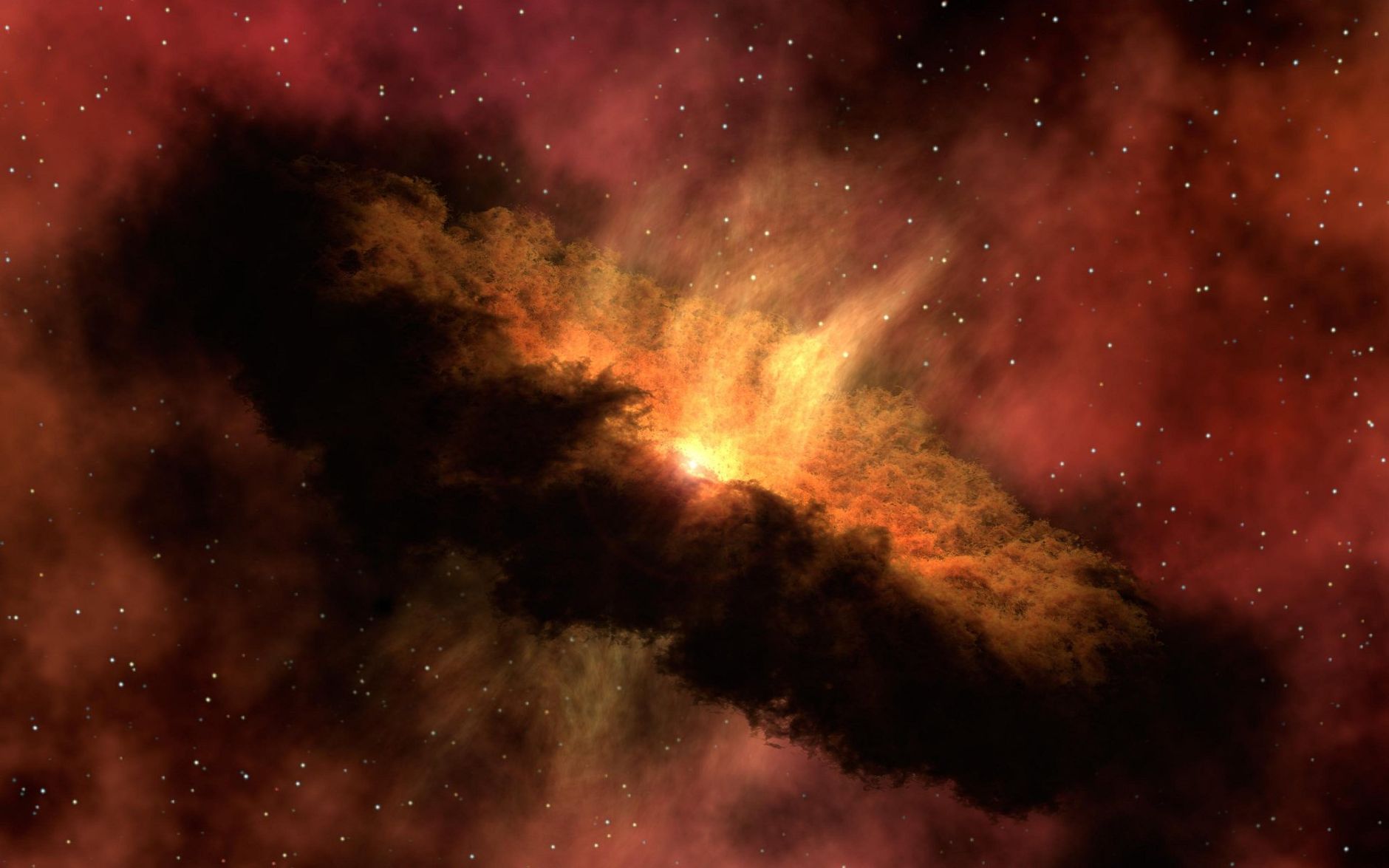
In the vast expanse of the universe, a new mystery has emerged from the depths of scientific endeavour. A recent detection has sent ripples through the scientific community, hinting at a possible discovery of the elusive dark matter particle. For decades, this invisible substance has tantalised scientists with its unseen presence, accounting for approximately 27% of the universe's mass.
The latest breakthrough comes from a dark matter detector, which observed an unusual particle event that defies current understanding. While scientists remain cautious, the potential implications of this discovery are profound. Dark matter, alongside dark energy, is believed to play a pivotal role in shaping the universe's structure, affecting galaxy rotation and the bending of light around massive clusters.
What Did Scientists Find?
The mysterious signal captured by the detector is unlike anything previously observed. This anomaly has led some experts to speculate that they might have caught a glimpse of a dark matter particle in action. While the nature of this particle remains uncertain, its existence could provide crucial insights into the fundamental forces that govern our universe.
Dark matter is theorised to be made up of particles that do not emit, absorb, or reflect light, making them incredibly difficult to detect with traditional methods. Theories have long suggested the existence of both cold and warm dark matter, differing by the speed of their particles. This recent detection could potentially align with either hypothesis.
The Road Ahead
Despite the excitement, caution is the watchword. Scientists are meticulously analysing the data to rule out any alternative explanations. The road to confirming the existence of a dark matter particle is fraught with challenges. It involves rigorous verification and replication of results, alongside further experimentation.
Nevertheless, the scientific community is abuzz with anticipation. Unravelling the mysteries of dark matter could open new avenues in cosmology and physics, enhancing our understanding of the universe's past, present, and future. Until then, the quest continues, with the hope that this latest development brings us one step closer to unveiling the universe's deepest secrets.