India's Gaganyaan: Parachutes That Promise A Safe Descent
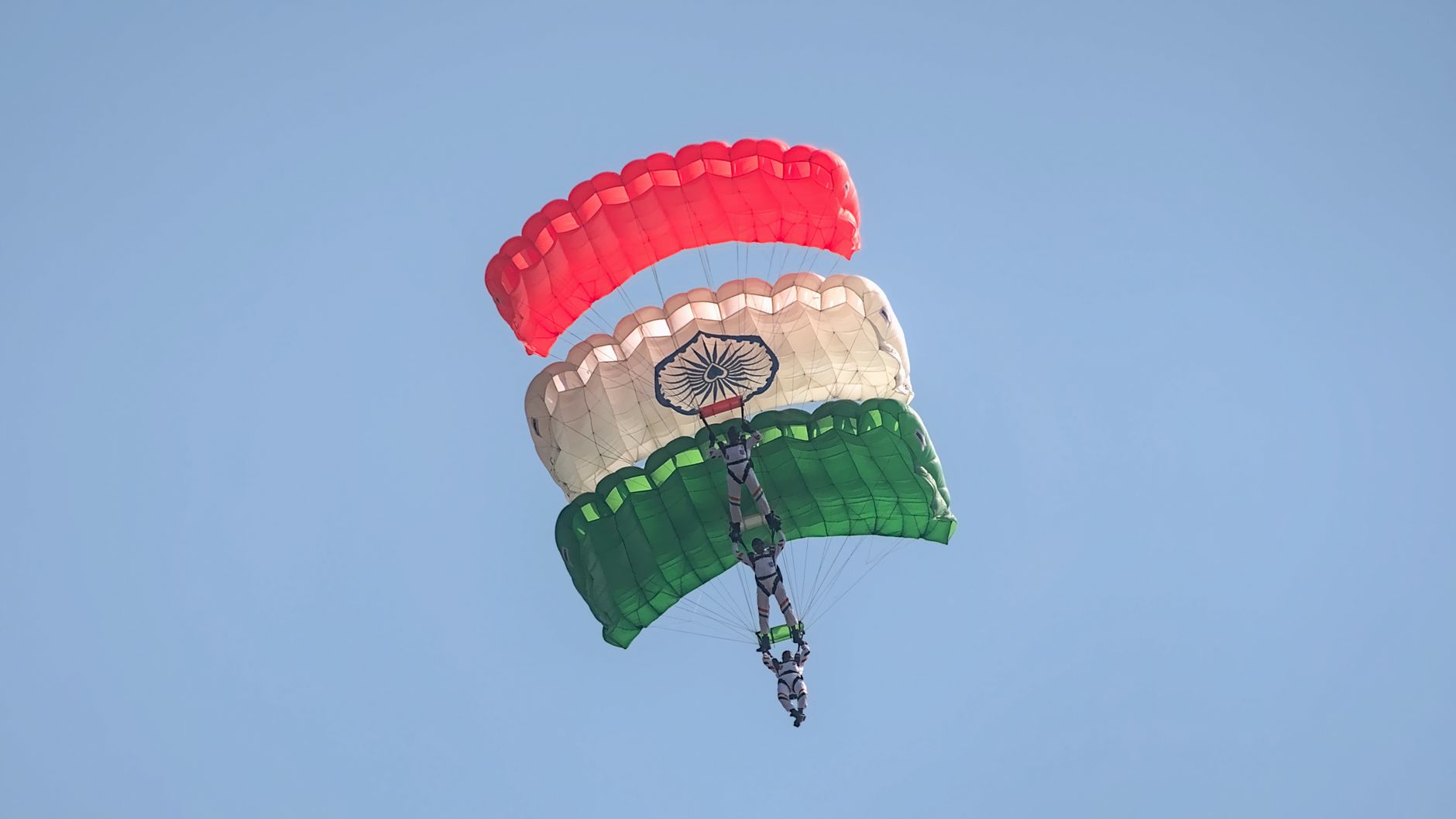
In the world of space exploration, it’s often the smallest components that play the most pivotal roles. As India inches closer to launching its first crewed mission to space, the Gaganyaan project, the spotlight is firmly on a set of parachutes designed to ensure a safe descent back to Earth.
Recently, ISRO successfully completed the qualification tests for the drogue parachutes at the RTRS facility of the Terminal Ballistics Research Laboratory in Chandigarh. These tests, conducted over two days, are crucial as they confirm the performance and reliability of the parachutes under various simulated flight conditions.
The Science Behind the Parachutes
Drogue parachutes are not your typical parachutes. Measuring 5.8 metres in diameter, these conical ribbon-type parachutes are meticulously crafted to minimise canopy mechanics and mitigate opening shock. Their smaller surface area compared to other parachutes reduces drag, making them ideal for deceleration, as explained by a former ISRO scientist.
The science of parachute deployment is a delicate dance of physics and engineering. When the Gaganyaan crew module re-enters the Earth’s atmosphere, the drogue parachutes will first be deployed to slow down the module before the main parachutes take over to ensure a gentle landing.
Why It Matters
The success of these parachute tests marks a significant milestone in India's quest for human spaceflight capabilities. The ability to safely return astronauts is as critical as launching them into space, and the reliability of parachute systems is paramount.
As India seeks to join the elite club of nations with independent human spaceflight capabilities, the Gaganyaan mission stands as a testament to the country's growing prowess in space technology. With these tests behind it, ISRO moves a step closer to its goal of sending humans to space, showcasing India's scientific ambition and technical expertise.