Joshi Criticises Modi's Education Policies Amidst Scandal Allegations
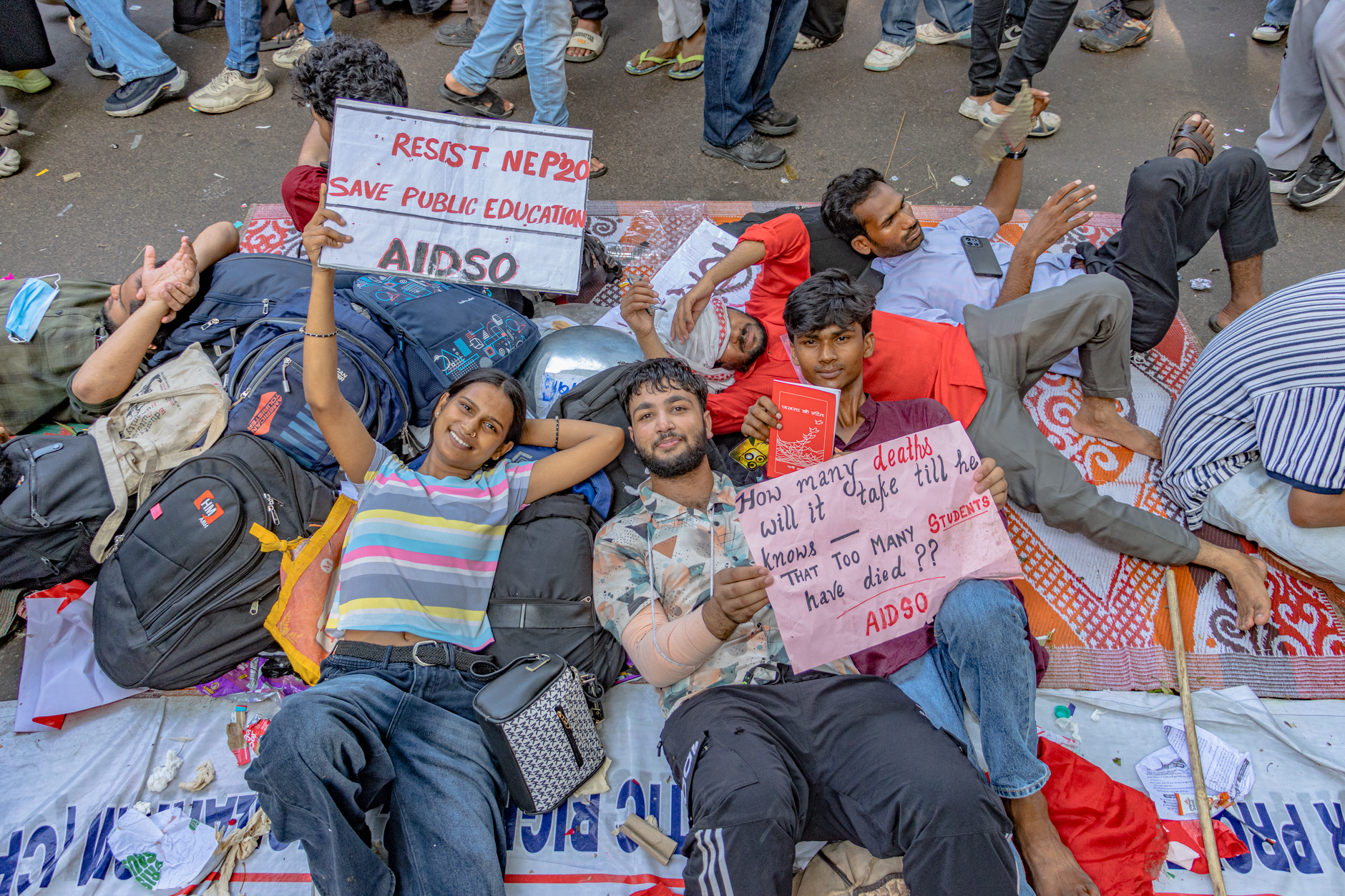
In a striking rebuke, veteran BJP leader Murli Manohar Joshi has taken aim at the Modi administration's education policies, amidst swirling allegations of governmental scandals. Speaking recently, Joshi questioned the integrity of the current educational reforms, suggesting that the government itself is mired in corruption. He remarked, 'Scams are happening in business; the government itself is embroiled in scams. Why, then, do you blame these poor students? They are bound to follow suit.'
The timing of Joshi's critique is particularly poignant, coinciding with the third anniversary of the National Education Policy (NEP) 2020. Lauded as a transformative blueprint for Indian education, the NEP aims to overhaul the system from school to higher education. However, Joshi's comments have cast a shadow over these celebrations, urging a rethink on the direction of India's educational trajectory.
Development Benchmarks Under Scrutiny
Joshi's concerns extend beyond mere policy. He has called for a national introspection on India's standing in global development indicators. 'Where does India stand on global development benchmarks,' he mused, 'and how far has the dream of Purna Swaraj been achieved?' Such questions invite a broader discourse on whether India’s policies are genuinely advancing the nation’s educational and developmental aspirations.
Prime Minister Narendra Modi, fresh from a meeting with Joshi for guidance and blessings, has yet to comment directly on these critiques. However, his administration has signalled intentions to tackle issues like paper leaks, with stricter measures anticipated imminently.
Political Implications
This public divergence within BJP ranks may have significant political ramifications. Joshi's stature as a party patriarch lends weight to his words, potentially galvanising debate both within and outside the party. As India grapples with its educational future, the discourse initiated by Joshi could prompt a reassessment of policy priorities.
For now, the nation watches closely, as these discussions unfold at a crucial juncture in India's educational journey. With the NEP's goals under scrutiny, the ability of the Modi government to align its policies with practical and ethical standards remains a matter of public interest.