NASA Pilots Chase the Moon's Shadow for Eclipse Research
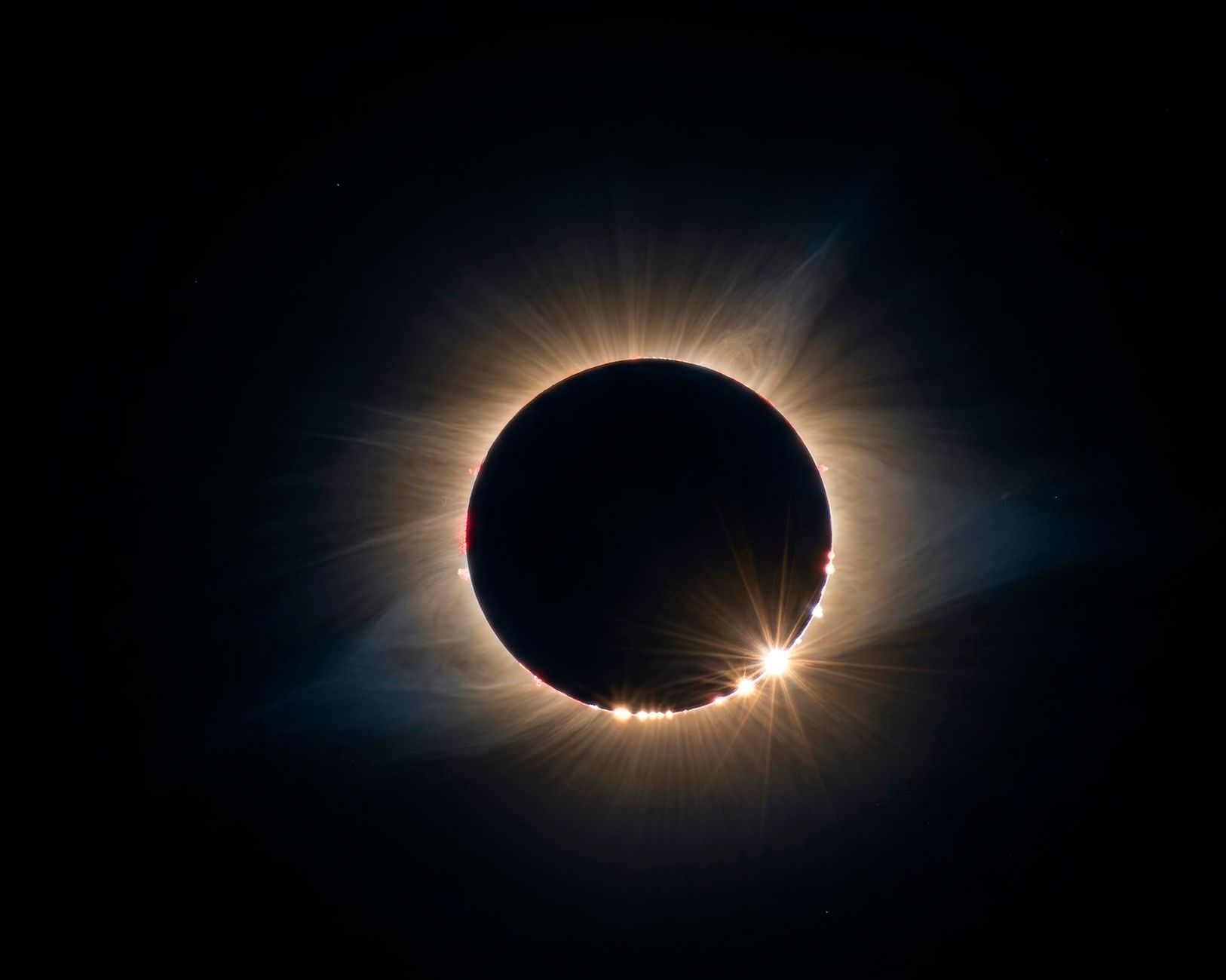
In a bold scientific endeavour, pilots from NASA's Johnson Space Center have embarked on a mission to chase the fleeting shadow of the Moon as it crosses the Earth during a solar eclipse. Their chosen steed: the WB-57F high-altitude research aircraft, a marvel of engineering, capable of soaring at altitudes where commercial jets dare not tread.
Launching from Ellington Field in Houston, the pilots navigated to Iceland, their strategic base for this celestial pursuit. From here, they planned to intercept the path of totality, a narrow band where the eclipse morphs from a mere partial obscuration to a total blackout of the Sun's face. This alignment offers a rare window for scientists to peer into the Sun's corona, the enigmatic outer layer that is usually concealed by the blinding glare of daylight.
Unveiling the Sun's Mysteries
The mission's significance is not lost on those involved. By studying the corona, scientists hope to unlock secrets about solar winds and magnetic fields. These insights are crucial not only for understanding our closest star but also for predicting space weather phenomena that can disrupt satellite communications and power grids on Earth.
According to Dr. Emily Harrison, a leading solar physicist involved in the project, 'The corona holds the keys to many mysteries of solar physics. Observing it during an eclipse gives us a chance to study its structure and dynamics up close.'
A High-Stakes Chase
Flying through the eclipse's path is no mean feat. Timing is everything, and any deviation could result in missing the totality entirely. The pilots, therefore, must execute their flight plan with precision and finesse. 'It's a high-stakes chase against time and nature,' remarked Captain Mark Evans, one of the mission's lead pilots.
As the aircraft streaks across the sky, equipped with sophisticated imaging tools, the data collected will be analysed meticulously in the months to come. Such missions, though rare, are invaluable for the advancement of solar science and our understanding of cosmic phenomena.
This solar eclipse, visible across parts of Europe, North Asia, and North America, is a reminder of the intricate dance of celestial bodies and the relentless human pursuit to unravel the universe's mysteries.