
Quantum Leap: Einstein's Gravity Explored at the Subatomic Level
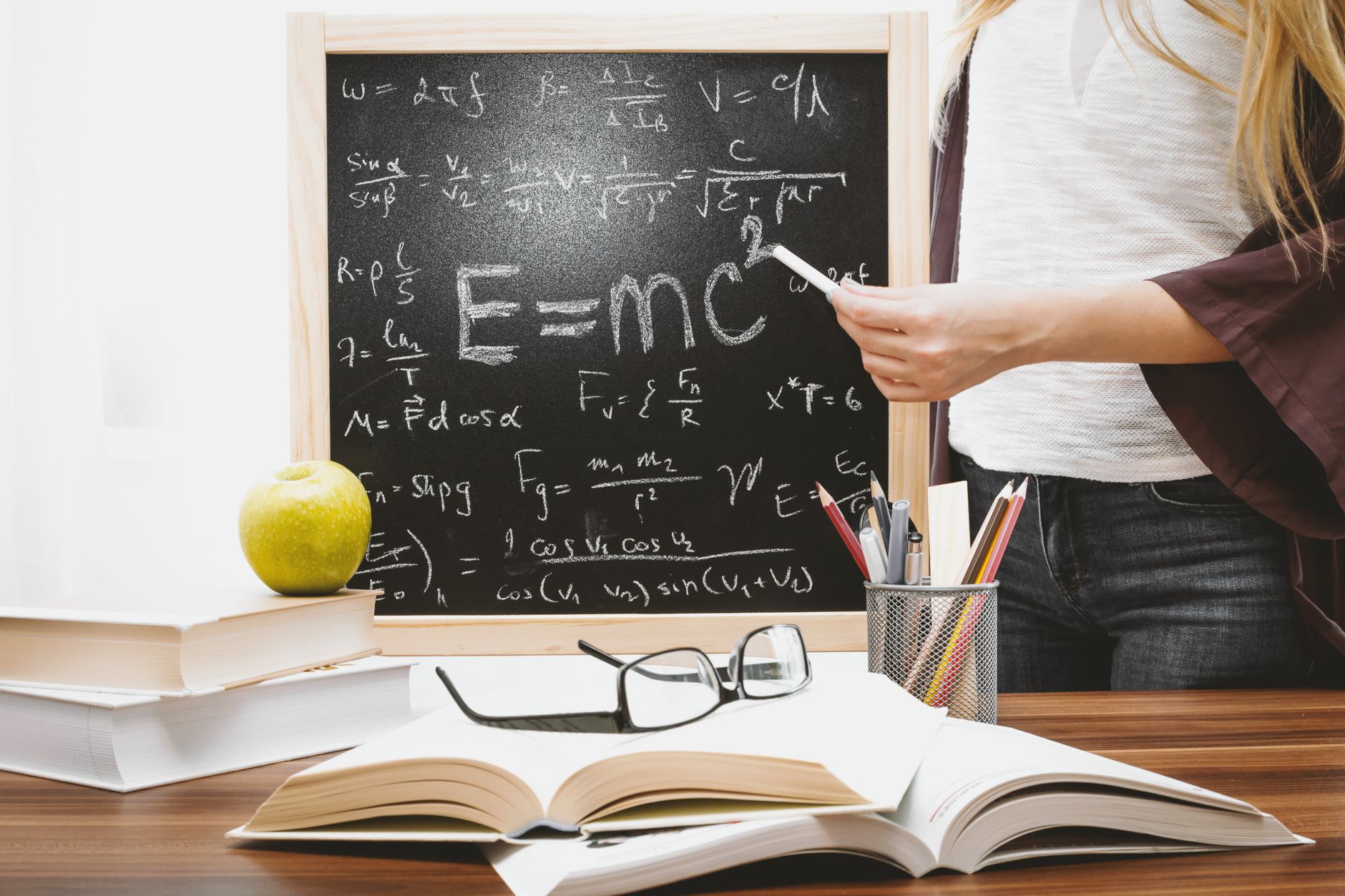
In a finding that Albert Einstein himself might have tipped his hat to, scientists have embarked on a journey to explore the seemingly irreconcilable worlds of general relativity and quantum mechanics. Researchers have observed the effects of gravity at a quantum level, a feat that could inch us closer to a unified theory of physics that has eluded scientists for decades.
Einstein's General Theory of Relativity, which describes how gravity affects the fabric of space and time, has been a cornerstone of modern physics. However, its principles have long seemed incompatible with quantum mechanics, the branch of physics that governs the subatomic world. While relativity depicts spacetime as a malleable entity, quantum mechanics treats it as a static stage. The quest for a coherent theory that blends these frameworks is often likened to a search for the Holy Grail of physics.
This latest observation, published in the journal Science Advances, reveals that the quantum phase of free fall is consistent with Einstein's equivalence principle. This principle, which holds that gravitational and inertial forces are indistinguishable, has now been seen to hold even in the quantum realm.
Intriguingly, the experiment demonstrated gravity's pull between antimatter and Earth, reaffirming Einstein's insights. For physicists, this represents a significant stride in understanding the fundamental forces that govern our universe. Historically, the reconciliation of these forces has been an arduous task, with the world of the very large and the very small appearing to operate under entirely different sets of rules.
While this discovery does not yet offer the final answer to quantum gravity, it provides a tantalising glimpse into a future where the mysteries of the universe may be understood through a single, elegant theory. In the meantime, scientists continue their quest, driven by the hope that one day, they might bridge the chasm between the apple that falls to the ground and the particles that dance in the quantum void.


