Scientists Edge Closer to Unveiling Dark Matter Mystery
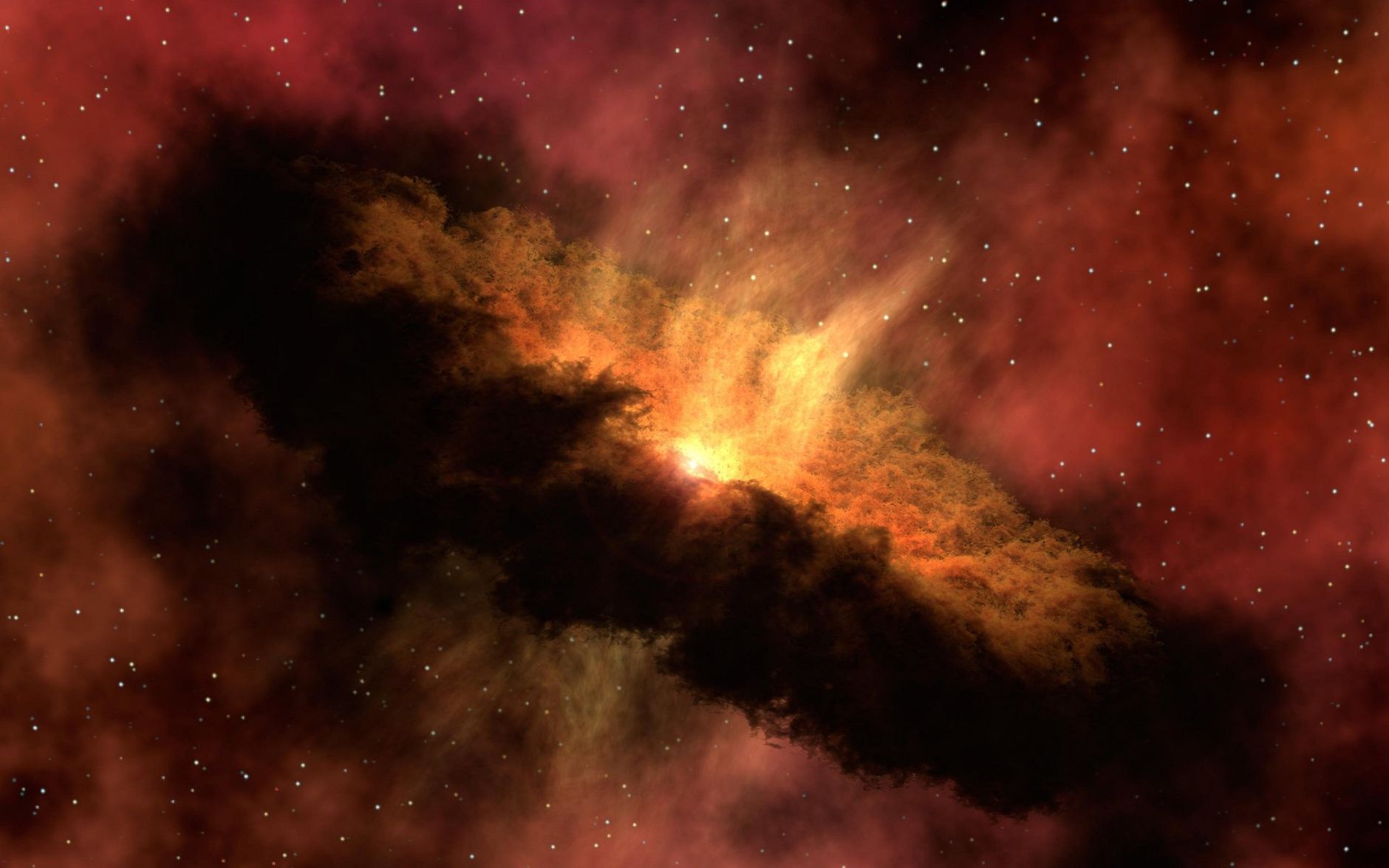
In the vast expanse of the universe, where mysteries abound and questions often outnumber answers, a potential breakthrough has emerged from the shadows. Scientists from the University of [Name], working in conjunction with the NASA gamma-ray spacecraft Fermi, may have detected a faint signal that points to the elusive dark matter.
Dark matter, the enigmatic substance thought to account for approximately 85% of the universe's mass, has long evaded direct observation. Its presence has been inferred through gravitational effects on galaxies and cosmic structures, yet it has remained stubbornly invisible, like a ghost in the cosmic machine.
The Promise of Gamma Rays
The recent study suggests that gamma rays, emitted from dark matter annihilation, could offer the first tangible proof of its existence. If validated, this would mark a seismic shift in astrophysics, providing a window into one of the cosmos's most profound mysteries.
Dr. [Name], lead researcher, remarked, "This is a tantalising hint, but it requires rigorous verification. Our findings could redefine our grasp of the universe's composition."
What Lies Ahead?
While excitement mounts, caution is the watchword. The scientific community awaits independent verification before proclaiming a discovery of such magnitude. The implications, however, are enormous. Confirming dark matter's nature could reshape our understanding of fundamental forces and the universe's evolution.
For now, the universe retains its secrets, whispering just enough to keep humanity gazing toward the stars, questing for answers in the inky vastness.