
Scientists May Have Spotted a Particle of Dark Matter
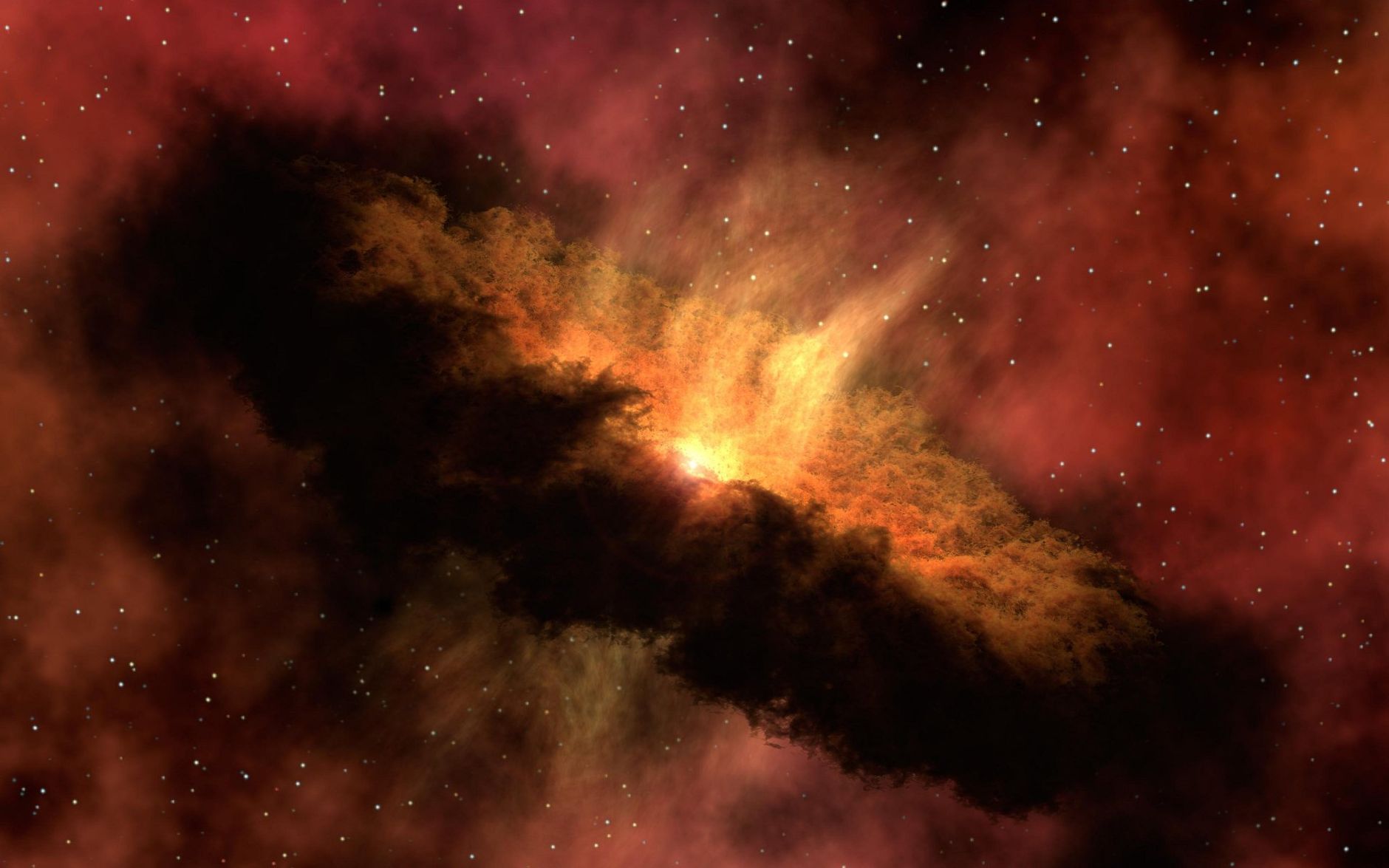
In the shadowy realms of the cosmos, where light dare not tread, scientists have announced a tantalising possibility: they may have glimpsed a particle of dark matter. This mysterious entity, often described as the glue holding the universe together, has eluded detection for decades, leaving scientists both frustrated and intrigued.
A recent publication in Physical Review Letters reveals findings that could upend our understanding of the universe. Researchers at the cutting edge of particle physics have detected what they believe to be a dark matter particle, a discovery that, if confirmed, would mark a seismic shift in cosmological studies.
The Invisible Force
Dark matter, accounting for approximately 85 percent of all matter in the cosmos, is notoriously difficult to detect. It does not interact with light in the conventional sense—neither emitting nor absorbing it—thus remaining invisible to telescopes. Its presence is inferred from gravitational effects on visible matter, such as galaxies and galaxy clusters.
While dark matter's nature has been the subject of speculation and theoretical modelling, direct evidence has remained elusive. This latest potential discovery offers a glimmer of hope to physicists who have long sought to understand the universe's hidden architecture.
A Breakthrough in Understanding
The implications of detecting a dark matter particle are profound. It could provide answers to longstanding questions about the universe's formation and the fundamental forces at play. Furthermore, it may lead to revisions of the Standard Model of particle physics, which has been the bedrock of our understanding for decades.
Scientists caution, however, that more research is needed to verify these findings. The excitement is palpable, yet tempered with a scientific caution that demands rigorous testing and peer review. Should subsequent studies corroborate this discovery, the ramifications for physics and cosmology could be nothing short of revolutionary.
As researchers continue to probe the cosmos's dark recesses, the possibility of unlocking one of the universe's greatest mysteries remains a thrilling prospect. For now, the scientific community watches and waits, poised on the brink of what could be a new era in our cosmic exploration.


