Scientists on the Brink of Unveiling Dark Matter Secrets
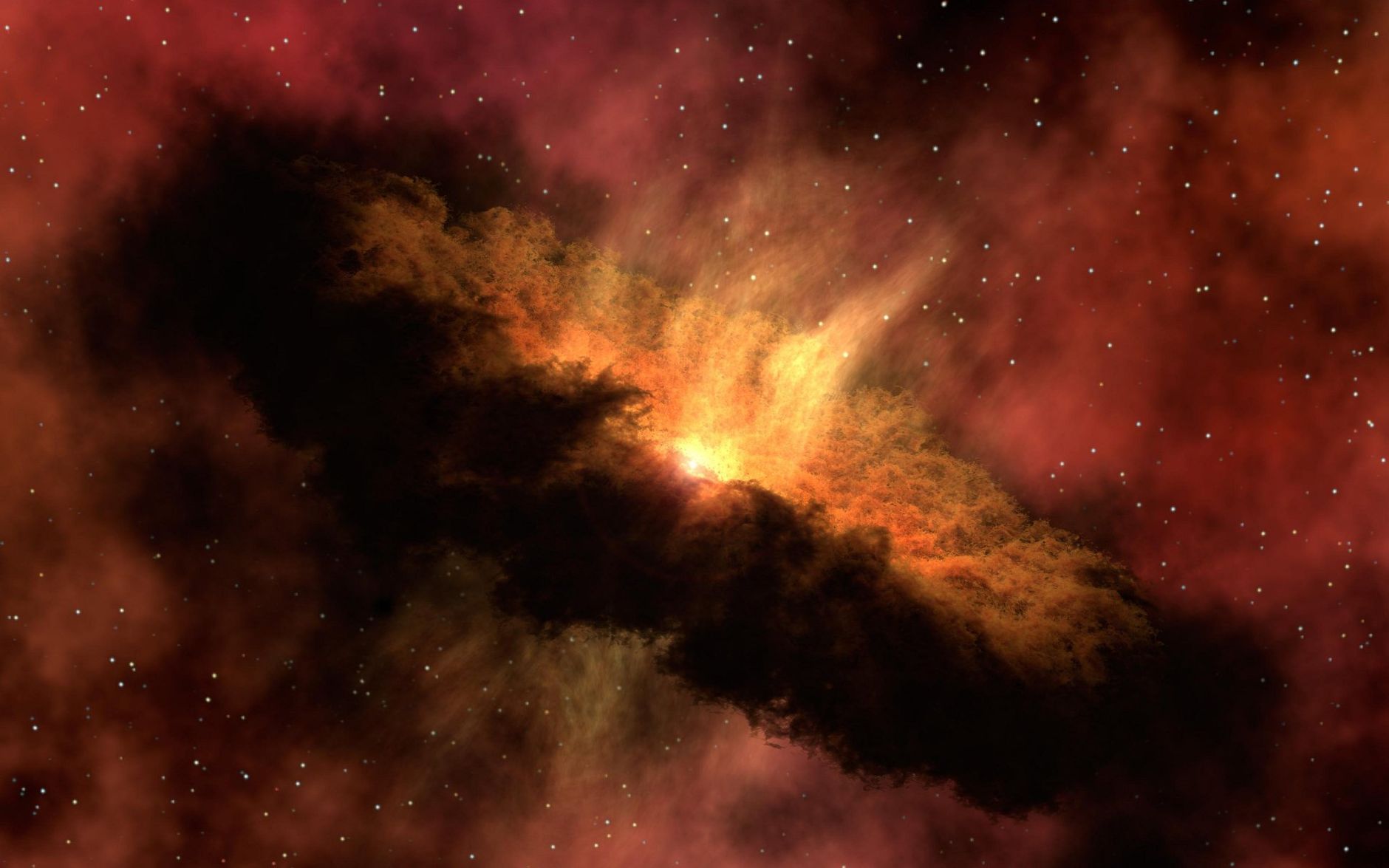
The universe's most elusive constituent, dark matter, might have finally revealed a sign of its existence. Scientists, for decades baffled by this mysterious substance, have detected a strange signal they believe could be the first indication of a dark matter particle. This discovery, if confirmed, could potentially unravel one of the greatest enigmas of modern physics.
Dark matter, which neither emits nor absorbs light, constitutes about 85 per cent of the universe's mass. It is this very invisibility that has made it a tantalising challenge for scientists. Yet, its gravitational effects are evident in the way galaxies hold together, suggesting a significant if intangible, presence.
In a recent experiment, researchers observed a peculiar signal from a dark matter detector, a signal unlike any previously recorded. While the scientific community remains cautious, the excitement is palpable. Dr Jane Foster, a leading astrophysicist, remarked, "This could be the closest we've come to actually observing a dark matter particle. It's like catching a shadow out of the corner of your eye."
However, sceptics warn against jumping to conclusions. Similar signals in the past have led to false alarms, attributed to cosmic rays or other cosmic phenomena. The current signal, though, persists and shows characteristics that are hard to explain with known physics. This has scientists hopeful that they may be on the cusp of a groundbreaking discovery.
Should this signal indeed be a dark matter particle, the implications are profound. It would not only confirm the existence of this theoretical substance but also open new avenues for understanding the universe's formation and evolution. The hunt for dark matter has been compared to the search for the Higgs boson, which, once discovered, significantly advanced particle physics.
The scientific method demands rigorous testing and validation, meaning it could be some time before the community reaches a consensus. Yet, the possibility that we might soon be able to 'see' what has eluded us for so long is nothing short of thrilling.