Scientists Unravel 'Impossible' Black Hole Merger Mystery
The cosmos has once again thrown a curveball at scientists, presenting a merger of black holes that seemed to defy the very laws of physics. A recent study has finally shed light on this 'impossible' event, revealing a fascinating interplay of forces that could account for the existence of these 'forbidden' black holes.
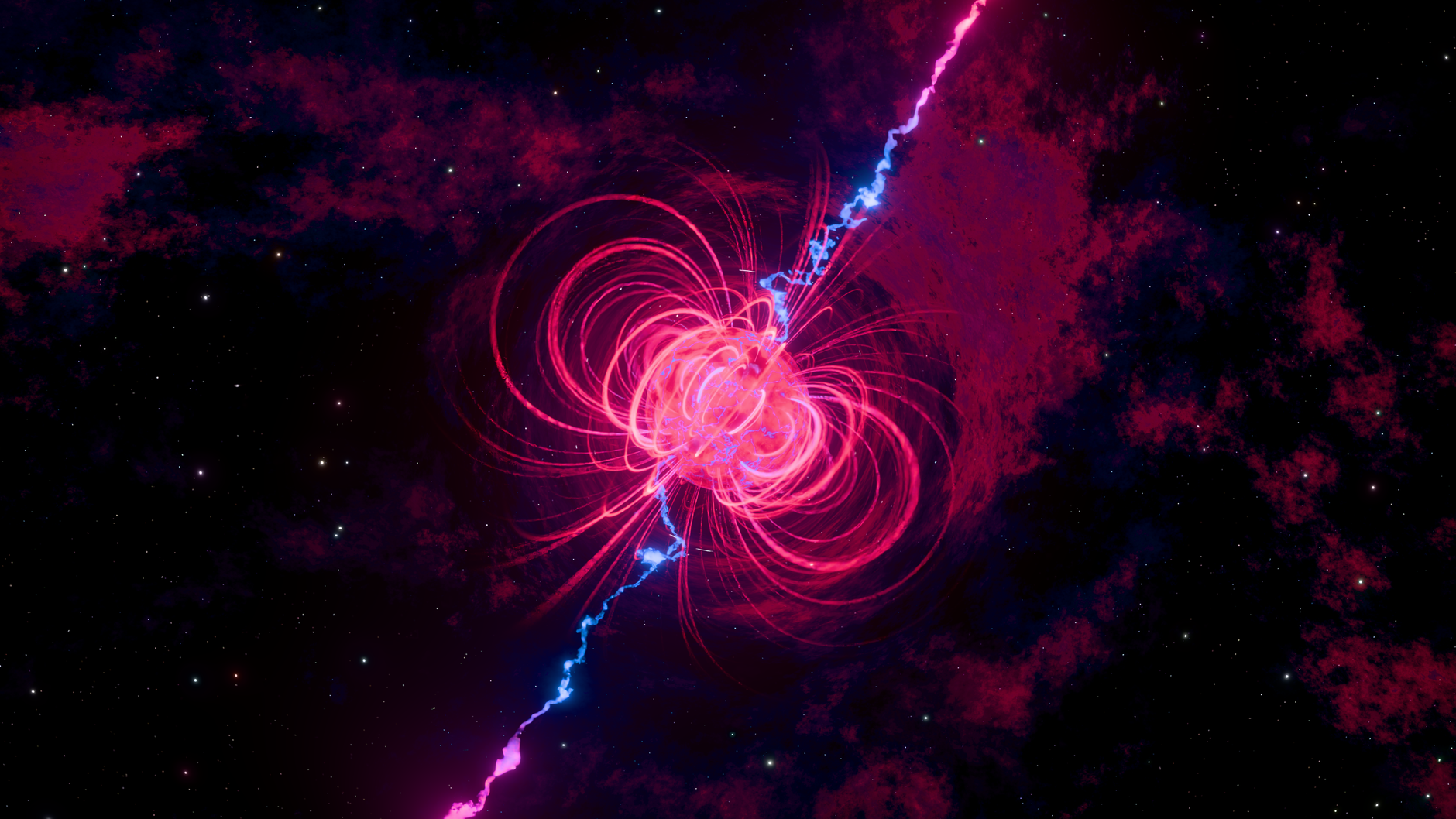
At the heart of this discovery lies the theory of relativity, proposed by Albert Einstein over a century ago. The theory, which has stood the test of time, provided the framework for understanding how such massive structures could possibly merge. Researchers have employed sophisticated simulations to demonstrate that magnetic fields, when acting on a collapsing, rapidly spinning star, can eject material in a manner that results in smaller but faster-spinning black holes.
The Role of Magnetic Fields
The breakthrough came when scientists realised that the magnetic fields could be the key to resolving the conundrum of the 'forbidden' mass gap. By exerting immense forces, these fields are capable of influencing the collapse of massive stars, ultimately leading to the formation of black holes that fall outside the expected mass range.
These findings were corroborated by gravitational wave data from the LIGO Collaboration, which had detected a peculiar signal — GW231123. The signal, indicative of two galaxies colliding and merging, provided the necessary evidence to support the theoretical models proposed by scientists.
A New Cosmic Puzzle
While this discovery marks a significant step forward, it also opens the door to a fresh mystery. The precise mechanisms by which these magnetic fields operate, and their role in the broader cosmic tapestry, remain largely unknown. Scientists are now faced with the task of delving deeper into the universe to unravel these complexities.
As they continue to peer into the depths of space, researchers are reminded of the vastness and intricacy of the cosmos. The universe, with its endless enigmas, continues to challenge and inspire, urging humanity to push the boundaries of knowledge ever further.