Taiwan's 'White Wolf': The Lone Voice for Reunification
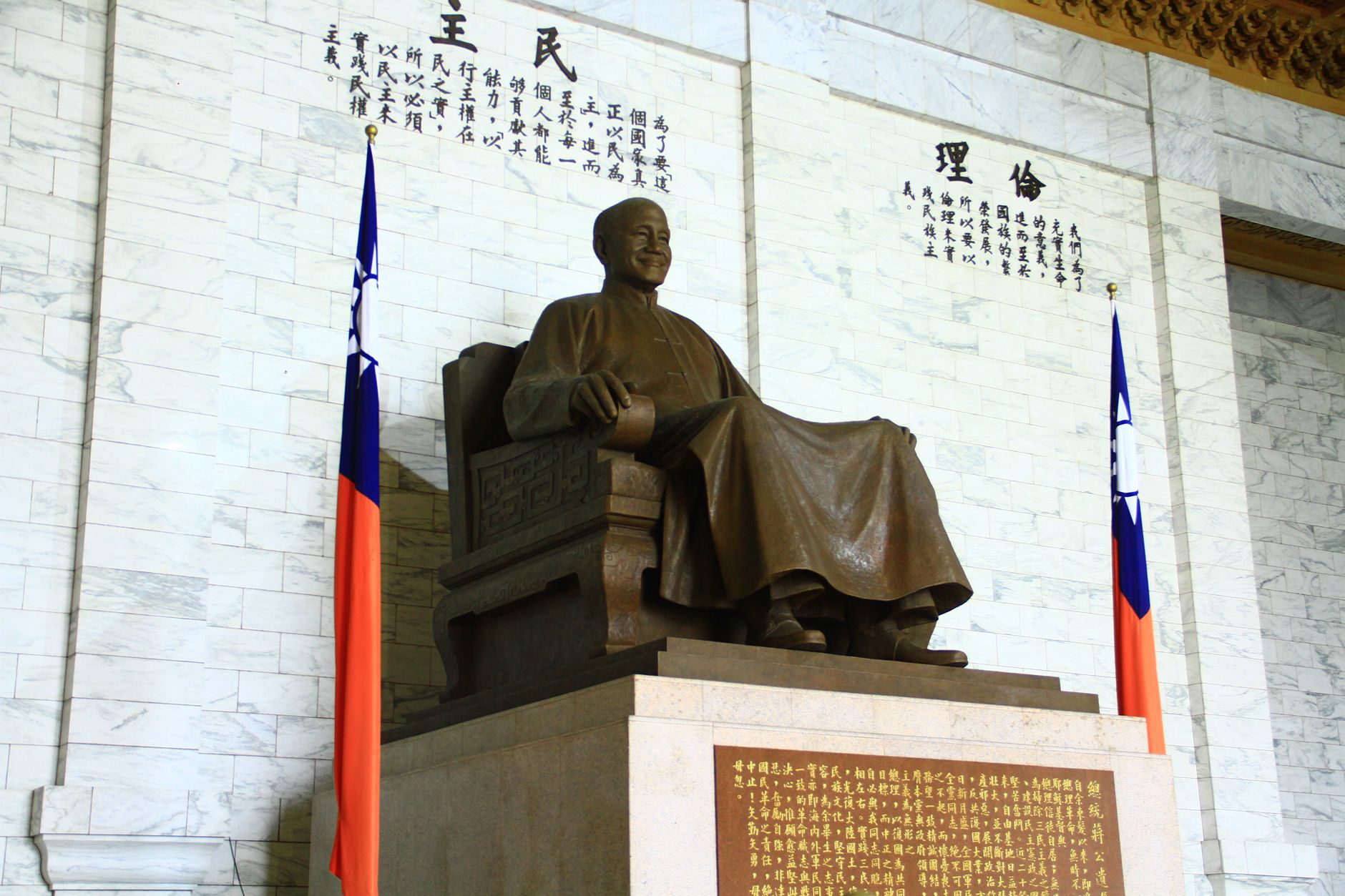
In the bustling streets of Taipei, a solitary figure stands defiantly against the prevailing political winds. Dubbed the 'White Wolf', Chang An-lo is a man on a mission — one that many in Taiwan deem imprudent, if not impossible. As the founder of the Chinese Unification Promotion Party (CUPP), Chang is steadfast in his advocacy for the 'reunification' of Taiwan with mainland China. Yet, his mission is fraught with challenges, not least among them the Taipei government's recent moves to dissolve his party due to alleged links with Beijing.
Chang's vision of reunification is, admittedly, a contentious one. The notion that Taiwan should return to the fold under Chinese governance is a prospect that finds little favour among the island's populace, who overwhelmingly support maintaining the current status quo. The legacy of nearly a century of separation from the People's Republic of China (PRC) has fostered a distinct Taiwanese identity, one that prizes its democratic institutions and economic independence.
The Man Behind the Mission
Chang An-lo's journey to becoming Taiwan's 'White Wolf' is as colourful as it is controversial. A former gang leader turned politician, his life story might seem more fitting for a film than reality. Despite his past, or perhaps because of it, Chang has cultivated a persona that combines charisma with notoriety. His rhetoric speaks of prosperity and unity under a singular Chinese flag, echoing sentiments recently reiterated by Chinese President Xi Jinping.
However, Chang's campaign is not merely a matter of political ideology; it is a battle against the tide of public opinion and official resistance. The Taipei administration's moves to dissolve the CUPP underscore the tension inherent in his crusade. Accusations of ties to Beijing cast a long shadow over his intentions, though Chang dismisses these as politically motivated attempts to silence dissenting voices.
A Future in the Balance
For many Taiwanese, the idea of reunification is not just unpalatable, but untenable. The island's history of de facto independence since the end of the Chinese Civil War has entrenched a sense of sovereignty that Beijing's overtures struggle to overcome. While the spectre of military conflict looms persistently in the background, direct confrontation has largely been avoided, allowing Taiwan to flourish in its own right.
In this charged atmosphere, Chang An-lo's lonely crusade seems destined to remain on the fringes of Taiwanese politics. Yet, his presence serves as a reminder of the complex interplay of identity, power, and ideology in the Taiwan Strait. Whether Chang's vision will ever gain traction or fade into obscurity is uncertain, but for now, the 'White Wolf' howls alone.