The Enigmatic Orion Nebula: A Celestial Wonder Revealed
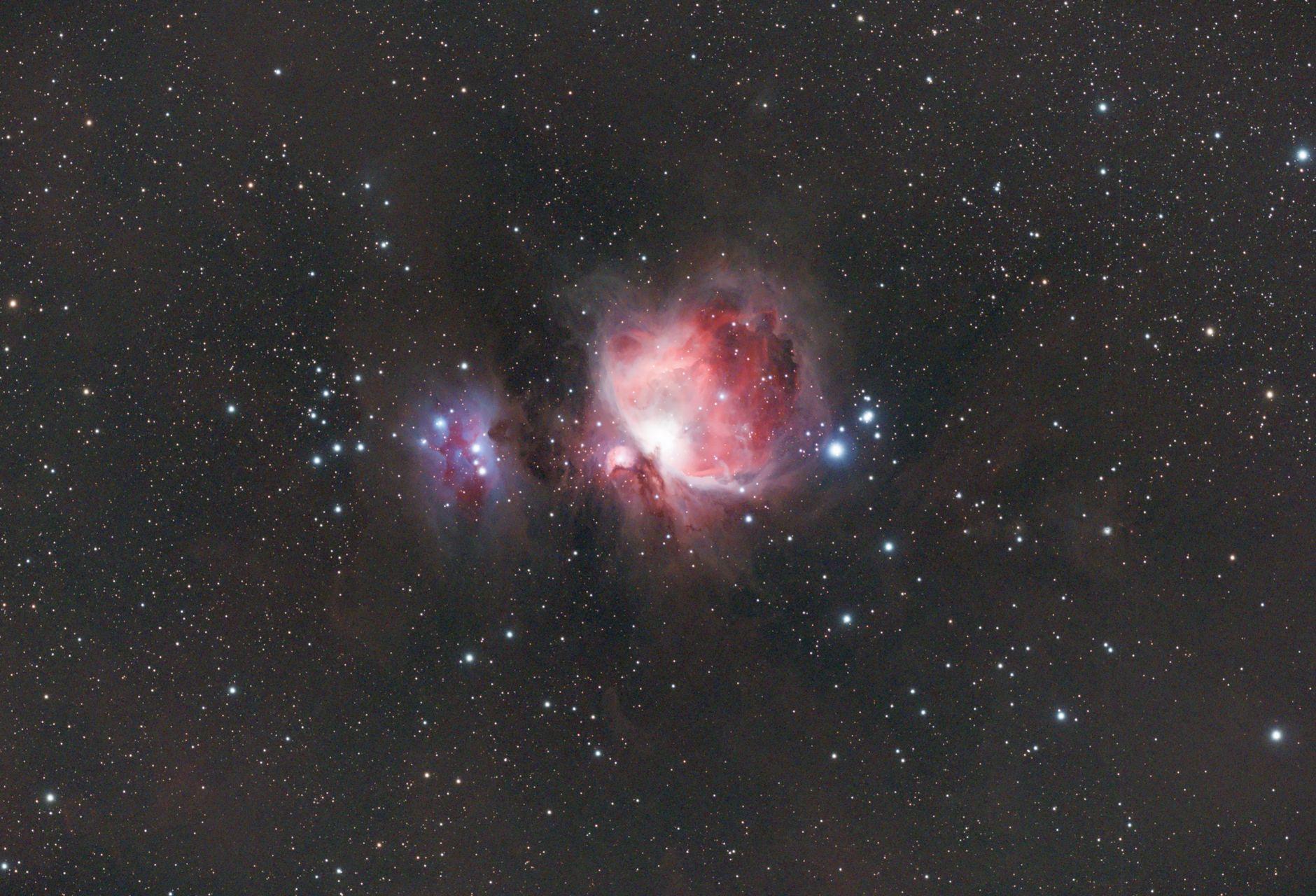
In the tapestry of the night sky, the Orion Nebula, or M42, stands out as an illustrious gem. Situated approximately 1,344 light-years from Earth, this celestial feature is a hub of star formation, nestled within the same spiral arm of our Milky Way as our Sun. Its size, a staggering 40 light-years across, makes it one of the most studied objects in the cosmos.
October 2026 presents a remarkable opportunity for skywatchers to observe this nebula. Known for its vibrant hues and intricate structures, M42 is a stellar nursery, where astronomers have identified around 700 stars in varying stages of birth. These infant stars provide a unique window into the processes that give birth to solar systems and potentially life-supporting planets.
A Glimpse Back in Time
The nebula's allure is not a modern discovery. In 1883, Andrew Ainslie Common, an amateur astronomer, captured the first photographs of M42 using a 36-inch telescope from his garden in Ealing, London. This marked a pivotal moment in astronomical photography, offering the world its first detailed glimpse of deep space phenomena.
Today, advanced telescopes continue to peel back the layers of the Orion Nebula, revealing its complex interplay of dust, gas, and young stars. The nebula's heart, dominated by the Trapezium Cluster, is a dense region where intense ultraviolet light shapes and sculpts the surrounding material.
The Significance of M42
The Orion Nebula's significance extends beyond its spectacular beauty. It serves as a natural laboratory for understanding stellar evolution and the conditions that may lead to planet formation. Observations of M42 contribute to our knowledge of how stars and planetary systems, including our own solar system, have formed and evolved over billions of years.
As we gaze upon this celestial wonder, we are reminded of the vast and intricate universe we inhabit, a universe where every glance at the sky is a journey through time and space.