The Sun's Early Appetite: Did It Swallow a Super-Earth?
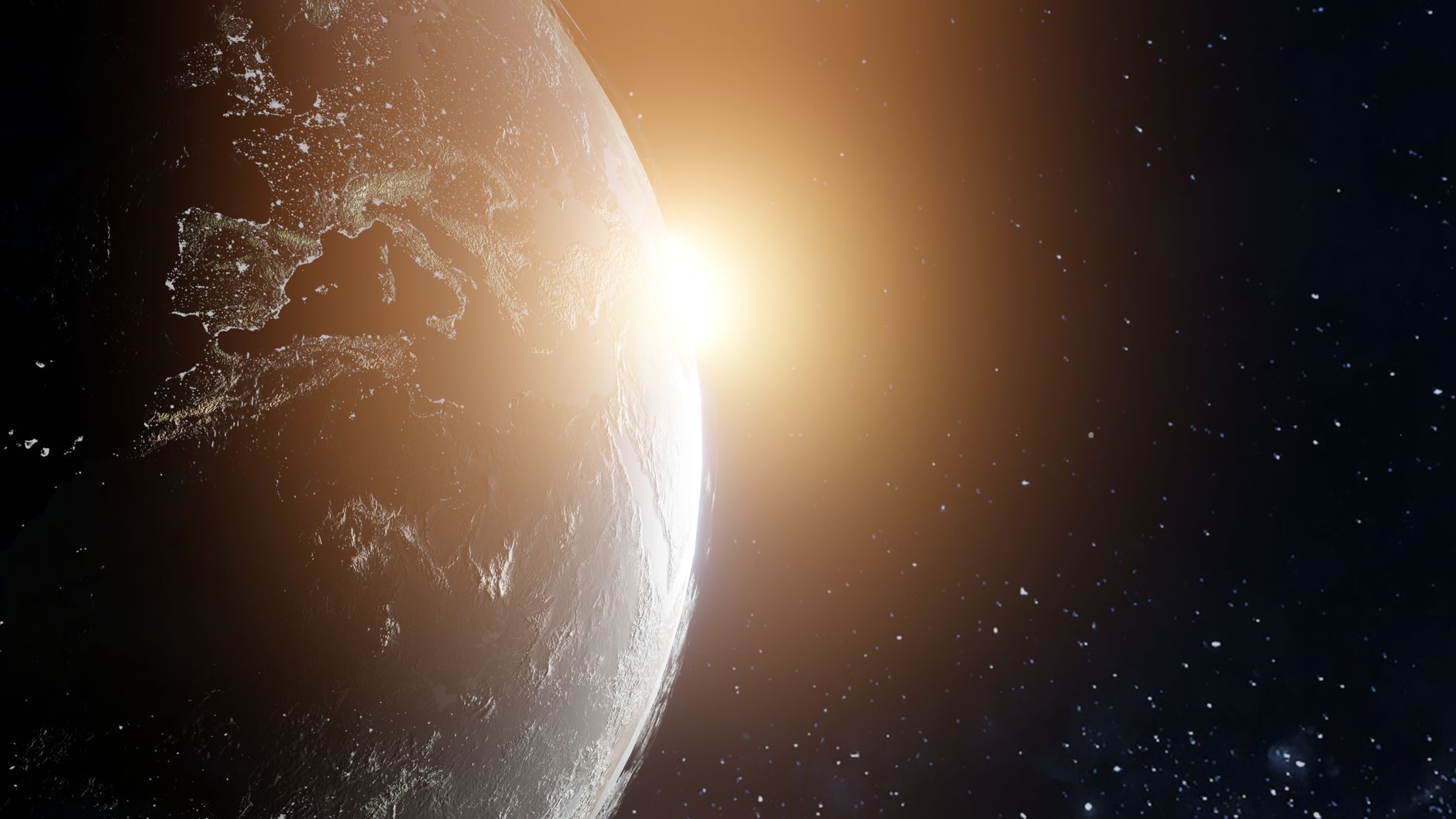
In the vast theatre of the cosmos, where stars are born and die with little regard for the human penchant for narrative, a recent study has added a tantalising twist to the tale of our Sun's formative years. A team of scientists has proposed that the young Sun may have consumed a super-Earth, an idea that could illuminate some of the lingering mysteries surrounding our star.
This hypothesis, while not new in the astronomical community, has gained fresh credence as researchers scrutinise the Sun's peculiar characteristics. Notably, the Sun's surface contains far less lithium than expected. The element, typically found in stars, is conspicuously scarce in our own celestial furnace.
According to the research, the early Sun may have had a planetary feast, swallowing a super-Earth estimated to be five to ten times the mass of our planet. Such an event might have disrupted the Sun's chemical makeup, particularly depleting its lithium reserves.
The Evidence Behind the Hypothesis
The idea is not merely speculative. Scientists have drawn on simulations that suggest a Sun with an early planetary meal fits better with observed measurements than models without such consumption. This theoretical super-Earth, lovingly nicknamed 'Dev Dilek' by its conceptualisers, would have played a crucial role in shaping the early solar neighbourhood.
Dev Dilek, had it existed, would have gathered space debris before succumbing to the Sun's gravitational pull. This dramatic end could have sent ripples through the solar system, influencing the orbits and compositions of other early planets.
Dr Yildiz, a prominent figure in the research, remarked, "Our work asks whether the Sun itself could still carry observable evidence that such an engulfment actually happened, and we believe it could."
Implications for Solar Science
While the hypothesis remains unproven, it offers a compelling explanation for some of the Sun’s enigmatic properties. If a super-Earth was indeed consumed, it would have sent shockwaves through the Sun, altering its surface chemistry and dynamics fundamentally.
This research is more than a celestial whodunit; it poses broader questions about planet formation and solar system evolution. If our Sun could have devoured a planet, might other stars have similar appetites? The implications stretch beyond our solar system, offering insights into the life cycles of stars and the planets that orbit them.
As scientists continue to unravel these celestial mysteries, one thing remains certain: the Sun, a seemingly constant presence in our sky, holds secrets that challenge our understanding of the universe.