
Unveiling the Universe's Shadows: The Dark Matter Pursuit
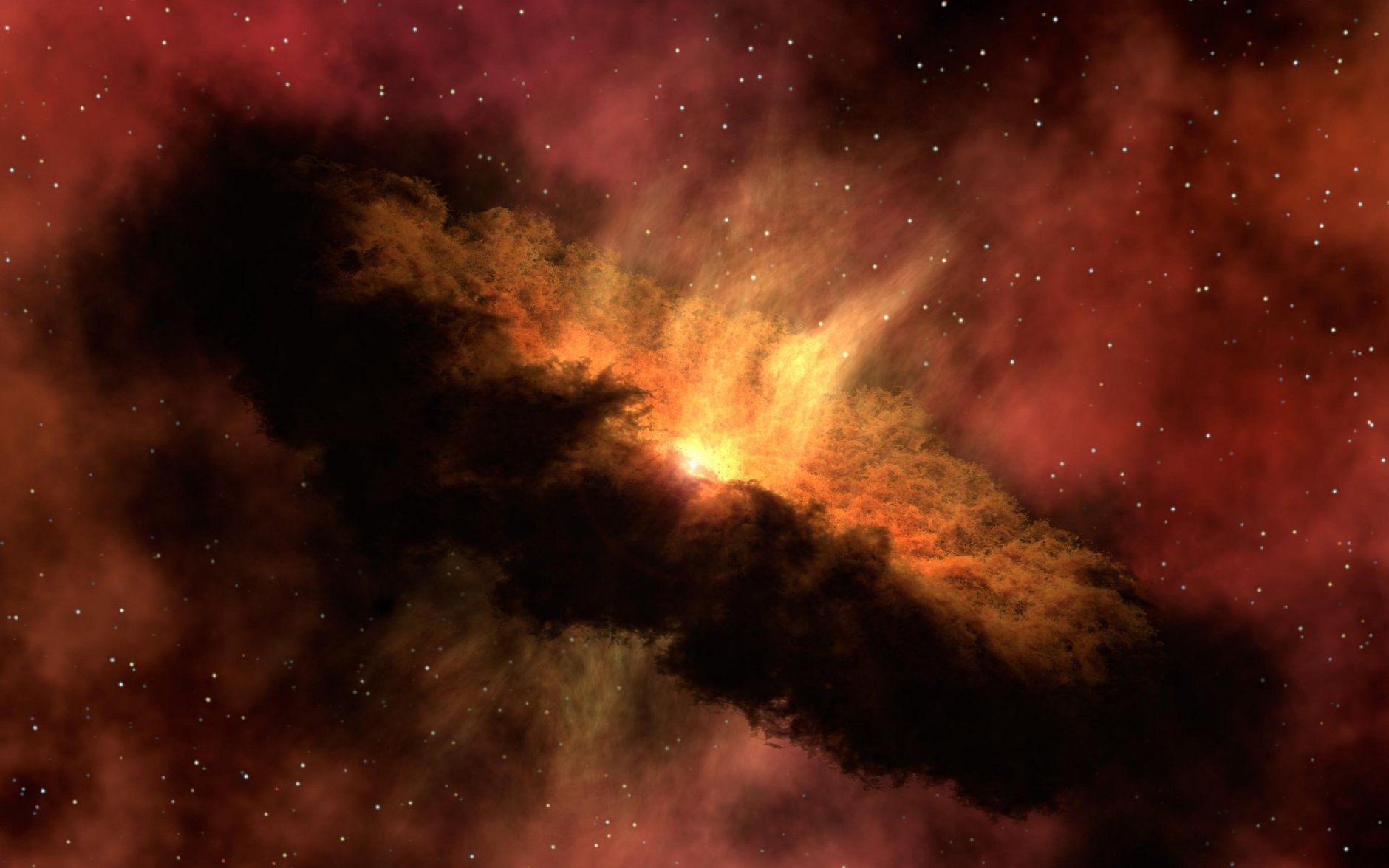
In an era where the universe's mysteries are being unravelled at an unprecedented pace, dark matter remains one of the most confounding enigmas. Despite its invisibility, this elusive component is believed to constitute a significant portion of the universe's mass. Its presence is inferred not through direct observation, but through its gravitational effects on visible matter.
At New Scientist Live in London, leading experts gathered to discuss the latest advancements in our understanding of dark matter. The event served as a platform for sharing insights across disciplines, from geoscience to astrophysics. One of the compelling points raised was how dark matter's gravitational pull is essential for the formation of galaxies and clusters, providing a scaffolding for the universe's visible structure.
The quest for dark matter is akin to a cosmic detective story, with scientists piecing together clues from various observations. Over the years, numerous theories have been proposed, ranging from weakly interacting massive particles (WIMPs) to axions. Each hypothesis brings with it a new set of challenges and experimental pursuits, yet none has conclusively unveiled dark matter's true nature.
The Scientific Endeavour
Despite the challenges, the search for dark matter has united the scientific community in a shared quest. Experiments around the globe are underway, employing cutting-edge technology to detect these ghostly particles. Facilities like CERN's Large Hadron Collider and the subterranean detectors in Italy and the United States are at the forefront of this exploration.
While the pursuit of dark matter may seem esoteric, its implications are profound. Understanding dark matter could unlock answers to fundamental questions about the universe's origins and future. It might also lead to breakthroughs in physics, challenging existing paradigms and potentially leading to new ones.
As the scientific community continues its pursuit, one thing remains clear: dark matter, though elusive, is a cornerstone of cosmic understanding. Its discovery would not only revolutionise our grasp of the universe but also reaffirm the value of scientific curiosity and perseverance.


