XRISM Unravels Cosmic Mystery: Pulsar's Wind Captured
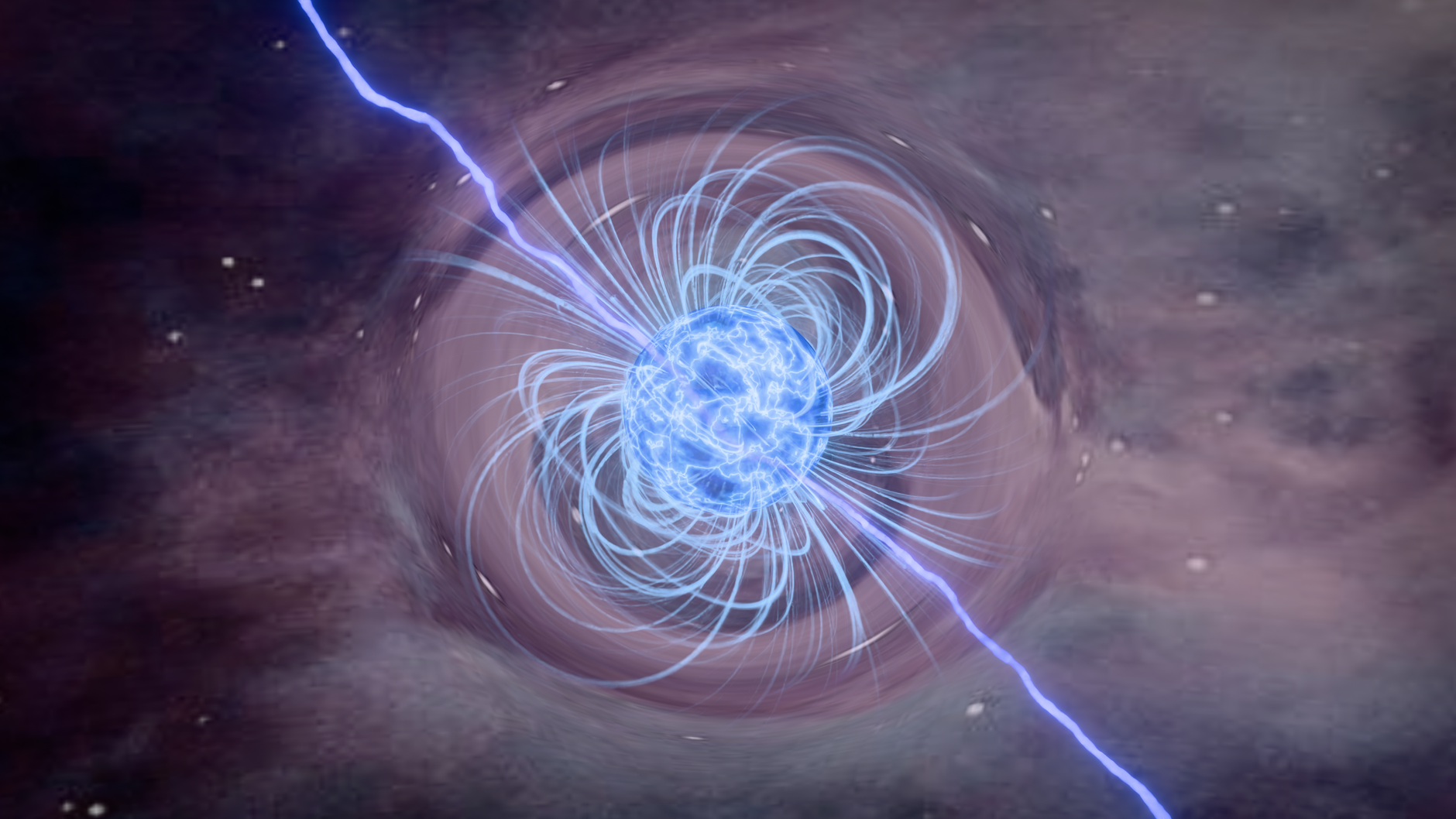
In the cosmic ballet of stars and space, the XRISM mission has delivered a performance worthy of the grandest astronomical stage. This joint endeavour by NASA and JAXA, with assistance from the European Space Agency, has unveiled an astonishing observation: the pulsar GX 301-2 capturing the 'wind' from its supergiant companion.
But this is no ordinary wind. Created by the pulsar’s magnetic fields and rapid rotation, it is a stream of charged particles that whips through the universe, interacting with the vast expanse around it. The XRISM's Resolve instrument, a marvel of modern technology, has allowed scientists to examine these interactions in exquisite detail, providing data that could propel X-ray astronomy to new heights.
The pulsar GX 301-2, a neutron star, remains a cosmic enigma. Formed from the remnants of a supernova, it packs an extraordinary amount of mass into a sphere just 20 kilometres across. Yet, it is this very density and the intense gravitational pull that makes it a perfect subject for study. Observing the pulsar's interactions with its companion during a particularly strong flare on 1st February 2025, the XRISM mission has opened new pathways for understanding such stellar phenomena.
This mission is more than just a scientific success; it is also a testament to international cooperation in space exploration. The XRISM was conceived as a successor to the ill-fated Hitomi observatory, which met with disaster shortly after its launch in 2016. Learning from past missteps, this new mission has not only met but exceeded expectations, delivering data with unprecedented clarity.
The implications of these findings are profound. By capturing the pulsar's wind, scientists can better understand the life cycles of stars and the forces that govern their evolution. This could eventually lead to insights into the formation of black holes and the nature of dark matter. In essence, XRISM is not just observing the universe; it is helping to rewrite the very textbook of astrophysics.