RRI Scientists Unveil 'Petal-Like' Structures in Solar Corona
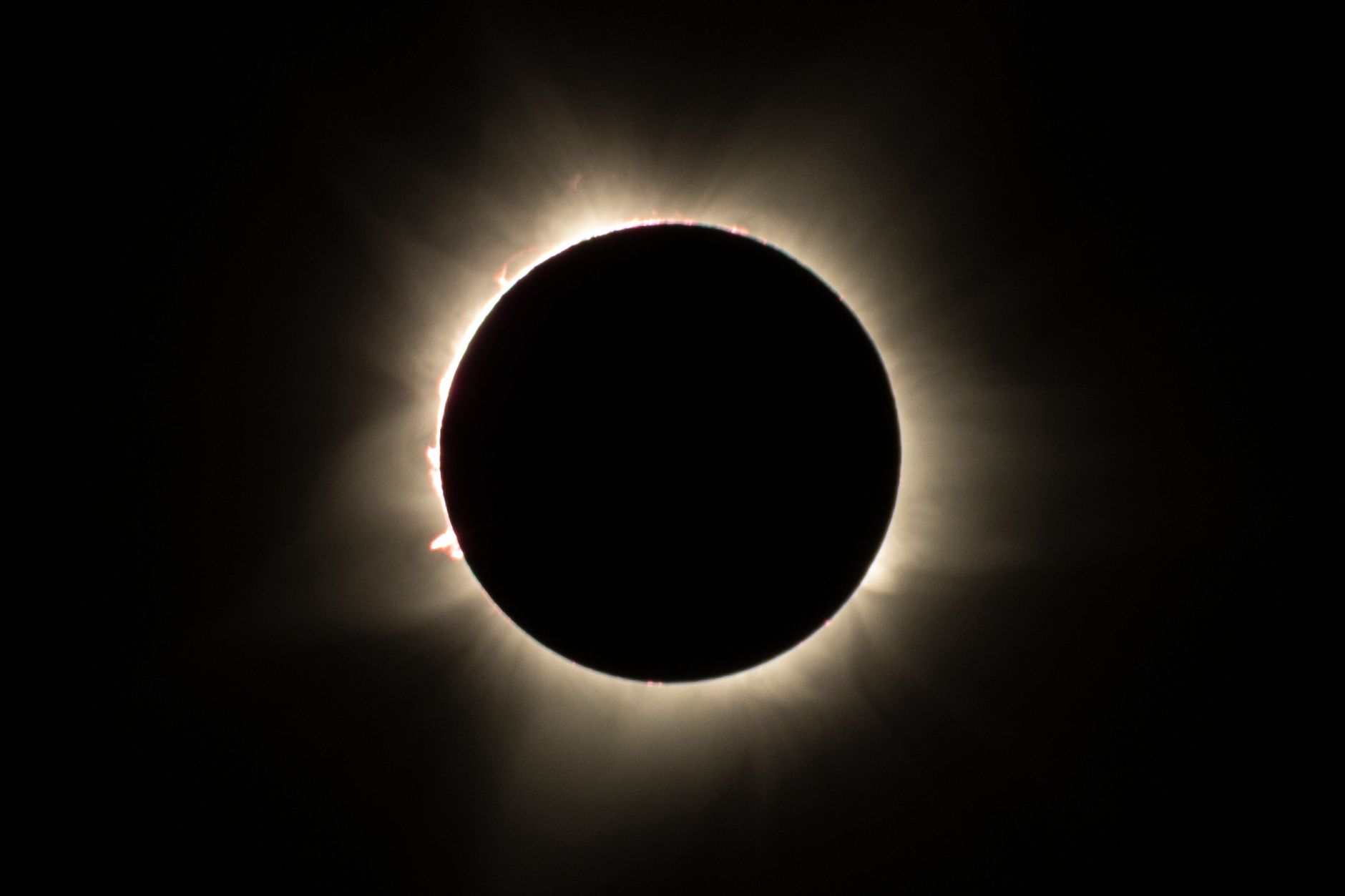
While most of us gaze in awe at the spectacle of a solar eclipse, a team of scientists from the Raman Research Institute (RRI) have been peering deeper into the Sun’s corona, predicting 'petal-like' structures that may unfurl during the celestial event. The corona, the Sun’s outermost layer, remains an enigma, visible only when the Moon obscures the Sun’s glaring face.
The scientists' endeavour is not merely an academic exercise. Understanding the corona's structure is crucial, as it holds the key to comprehending the Sun's magnetic field dynamics. The magnetic field, in turn, influences space weather, which can disrupt satellite operations and power grids on Earth.
The Mysterious Corona
During an eclipse, the corona, usually hidden by the Sun’s brilliance, becomes an ethereal halo. Its structures, shaped by magnetic forces, include streamers, plumes, and arches. The predicted 'petal-like' formations are thought to be a result of these magnetic manipulations, offering a fresh perspective on solar dynamics.
The RRI team, employing advanced magnetograms, have developed a predictive model that simulates these intricate patterns. Past simulations, like the one corroborated during the 2006 eclipse, demonstrated the model's accuracy and potential to forecast solar behaviour.
Implications for Science and Public Engagement
The implications of this research are significant. By predicting the corona’s appearance, scientists can better prepare for observing solar phenomena, providing insights into the Sun’s life cycle and its future as it continues its celestial dance.
Public engagement with astronomy will also benefit. Events like the upcoming eclipse viewing at Guildford's Newlands Corner, led by the Guildford Astronomical Society, offer the public a chance to witness these phenomena first-hand, armed with a deeper understanding of what they observe.
As the Sun inches closer to its mid-life, with billions of years still to burn, each eclipse offers a fleeting yet profound glimpse into the heart of our solar system. The RRI team's predictions promise to make these moments all the more enlightening.