Unveiling Dark Matter: A Glimpse into a Simulated Universe
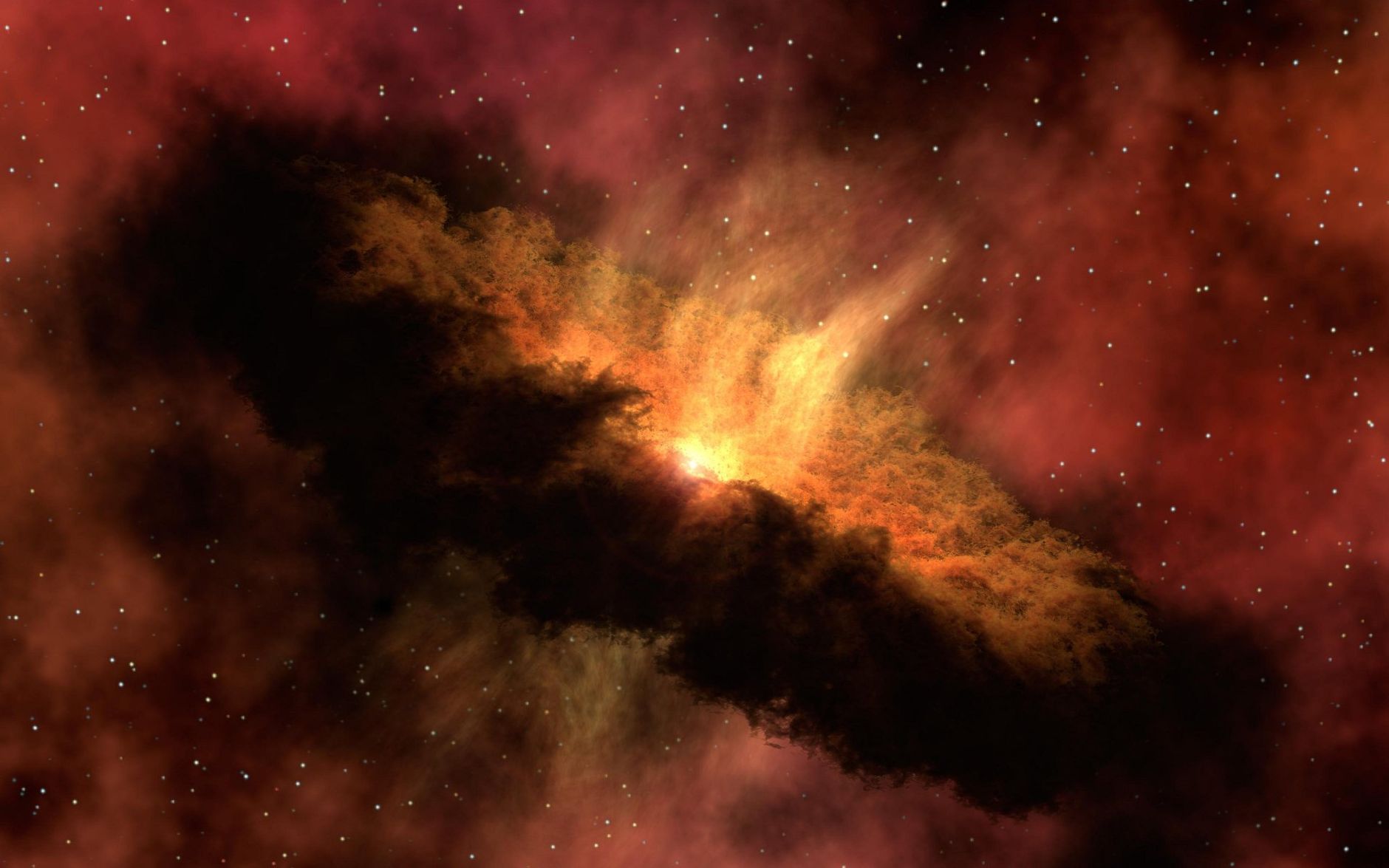
In the vast expanse of space, a mysterious force lurks, unseen yet profoundly influential. On 25th October 2026, NASA's Astronomy Picture of the Day unveiled a striking illustration of dark matter within a simulated universe, capturing the imagination of astronomers and enthusiasts alike.
Dark matter, a term that evokes intrigue and curiosity, constitutes about 85% of the universe's mass. Yet, it remains invisible, detectable only through its gravitational effects on visible matter. The illustration, crafted by Tom Abel and Ralf Kaehler, serves as a visual exploration into this enigmatic substance, offering a simulated universe where dark matter's presence is mapped and understood.
The Invisible Scaffolding
Dark matter acts as the scaffolding of the cosmos, shaping galaxies and influencing cosmic structures. Without it, the universe as we know it would be drastically different. The simulation, presented in the APOD, provides a bridge between theoretical physics and astronomical observations. It gives scientists a tool to test hypotheses about how dark matter operates and interacts with the observable universe.
These simulations are not mere academic exercises. They are pivotal in helping scientists understand the universe's large-scale structure and the role dark matter plays in cosmic evolution. By comparing simulated data with actual astronomical observations, researchers can refine their models and theories, inching ever closer to unveiling the true nature of dark matter.
Why It Matters
The study of dark matter is not just about understanding the cosmos; it has profound implications for physics as a whole. Discovering the nature of dark matter could revolutionise our understanding of fundamental forces and particles. As scientists continue to refine their simulations, the gap between what we know and what remains a mystery narrows, leading to potential breakthroughs in both astronomy and particle physics.
For now, the simulated universe remains a crucial tool in the astronomer's arsenal, providing a window into the unseen forces that govern the cosmos. The APOD's featured illustration is a testament to the power of scientific imagination and inquiry, inviting us all to ponder the mysteries that lie beyond our sight.